Queen Elizabeth II Dies; Charles III Ascends to the Throne
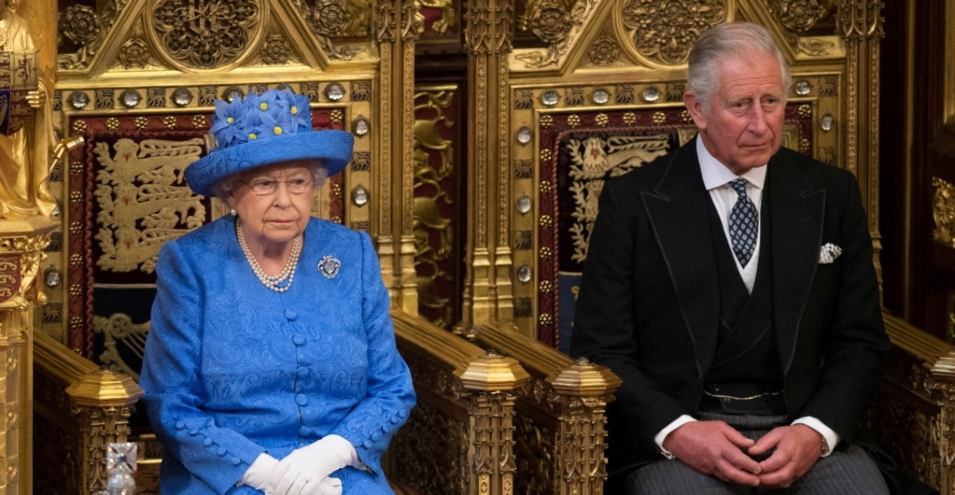
Buckingham Palace announced Thursday evening, September 8, that Elizabeth II, Queen of Britain, has passed away.
In a statement from the British Royal Palace, it was stated: “The Queen passed away peacefully this afternoon at Balmoral Castle.”
The statement, referring to Prince Charles and his wife Camilla, added: “The King and his wife will remain at Balmoral this evening and will return to London tomorrow.”
The Queen’s eldest son, 73-year-old Charles, automatically becomes King of Britain and head of 14 other realms including Australia, Canada, and New Zealand. His wife Camilla will be Queen Consort. However, Charles’s coronation ceremony may be postponed for several months.
Britain has previously had two kings named Charles; Charles I who ascended to the throne in the seventeenth century and Charles II, his son, and now Charles, upon ascending to the throne, has chosen the name Charles III for himself.
Queen Elizabeth II, 96, was the world’s longest-reigning monarch, having ruled the country and other realms for 70 years. She ascended to the throne at age 25 following the death of her father, George V.
She was crowned in June of that year. In her coronation speech, Queen Elizabeth II said: “I declare before you all that my whole life, whether it be long or short, shall be devoted to your service and the service of our great imperial family to which we all belong. But I shall not have strength to carry out this resolution alone unless you join in it with me, as I now invite you to do.”
Elizabeth II ascended to the throne during a period when Britain still controlled many of its colonies. The country had emerged from the ruins of World War II, while food was still rationed and class and aristocratic privileges still dominated society.
At the beginning of Queen Elizabeth II’s reign, Winston Churchill was Prime Minister of Britain, Joseph Stalin ruled the Soviet Union, Mohammad Mossadegh held the position of Prime Minister in Iran, and the Korean War was intensifying.
In the following decades, Queen Elizabeth witnessed political changes and social transformations in Britain and the wider world. The turbulence of the royal family, most notably the divorce of Charles and Diana, was completely exposed to public scrutiny.
With seven decades of reign witnessing the rise to power of 15 British Prime Ministers, Queen Elizabeth II’s name has become associated with an era that many call the modern “Elizabethan Age”; a comparison to the Golden Age of Elizabeth I in the sixteenth century, when the Renaissance flourished in Britain.
The impact of her loss will be significant both for British citizens and the royal palace; someone who over decades both contributed to stability and far-reaching social changes and helped resolve royal family controversies.
Elizabeth II’s life was also connected to World War II; when she delivered her first encouraging radio address in 1940, at age 14, to children evacuated from Britain: “We children at home are full of cheerfulness and courage. We try our very best to help our gallant soldiers, sailors, and airmen in every way we can. We also try our very best to take our share of the burden and sorrow of war. Each and every one of us will show the world that we, too, have a part to play in the framing of the future of our world. We do all we can to help. The evening comes when again we go to bed, and we lie down to sleep peacefully. God bless us all. Remember, always, to say a little prayer before you go to sleep. Good night, and good luck to you all.”
Elizabeth II reigned from February 6, 1952 to September 8, 2022; a period that witnessed the collapse of empire and the era of Britain’s reconstruction, the transition from the industrial age to the 21st century, as well as Britain’s entry into and exit from the European Union.
After Louis XIV of France, who ascended to the throne at age four, she holds the longest reign in history.
At age 21, when she was still five years away from attaining the crown, she had pledged to the people that “my whole life, whether it be long or short, shall be devoted to your service.”
Messages of Condolence from World Leaders
Following the announcement of the Queen’s death, world leaders and figures paid tribute to her and offered condolences.
The President of the United States, in a message honoring Queen Elizabeth II, referred to her as “a stateswoman of unequalled dignity and constancy” and said he is ready to work with her son, King Charles, with whom he has had “a close friendship.”
Joe Biden, in a joint message with his wife Jill, stated: “Queen Elizabeth II was a stateswoman of unequaled dignity and constancy who deepened the alliance between the United States and the United Kingdom.”
He added that Queen Elizabeth II “helped make our relationship special.”
Mr. Biden said he first met her in 1982 when he was a senator, and most recently in June 2021 during his first foreign trip as President—the fourteenth U.S. President to have met the Queen during her lifetime.
The U.S. President emphasized: “She was the first British monarch to whom the people of the world could establish a direct and immediate personal connection.”
Mr. Biden added: “She, too, in turn, devoted her entire life to serving them.”
Referring to Charles, the deceased Queen’s son, he said: “In the years ahead, we will continue our close friendship with the King and Queen.”
Emmanuel Macron, President of France, also wrote on Thursday in a tweet: The Queen “was the embodiment of the continuity and unity of the British nation over the past 70 years. I remember a friend of France, a queen who inscribed her name on her country and her century with unprecedented stature.”
Donald Trump, Barack Obama, George W. Bush, Bill Clinton, and Jimmy Carter, five former U.S. Presidents who are still alive, paid tribute to Queen Elizabeth II by releasing separate messages.
In this regard, Nancy Pelosi, Speaker of the House of Representatives, also offered condolences on the death of the British Queen in a message.
Ms. Pelosi praised Elizabeth II’s character throughout her reign in her message.
In this connection, Nancy Pelosi ordered flags at the U.S. Capitol building to be lowered to half-staff in honor of Queen Elizabeth II.
Anthony Blinken, U.S. Secretary of State, also offered condolences on the death of Queen Elizabeth II to the royal family, the people of Britain, and the people of Commonwealth nations.
Annalena Baerbock, Foreign Minister of Germany, also expressed sadness at hearing the news of the British Queen’s death and wrote in a tweet: “Germany will always be grateful to her for extending her hand toward reconciliation with us after the horrors of World War II.”
The German Chancellor called Queen Elizabeth II a “symbol of reconciliation” after World War II.
Olaf Scholz said: “Her commitment to reconciliation between Britain and Germany following the horrors of World War II is unforgettable.”
Frank-Walter Steinmeier, President of Germany, also said that the Queen’s official visit to post-war Germany in 1965 was “a very important sign of reconciliation after two devastating world wars.”
Mario Draghi, interim Prime Minister of Italy, also sent a message of condolence, referring to the Queen as “a prominent figure in world history over the past 70 years,” and said that the Queen represented Britain and Commonwealth nations with “moderation, wisdom, and respect for institutions and democracy.”
Justin Trudeau, Prime Minister of Canada, also, while paying tribute to Queen Elizabeth II, said she “will forever be an important part” of Canada’s history.
He added: “She was a steady presence in our lives—and her service to Canadians will forever be an important part of our national story.”
Mr. Trudeau described the British Queen as a figure who was “wise, compassionate, and kind-hearted.”
Liz Truss, Britain’s new Prime Minister, also on Thursday referred to Queen Elizabeth II as a figure who was “beloved and admired throughout the world.”
She said: “The Queen’s death has been a tremendous shock to the country and the world.”
Donald Trump, former U.S. President, also referred to Queen Elizabeth II as “a great lady” who, according to him, never made any mistakes.
He said: “Who could possibly be greater than what she was able to accomplish, and she did it for a very long time, and very, very well, and never made a mistake.”
The King of Spain also in a message of condolence to the British royal family said we will miss her very much.
King Felipe, referring to Queen Elizabeth II, said: “You remain in our hearts and minds. We will miss you very much.”
Previous Developments
Earlier, following the cancellation of a virtual session of Britain’s “Privy Council” by Queen Elizabeth II to swear in the country’s new Prime Minister, doctors expressed concerns about her health status.
Members of the 96-year-old Queen’s family, following concerns about her physical condition, quickly made their way to Balmoral Castle, her summer residence in Scotland.
Queen Elizabeth had suffered from “irregular movement” since late last year, and doctors had advised her to remain under medical care and be hospitalized for a full day.
Queen Elizabeth was hospitalized overnight in October last year, and from then on, she had delegated many of her duties to her relatives, particularly Prince Charles.
Yesterday, she also, on medical advice, canceled the virtual Privy Council meeting, composed of advisors and senior officials of the country, to swear in Liz Truss, the new Prime Minister of Britain.
A day before that, Ms. Truss had met with the British Queen at Balmoral Castle, and images of the meeting were released.
Source: Radio Farda