Rent Consumes 80 Percent of Low-Income Families’ Income
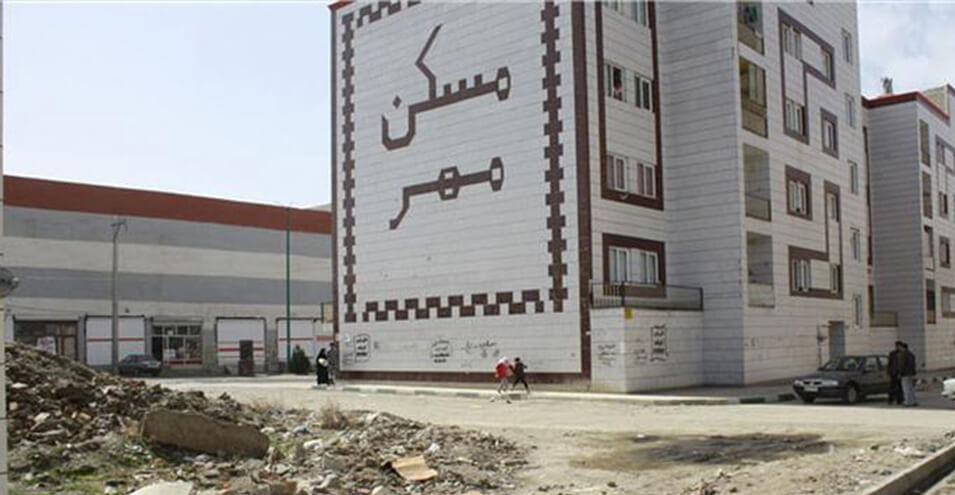
Iran’s Minister of Roads and Urbanization says the poverty imposed on families without housing has social damages and consequences. He reminds that providing housing for low-income groups is a legal obligation and requires the cooperation and coordination of all government bodies and institutions.
Mohammad Eslami, Minister of Roads and Urbanization, says people’s decisive demand is about housing and accelerating housing production. During a ceremony to introduce and bid farewell to deputies of this ministry, he pointed to the gap between supply and demand in the housing sector and said: “Low-income groups without housing spend more than 80 percent of their monthly income on rent.” He described the poverty resulting from this imposed cost as having social harms.
The Minister of Roads and Urbanization added that both the urban planning and construction systems lack effective and efficient control mechanisms: “The legacy of the past, which has imposed many costs resulting from disorder on the people and government, must be changed based on foresight and examination of needs and requirements for achieving balanced and sustainable development in regional, territorial, urban and local planning.”
Mohammad Eslami emphasized that policymaking and providing land in the housing supply and demand market must be in accordance with the law to create balance: “At the same time, there is a legal obligation to provide housing for low-income groups, but this issue requires the cooperation and coordination of other government bodies and institutions.”
The housing situation, particularly in Tehran, has seen unprecedented surges in recent months. According to statistics from the Ministry of Roads and Urbanization, housing transactions show a 53 percent decline while house prices have increased by 91 percent. Housing market stakeholders predict that by the end of year 97, this sector will face serious stagflation.
Two years ago, Abbas Akhundi, the former Minister of Roads and Urbanization, said there were 27 million residential units in the country while the number of households was 24 million people, meaning there were 2.6 million empty houses in the country: “Against this, 19 million of Iran’s urban population live in substandard housing, and these figures show a very inappropriate distribution of resources has occurred.”
Akhundi, who was accused by critics of negligence in regulating the housing market’s supply and demand, resigned on October 19, 2018.
The increase in rent in Tehran following price surges in spring 2018 caused many tenant families to leave Tehran and move to other cities. In autumn 2018, it was announced that the growth in housing prices had extended to southern areas of the city and neighborhoods inhabited by low-income groups. For example, in District 9 of Tehran, including the neighborhoods of Hashemi, Mehrabad and Si-Metri G, rents and purchase prices increased by 111 percent.
Source: DW