Result of Eight Months of Wasted Opportunity: 6 Trillion Rials in Damage to Sistan and Baluchestan Agriculture
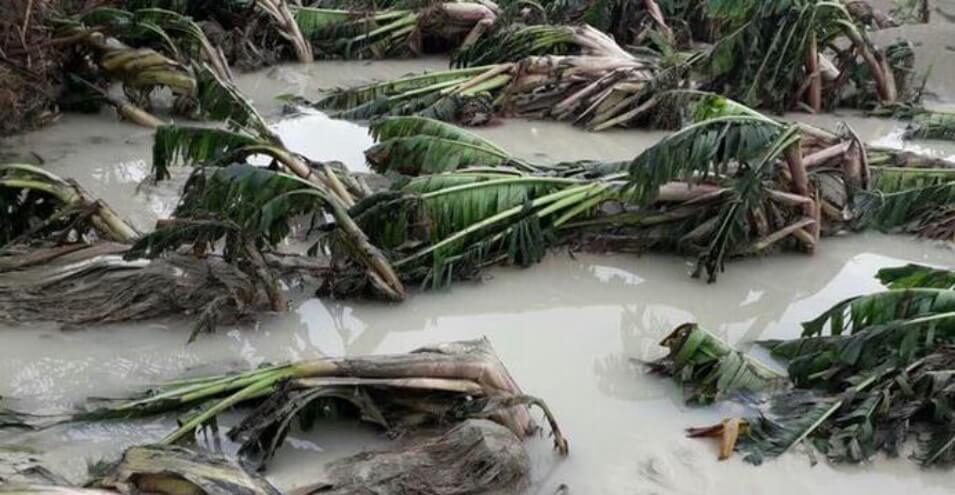
Floods in Sistan and Baluchestan have caused 6 trillion rials in damage to the agricultural sector alone. Officials and experts attribute this to “eight months of wasted opportunity” in dredging and hydraulic restructuring of rivers in Iran’s southeastern agricultural hub.
Total flood damages in Sistan and Baluchestan are estimated at approximately 10 trillion rials, with several parliamentary representatives and officials stating that if there had not been “eight months of wasted opportunity” in dredging and hydraulic restructuring of the province’s rivers, agricultural sector damages would not have reached approximately 6 trillion rials.
Initial estimates from three sectors—agriculture, urban infrastructure, and roads—indicate total damages to these sectors amount to approximately 1,095 billion tomans. Abbasali Esmailzadeh, crisis management headquarters director at the Sistan and Baluchestan governorate, stated that infrastructure and agricultural sectors in the region suffered the most damage.
According to IRNA, Habibollah Dehmareh, Zabol’s representative in parliament, attributed these damages to negligence in river dredging and stated that if appropriate infrastructure had been provided, considering that flooding in Sistan and Baluchestan was foreseeable, we could have prevented the damages.
Warnings about high rainfall volumes in Sistan and Baluchestan began last week. The province’s meteorological organization had predicted rainfall between 50 to 90 millimeters and in some areas exceeding 100 millimeters.
Early this year, Sistan and Baluchestan also experienced flooding, and at that time the provincial crisis management headquarters approved river dredging, but according to Dehmareh, from eight months ago until the recent flood, no dredging measures were undertaken.
Eight months ago, Mohammad Hajjrasouliha, CEO of the National Water Resources Management Company, expressed concern in a meeting of the water, agriculture, and natural resources working group of Sistan and Baluchestan about sand accumulation in various parts of the province following a drought period, stating that the province’s rivers must definitely be dredged.
In the same meeting, hydraulic restructuring of rivers was also raised as another challenge and bottleneck for problems in the province, which according to IRNA, Atak Jafari, CEO of the Sistan and Baluchestan Regional Water Company, considered a priority for water resources management in the province.
“You Cannot Publicize River Dredging”
Despite all these warnings and emphasis on dredging, it remains unclear why responsible organizations did not take action regarding dredging and hydraulic restructuring of rivers to at least reduce damages in the recent flood.
Hidayat Fahmi, former water resources expert at the Ministry of Energy, told some media outlets: “River dredging produces no publicity campaign for officials. This is why this important issue is not properly implemented in the country.”
He simultaneously considered river dredging allocations as “trivial funds” that do not correspond to the scale of rivers in the country.
Heaviest Damage to Agriculture
In the recent flood, rainfall volume at 17 rainfall stations reached 100 to 186 millimeters. This is while the annual rainfall volume during an agricultural year in Sistan and Baluchestan is approximately 100 millimeters. As a result, the agricultural sector of this province was damaged and ready-to-harvest crops were submerged in the flood.
According to Gholomheydar Zouraghi, director of the Sistan and Baluchestan Agricultural Jihad Organization, the recent flood caused 613 billion tomans in damage to the province’s agricultural sector.
Fields, orchards, qanats, access roads to fields, water and earthen facilities, livestock and animal husbandry, traditional canals and irrigation channels, watershed dams, fish farming pools, and aquaculture facilities are among the damaged sectors in agriculture.
Kanarak, Nikshahr, Chabahar, Ghassrqand, Delgan, Mehrestan, Sarbaaz, Bampur, Fanuj, Suran, and Khash districts also suffered the most agricultural damage.
The most damaged crops were related to subtropical and tropical fruit orchards, off-season crop fields, and livestock farming in the province.
332 Billion Tomans: Urban Infrastructure Damage
Initial estimates from the provincial crisis management headquarters indicate flood damage to urban infrastructure of approximately 24 municipalities amounts to approximately 332 billion tomans.
Meanwhile, Ayoub Kurd, director-general of roads and highway transport in Sistan and Baluchestan, reported 150 billion tomans in damage to road bodies and engineering structures of the province’s northern roads.
Following this flood that began Thursday evening, December 19 (January 9) in parts of Sistan and Baluchestan, numerous villages were submerged, and it is reported that from 50 inhabited areas and villages, there is no news. There is no communication with them and the situation of people is dire.
Source: DW