Results of JCPOA Negotiations: Step-by-Step Agreement or Simultaneous Lifting of All Sanctions?
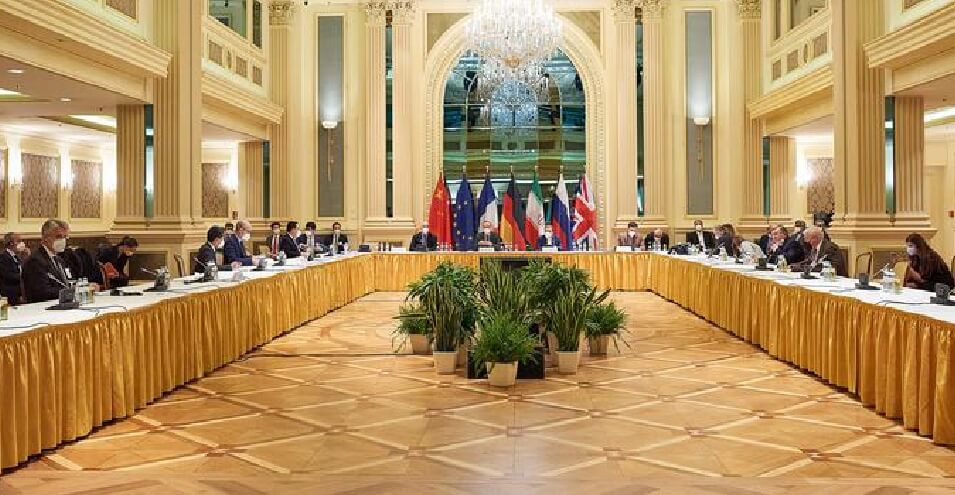
The fourth round of JCPOA negotiations has concluded. It is reported that both sides are returning to their countries for “final consultations.” The specific outcome of these four rounds of talks has not been publicly disclosed. Despite this, there is talk of a step-by-step agreement.
Approximately two weeks have passed since the start of the fourth round of JCPOA Joint Commission negotiations in Vienna. The talks have been conducted at several levels.
On one hand, political representatives of the relevant countries in the 2015 nuclear agreement held a meeting at the level of deputy foreign ministers, and on the other hand, expert meetings from these countries were held in three working groups that were established to facilitate the United States’ return to the nuclear agreement and Iran’s commitment to JCPOA obligations.
Abbas Araghchi, political deputy to Mohammad Javad Zarif, stated that on Wednesday, May 19 (May 29 in the Persian calendar), political representatives of the 4+1 countries and simultaneously representatives of the United States will hold a meeting to reach a conclusion to these four rounds of negotiations.
Afterward, the political delegations of the relevant countries are scheduled to return to their countries to consult with their governments.
Although Araghchi spoke of progress in the negotiations, he referred to “several key issues” that remain unresolved.
According to the statements of Iran’s deputy foreign minister, decision-making on “these several key issues” is contingent upon consultation with the leaders of these countries.
No explanation regarding these several key issues was provided by the Islamic Republic’s political delegation in the Vienna negotiations.
Khamenei and JCPOA Negotiations
Concurrently with the progress of talks in the fourth round of the JCPOA Joint Commission in Vienna, Hassan Rouhani announced on May 29 in a government cabinet session that the results of these negotiations are being pursued under the supervision and approval of Khamenei.
Rouhani spoke of Iran’s success in the JCPOA negotiations and stated that these talks have been under the guidance of the leadership. He said: “We proceeded step by step in service to the Leader, and the heads of branches were with us and they assisted us at various stages, both in writing and verbally.”
Iran’s president emphasized that these instructions have been executed “phase by phase” and that “it has always been the case that the leadership has guided and assisted.”
Step-by-Step Agreement or Simultaneous Lifting of All Sanctions
Sergey Ryabkov, deputy foreign minister of Russia, spoke of Iran and the United States’ step-by-step actions regarding the revival of the nuclear agreement.
Ryabkov emphasized: “From our perspective, the United States’ return to the nuclear agreement is a key issue that must be resolved. On the other hand, the Vienna negotiations cover all issues related to Iran’s return to the commitments envisioned in the nuclear agreement. We insist on the simultaneity and alignment of these steps, although we understand that Iran believes the United States should immediately lift all sanctions.”
The political deputy of Russia’s foreign minister also announced that during a meeting on Thursday, May 20, between the foreign ministers of Russia and the United States in Reykjavik, the capital of Iceland, the issue of Iran’s nuclear agreement will also be discussed.
This is the first meeting between Sergey Lavrov and Antony Blinken since the beginning of the Biden administration. The two had, of course, previously had telephone contact with each other.
Divisions Among Political Factions in Iran
A step-by-step agreement with the United States on returning to the JCPOA is among the issues that some factions in Iran oppose. Araghchi and also Said Khatibzadeh, Iran’s foreign ministry spokesperson, have repeatedly spoken of lifting all sanctions.
The “Entekhaab” website reported on Wednesday, May 29, on the statements of Mahmoud Nabavian, representative of Tehran in the Iranian Parliament.
Nabavian is among those who believe all sanctions should be lifted and therefore does not consider negotiation with the United States necessary. He said: “Verification in the short term is not feasible, and the United States must completely and simultaneously lift all of Iran’s sanctions.”
He said: “It is not the case that Americans will lift one of our sanctions today and a few months later, if they were willing, lift another.”
Tehran’s representative in the Iranian Parliament spoke of 1,600 sanctions. He says the Americans speak of 1,500 sanctions. Nabavian emphasized that Parliament expects the negotiating team to tell the Americans that “the number of sanctions is 1,600.”
It should be noted that the United States does not consider part of the sanctions, which relate to Iran’s missile activities, support for terrorism, or human rights violations in the country, as part of the sanctions imposed by the Trump administration related to the JCPOA.
In another part of his remarks, Nabavian criticized the performance of Zarif and Rouhani and said: “You brought this hell and economic disaster upon the people with your wrong policies…Unfortunately, the weakness of the government’s performance and the blows that Rouhani and Zarif dealt to the country caused everything in this nation to be destroyed and it will take 50 years for the country’s situation to return to normal.”
On the other hand, Iran’s student news agency “ISNA” has confirmed news of a meeting between Majid Takht Ravanchi, ambassador of the Islamic Republic to the United Nations, and Chris Murphy, an American Democratic senator.
Shahrokh Nazemi, press adviser of Iran’s representation at the United Nations, said that this meeting took place virtually.
It is reported that issues such as nuclear negotiations in Vienna and the issue of prisoner exchange were discussed in this conversation.
Source: DW