Compulsory Military Service; A Report on the Reasons for the Increase in Suicide Rates Among Soldiers in Recent Years
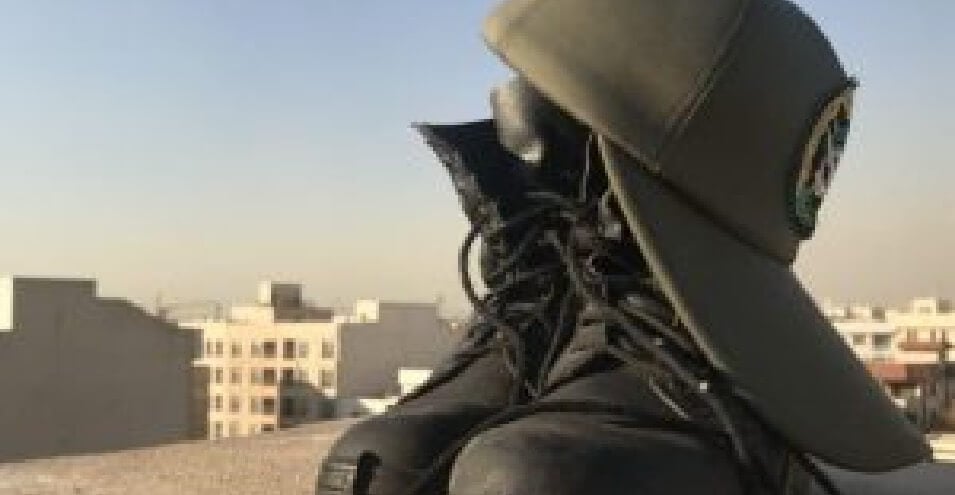
The compulsory nature of military service in Iran has led to an increase in suicide rates among conscripts in recent years and the emergence of other behavioral harms in them; while the Armed Forces Headquarters has no system to record suicide statistics among deployed soldiers. According to experts, the physical and psychological conditions of conscripts before their deployment are not evaluated as they should be, and soldiers on active duty are not properly monitored psychologically by counselors present in armed forces centers—matters that are explicitly mandated in law. According to experts, these laws are not being observed under the pretext of “shortage of soldiers in the country.” On the other hand, conscripts who refuse to serve are deprived of the most basic civic rights.
According to HRANA news agency, citing Iran Watch, based on statistics, out of every six soldiers, one person has seriously considered suicide, and about five percent of conscripts fall into addiction.
Vahid Ashtari, a social activist who specifically works in the field of opposing compulsory military service, says in this regard: In Iran, approximately 700,000 people are conscripted annually, of which about 350,000 soldiers evade military service; meaning about 50 percent of these conscripts consciously decide to accept all the limitations in their lives and in return not to serve.
Ashtari, referring to how these restrictions work, stated: They cannot sign any documents in their names, they cannot buy houses and cars or travel abroad; they are willing to be formally deprived of the most basic civic rights and they value all these things more than going to military service. The other half of the conscript population who are sent to service fall victim to suicide, addiction and depression. Many of them also suffer from subsequent problems including unemployment and falling behind in the course of life, which is not recorded anywhere.
Referring to the fact that the harms of military service become more radical in each period, he continued: Following the developments of the 1990s in the country, which was influenced by the political and economic atmosphere, news of addiction and depression in military service was revealed, but a few years later the harms entered the phase of suicide. In all scattered research efforts, one can see the growth of suicide in military service. Just as we have heard more about it in the past decade.
This social activist, referring to the suicide that led to the death of Saman Dashtaki, a NAJA soldier in Tehran, who committed this act in early this month, noted: “The story of Saman Dashtaki’s behavior and the details of what happened are completely in line with confirming this more radical shift in the method of protest, so it is better to wait until the complete account of the general headquarters is mentioned.”n
He said: “The noteworthy point is that the atmosphere of military service and the behavior of soldiers is becoming more radical every day; especially the demands made in the field of military service in cyberspace and the reception that took place, which shows the volume of these demands. Young people want officials to hear their voice and make changes in these conditions. I receive thousands of messages daily regarding the #TellAboutMilitaryService campaign, and from morning to night I am chatting and discussing with these young people.
MohammadReza Akbarhalvaei, former deputy of conscripts and exemption affairs in the General Compulsory Service Organization and one of the opponents of compulsory military service who has recently launched a legal counseling office in this field, in criticizing the compulsory nature of “military service” stated: The long distance, difficult commuting, the difficulty of the service itself and the behaviors that are common during military service easily put these young people under pressure. Soldiers who think that after these years of service nothing awaits them. They have lost two years and have no prospects for employment, income, life and future ahead of them.
Akbarhalvaei continued: The nature of military service itself, which is compulsory, contributes to these difficult circumstances. The Ministry of Health of the country has announced that 30 percent of Iranians are struggling with mental problems and disorders, and our young soldiers are also part of these people. All these conditions cause some of these young people to commit suicide. The news we have heard in recent months has not received any reaction from officials.
Halvaei, referring to the non-observance of some laws in the field of conscript deployment, stated: The process of conscript deployment and assignment faces problems. The law explicitly states that the physical and psychological condition of conscripts must be evaluated before deployment. But since the country has lacked soldiers in recent years, these assessments are not conducted with strict rigor. On the other hand, the law again explicitly states that soldiers must be psychologically monitored during service by counselors present in armed forces centers. These centers must monitor the psychological condition of young people and be in contact with their families. This is also in an environment whose nature exacerbates violent behavior.
The former deputy of conscripts and exemption affairs in the General Compulsory Service Organization noted: Unfortunately, these reports are heard but it seems they are not important. While the Armed Forces Headquarters should be sensitive to these incidents, maintain an unofficial system and record statistics of these incidents in it so that a program to counter it can be designed.
MohammadReza Akbarhalvaei, while stating that officials are not very sensitive to these reports, continued: If you remember, after the Niriz bus accident in which soldiers were killed, a number of soldiers attacked the commanders of Abyek barracks. After that, a policy was implemented to minimize contact between commanders and soldiers. From my perspective, after that day attacks and assaults on commanders decreased, and soldier suicides took their place.
Military service in the Islamic Republic of Iran has become a double burden for many families, especially low-income groups. Every person whose gender was designated as male at birth must be forcibly sent to military service upon reaching the age of 18. Under unjust circumstances, military service is sold to conscripts under special conditions, and the higher the level of education, the higher the cost of purchasing service. This has resulted in a segment of society facing financial problems, poverty and unemployment being unable to afford to purchase military service.
Source: HRANA