Reza Pahlavi on Third Anniversary of October 7: Free Iran Will Be Friend and Partner of Israel
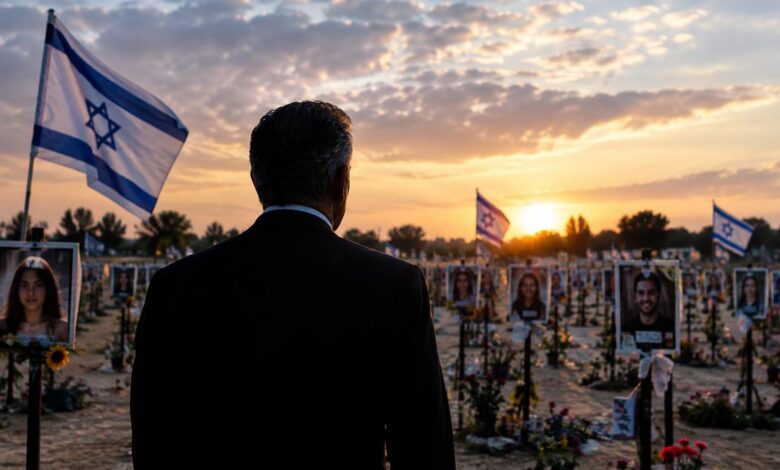
Coinciding with the third anniversary of the deadly October 7, 2023 attack, Reza Pahlavi issued a message addressed to the people of Israel, expressing solidarity with the victims, their families, and the survivors. He called the Islamic Republic the supporter and weapons supplier of Hamas, emphasizing that in a free Iran, those responsible for these crimes will be held accountable, and lasting peace and stability between the two nations will only be possible after the fall of the Islamic Republic.
The third anniversary of the October 7, 2023 attack is being commemorated in Israel as the memory of the attack’s victims remains at the center of Israeli society’s attention. In this attack, carried out by Hamas and associated armed groups, approximately 1,200 people were killed and 251 taken hostage. Three years later, families of the victims continue to demand accountability for the events of that day, while survivors speak of the psychological and social impacts of the attack.
In such circumstances, Reza Pahlavi, a political activist opposed to the Islamic Republic, issued a message addressed to the people of Israel expressing his condolences and emphasizing that Iranians will not forget the victims of this attack.
In his message, he wrote:
“To the people of Israel: On the third anniversary of October 7, I stand with you in sorrow, remembrance, and solidarity. We will never forget those who were killed, nor the suffering of their families and survivors.”
The message was released at a time when the third anniversary of the October 7 attack has once again brought discussions about the role of regional actors, the Islamic Republic’s support for armed groups, and the future of Iran-Israel relations to the center of Middle Eastern political discourse.
Continuing his message, Reza Pahlavi directly linked the Islamic Republic to support for Hamas, writing: “The Islamic Republic that armed and supported Hamas is the same regime that has kept Iranians in bondage. When Iran is free, we will hold all those responsible for these crimes accountable. Both our peoples deserve freedom and security.”
This section of Pahlavi’s remarks comes at a time when the Islamic Republic’s support for Hamas is a documented matter in reports by the U.S. government and studies related to the Iran-Israel conflict. The U.S. State Department’s 2023 report on terrorism stated that Hamas received budget, weapons, and training from Iran. Reports published after the October 7 attack have also documented Iran’s long-term financial and military support for Hamas.
However, there is an important distinction between the Islamic Republic’s support for Hamas and a direct order from Tehran to carry out the October 7 attack. Reports published after the attack have shown that U.S. and Israeli intelligence officials at the time did not provide definitive evidence of a direct Iranian order to carry out the attack.
In another section of his message, Reza Pahlavi linked the issue of accountability to Iran’s political future, a future he described as “a free Iran.”
He wrote on this matter: “The bond between Iranians and Jews dates back 2,500 years to the time of Cyrus the Great. A free Iran will be a friend and partner of Israel. Lasting peace and stability for both peoples will only be achieved with the fall of the Islamic Republic.”
This section of the message represents one of Pahlavi’s most explicit recent positions regarding the future of Tehran-Jerusalem relations, emphasizing a redefinition of Iran-Israel relations following the Islamic Republic.
He essentially presents a completely different picture of relations between the two countries during the Islamic Republic: on one hand, he views the Islamic Republic as the source of enmity and instability, and on the other, he portrays Iran’s future as that of a country friendly to and partnering with Israel.
This position is in line with views Pahlavi has expressed in recent months regarding Iran’s future. In a detailed interview with Reuters in July 2026, he presented himself as an advocate for Iran’s transition to a secular democratic system and said his goal is to facilitate such a transition, not necessarily to assume an official position in Iran’s future.
In Israel, the third anniversary of October 7 was marked by commemorative ceremonies held at sites that witnessed the Hamas attack three years ago. In settlements near the Gaza border and at the venue of the Nova music festival, families of victims and survivors gathered to honor those killed.
Reuters reported that the attack resulted in approximately 1,200 deaths and 251 hostages and led to a prolonged war in Gaza, which according to Gaza health authorities’ figures, has resulted in more than 74,000 Palestinian deaths.
Therefore, the anniversary of October 7 is not merely a reminder of a terrorist attack for Israeli society; this date has become the starting point of one of the Middle East’s greatest humanitarian and political crises of recent decades.
Concurrent with commemorating Israeli victims, Palestinians in Gaza are spending the third year of war amid widespread destruction and displacement. International reports emphasize that the consequences of October 7 and the ensuing war have changed the lives of millions in the region.
Reza Pahlavi’s message can also be examined within the framework of his explicit opposition to the Islamic Republic’s regional policy. The Islamic Republic has supported armed groups such as Hamas, Lebanon’s Hezbollah, and other armed groups in the region over past decades. Officials of the Islamic Republic have repeatedly spoken of the “axis of resistance” and support for Palestinian groups.
In contrast, Pahlavi in this message has attempted to make a clear distinction between the Iranian people and the Islamic Republic’s foreign policy; he has spoken of the historical relationship between Iranians and Jews and portrayed Iran’s future as one of friendly relations with Israel.
This section of the message is also a political response to the image that the Islamic Republic has presented of Israel as an “enemy” over four decades.
By referring to Cyrus the Great, Pahlavi traces the roots of the relationship between Iranians and Jews back more than two thousand years, a historical reference intended to emphasize the view that the hostility between the Islamic Republic and Israel does not necessarily represent the historical relationship between Iranians and Jews.
On the third anniversary of October 7, Israeli society continues to live with the wounds of that day. Survivors, families of victims, and those who lost their homes still debate what happened and the responsibility of Israel’s political and security officials. Meanwhile, Palestinians are also facing the consequences of the war that began after that attack.
Under these circumstances, Reza Pahlavi’s message presents a clear political position: he distinguishes between the Iranian people and the Islamic Republic’s government and portrays a future in which Iran and Israel, instead of enmity, would have a relationship based on cooperation and mutual security.
In his message, he has emphasized: “A free Iran will be a friend and partner of Israel,” and finally, he has directly linked the future of peace and stability for both nations to a change in Iran’s political system, adding: “Lasting peace and stability for both peoples will only be achieved with the fall of the Islamic Republic.”
Reza Pahlavi’s message on the third anniversary of October 7 is both a message of condolence to Israelis and a political statement about Iran’s future; a future in which he views the Islamic Republic as responsible for part of the region’s tensions and promises that Iran after the Islamic Republic will have a different relationship with Israel and the Jewish world.
At a time when the Middle East has not yet moved past the consequences of the October 7 attack and the war that followed, this position once again raises a fundamental question before public opinion: Can a clear line be drawn between the Iranian people and the Islamic Republic’s regional policy, and can a different future be imagined for Iran’s relations with Israel and other countries in the region?
Reza Pahlavi’s message provides a clear answer to this question: from his perspective, such a future will only be possible in a free Iran and after the end of the Islamic Republic.