Robert Malley: Iran Can Choose Between Reviving JCPOA or Dependence on Russia
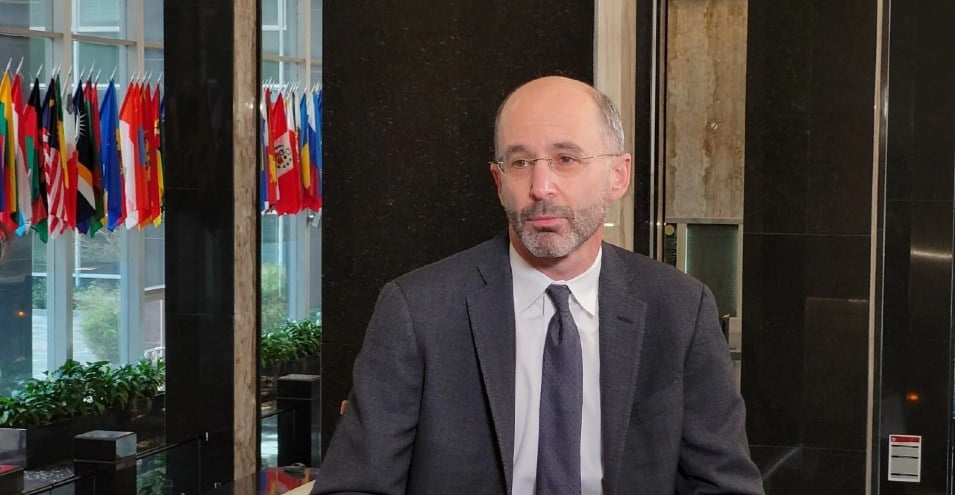
Robert Malley, the U.S. Special Envoy for Iran, in an interview with CNN, in response to a question about the results of Vladimir Putin’s trip to Tehran, stated that this visit puts Iran in front of the option of relative dependence on Russia or returning to the JCPOA.
Robert Malley emphasized that Russia is currently facing international isolation and can offer very limited economic opportunities for cooperation (with Iran) that will not be long-lasting.
He added that Iran also has another option ahead of it, which is returning to the (nuclear agreement) JCPOA, which has been negotiated over the past year and a half, and could have normal economic relations (like everyone else) with neighbors, Europe, and the rest of the world.
The U.S. Special Envoy for Iran further emphasized that if Iran does not return to the (JCPOA) agreement, it will face greater (global) isolation. The sale of armed drones to Russia is another option that (Iran) will pay the price for.
Robert Malley, regarding U.S. concerns about a possible deal for the sale of Iranian drones to Russia, said that whatever increases Russia’s capacity to destroy Ukraine is a cause for concern.
This U.S. official stressed that the sale of such drones by Iran to Russia contradicts Tehran’s claimed position of neutrality in the Ukraine war.
Robert Malley added that if Iran gives armed drones to Russia, the United States also has tools at its disposal to punish and sanction.
Vladimir Putin arrived in Tehran on Tuesday and met with Ayatollah Ali Khamenei, the Leader of the Islamic Republic of Iran. This is the first trip by the Kremlin leader outside the countries that were members of the former Soviet Union since Moscow’s attack on Ukraine on February 24.
U.S. officials said last week that Russia has asked Iran to deliver “hundreds of unmanned aircraft” capable of carrying weapons to the country for use in its military offensive against Ukraine. However, Iran’s Foreign Minister denied this.
The Window for Reviving the JCPOA is Closing Rapidly
Robert Malley has also warned that the window for reviving the nuclear agreement known as the JCPOA is closing rapidly.
The U.S. Special Envoy for Iran further emphasized that the Islamic Republic of Iran says it wants to return to negotiations, but in reality this opportunity is slipping away every day and such an option will not be available forever.
Robert Malley, in response to a question about how far Iran is from achieving a nuclear bomb, said that Iran is now only a few weeks away from obtaining the necessary materials to make a bomb. Of course, this is different from producing a bomb because it requires militarizing such materials.
In the same context, on Monday, John Kirby said that if Iran does not accept a return to the JCPOA, as President Biden clearly and explicitly stated, pressure on Iran will increase through cooperation with allies and partners in the region and Europe, and at the same time we will ensure that we have sufficient military capacity to defend allies in the region and protect national security interests.
Negotiations to revive the JCPOA resumed on December 29 of last year, after a pause of several months, following the administration of Ibrahim Raisi coming to power.
Ali Bagheri Kani, Iran’s senior negotiator in this new round of talks, participated in negotiations that continued in Vienna with the participation of JCPOA member states and the indirect presence of the United States. In this regard, it was said that the draft agreement for reviving the JCPOA was almost complete.
Following the publication of reports about the preparation of this draft, U.S. officials said that Iran wanted to remove the Islamic Revolutionary Guard Corps from the list of terrorist groups. On the other hand, in early April of this year, a source familiar with the JCPOA revival negotiations in Vienna told Radio Farda that the Islamic Republic’s commitment to stop pursuing operational cases in the death of Qasem Soleimani is one of the main conditions for removing the IRGC from the U.S. government’s terrorist list.
After the suspension of JCPOA revival negotiations in Vienna last March, Iran and the United States have blamed each other for the suspension of these talks.
Iran and the United States held indirect negotiations on July 8 of this year, mediated by the European Union’s Foreign Policy Chief in Doha, Qatar, but these negotiations also yielded no results.
Source: Radio Farda