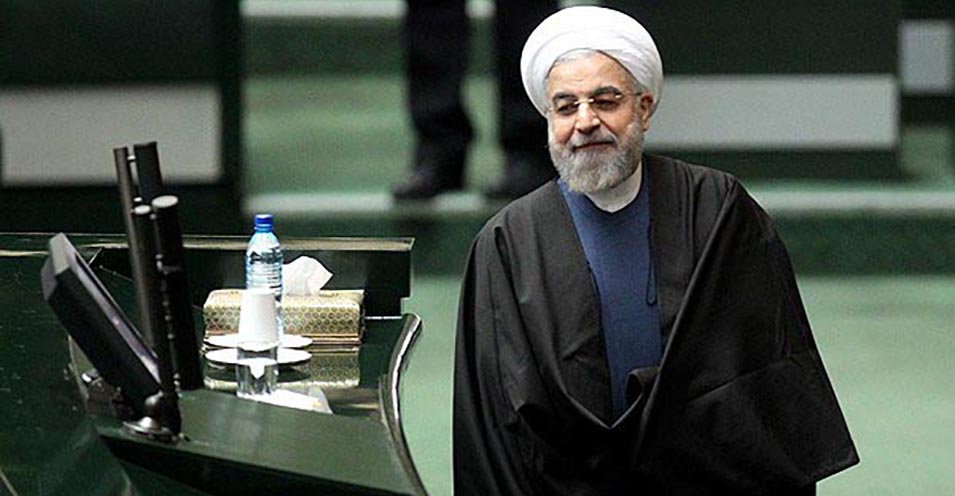
Hassan Rouhani, Iran’s president, has expressed hope that with the incoming parliament in the country, which will have “greater coordination with the other two branches of government,” his administration will be able to fulfill more of its promises.
Rouhani said on Sunday, May 1st, at an International Workers’ Day ceremony in Tehran: “We are pleased that our future Islamic Consultative Assembly, the parliament that will begin work in June, God willing, with divine strength and greater coordination with the other two branches, will operate.”
The second round of Iran’s parliamentary elections to determine the fate of the remaining 68 parliament seats was held on Friday, and the coalition of reformists and moderates close to Rouhani’s government succeeded in obtaining a relative majority of parliament seats overall, but fell short of achieving an absolute majority (half plus one) of the seats.
Read more here about the composition of the future parliament.
In his remarks today, Rouhani, while thanking voters who “chose the best,” expressed hope that with the cooperation of this parliament, he will be able to fulfill the promises he made to voters during the 2013 presidential election.
Defending the JCPOA
Rouhani also defended the comprehensive nuclear agreement with world powers once again and, addressing critics, said: “Why are you making the work of a great nation appear small? This work is not the work of government, it is the work of a great, powerful and resilient nation.”
Referring to some criticisms of the JCPOA, particularly from those he called “pessimists and doubters,” he said: “In the shadow of the JCPOA, today your hands are open for money transfers. They say it is nothing.”
Iran’s president continued: “In the shadow of the JCPOA, instead of large ships docking at the shores of neighboring countries and cargo reaching Iran’s shores by boat and barge, with each container costing an extra 700 dollars from people’s pockets, ships now dock directly at Iran’s shores, yet they still say it is nothing.”
Some government critics have criticized the slow pace of implementing the nuclear agreement, particularly the reluctance of Western banks to conduct transactions with Iran, and have accused Rouhani’s government of excessive optimism toward Western powers.
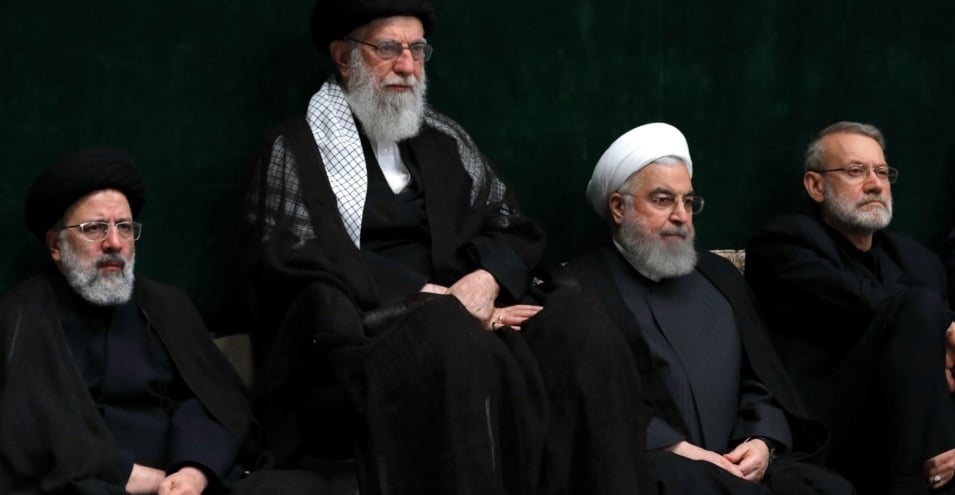
The scope of such criticisms of the JCPOA increased after Ayatollah Ali Khamenei, the Supreme Leader of the Islamic Republic of Iran, criticized the “lack of tangible practical results from the negotiations and agreement” in several speeches and said: “Interactions with Westerners have had no positive effects so far.”
These criticisms have also been expressed by some Iranian military officials.
Rouhani had responded to such criticisms in late March, saying: “Reconstruction and renovation after devastation takes time. Only three months have passed since the implementation of the JCPOA, but some think 30 years have passed. In these three months, see what tremendous breakthroughs have been created.”