Russia, America or Iran’s Hardliners Holding JCPOA ‘Hostage’?
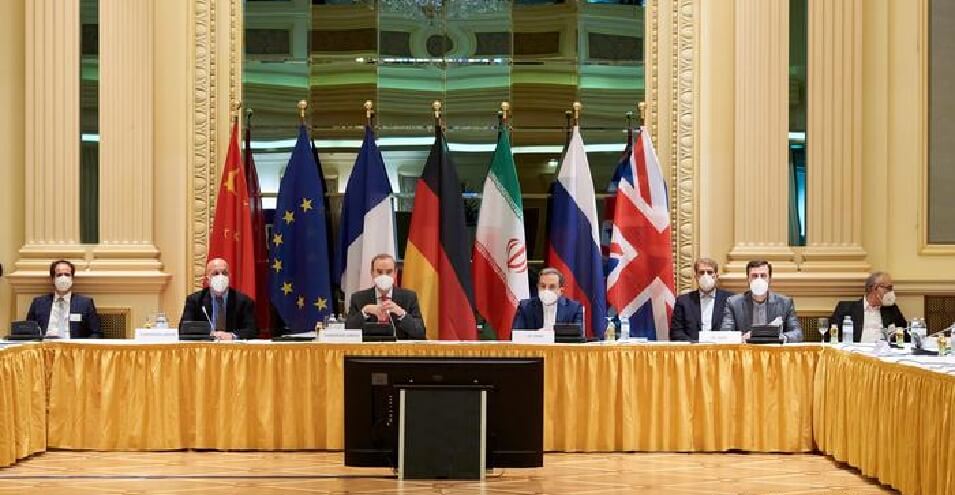
A group of American Republicans called for halting JCPOA negotiations. Russia has made the agreement conditional on the issue of sanctions against itself. Europeans say the agreement can be reached without Russia, but a faction in Iran is presenting America as an obstacle.
A group of Republican senators from the United States on Wednesday, March 18 (March 10), asked Joe Biden to abandon negotiations with Iran over a nuclear agreement, emphasizing that concluding this agreement would mean giving a “major concession” to Vladimir Putin, the President of Russia, amid the military aggression against Ukraine.
Senator Ted Cruz from Texas told media outlets at a press conference in this regard that if this agreement is announced at this time, it would be a “major victory for Vladimir Putin.” According to him, Putin would gain billions of dollars from oil and gas deals, nuclear agreements, and arms transactions.
Senator Jim Risch from Idaho described Iran and Russia as “two of America’s worst enemies” on earth and called for the country’s withdrawal from an agreement “that Russia and Iran are negotiating.”
Republicans have opposed this agreement since the implementation of the Joint Comprehensive Plan of Action (JCPOA) in 2015 during Barack Obama’s presidency. Now, given the Ukraine war, both Democrats and Republicans have expressed concerns about returning to the JCPOA. Senator Bob Menendez, in a hearing of the Senate Foreign Relations Committee on Tuesday, March 17, said he is also concerned that Russia would financially benefit from a new agreement.
However, Victoria Nuland, U.S. Deputy Secretary of State for Political Affairs, emphasized before the committee that no more time can be wasted and said: “The last thing we need alongside Putin’s bloody war is an Iran armed with nuclear weapons.” She added that failure to reach an agreement with Iran could mean that this country “would obtain nuclear weapons within weeks or months.”
European officials immediately rejected Moscow’s requests
In the recent days when it seemed that nuclear negotiations in Vienna could reach a conclusion and Iran’s Atomic Energy Organization and the International Atomic Energy Agency announced that they had agreed on a joint statement to resolve remaining issues, Russia entered with a new condition.
Sergey Lavrov, Russia’s Foreign Minister, on Saturday, March 14, demanded “written guarantees” from the United States so that sanctions against Russia over Ukraine would in no way negatively affect Moscow’s relations with Tehran within the framework of the agreement called JCPOA. A written guarantee stating that U.S. sanctions would in no way harm Russia’s “right” to “free and complete trade, economic cooperation, investment, and military-technical cooperation” with Iran.
According to the Wall Street Journal, Mikhail Ulyanov, Russia’s senior negotiator, presented an updated version of Russia’s broader requests to the European Union as well. However, a senior Western official said that this request was “immediately” rejected by the Europeans, and they said that these requests “have nothing to do with the JCPOA.” A similar response to the reaction of Antony Blinken, U.S. Secretary of State, who called his Russian counterpart’s conditions “irrelevant.” He explicitly stated that the issue of sanctions against Russia and the JCPOA are “separate matters” and “there is no connection between them.”
Agreement is possible even without Russia
The Wall Street Journal, citing Western officials, wrote that an agreement is possible even without Russia, although the work would be more difficult and time-consuming. They said “finding creative solutions may be possible, but would require reopening the JCPOA box, something no one wants to do and which takes time.”
Iran, however, has not taken a clear position. In initial reactions, Hossein Amir-Abdollahian, Iran’s Foreign Minister, said: “While standing firm in preserving and respecting red lines, we will not allow any external factor to influence national interests in Vienna negotiations.” Said Khatibzadeh, spokesman for Iran’s Foreign Ministry, while calling Russia’s role in Vienna negotiations “constructive,” emphasized: “Iran will make decisions based on the behavior of the United States, not based on unclear messages.”
Launching a satellite with two messages
Iran simultaneously, on Tuesday, March 16, launched its second satellite named Noor-2 into orbit and said this was a satellite for “sensing and reconnaissance.” An action that faced a U.S. reaction. Both America and Europe view Iran’s missile program as a threat.
Today, Noor News, affiliated with the Supreme National Security Council of the Islamic Republic, referred to this satellite as Iran’s “second military satellite” and wrote that this action carries two messages: “Iran is not willing to negotiate in any way regarding its defensive and space capabilities and regional policies. Second; emphasizing the fact that any possible negotiation and agreement cannot be a limiting factor in pursuing Iran’s defense, missile, and space programs.”
Noor News considered this to have “this important message for some political factions inside as well,” that they should “know that past approaches fundamentally put the country on the wrong path due to a misunderstanding of international system equations.”
This news agency also states that the slowdown in Vienna negotiations is “due to U.S. hesitation in making political decisions regarding remaining issues that fall within Iran’s red lines” and “Western officials and media constantly falsely introduce Iran as an obstacle to reaching an agreement. Russia’s request has also become a new pretext for U.S. excuses.”
The fate of the JCPOA is now caught between Iran’s “red lines,” including obtaining guarantees from America that it will not withdraw from the JCPOA again and removing all sanctions, Moscow’s conditions, and the maneuvers of Iran’s hardline factions. A situation that Noor News says some consider “Moscow’s hostage-taking and an obstacle to reaching an agreement in Vienna” and “others interpret it as evidence of Russia’s seriousness in Vienna negotiations and a guarantee for Iran to benefit from a possible agreement.”
Source: DW