Russian Ambassador in Tehran Urges Iranians Not to ‘Listen to Radio Farda’
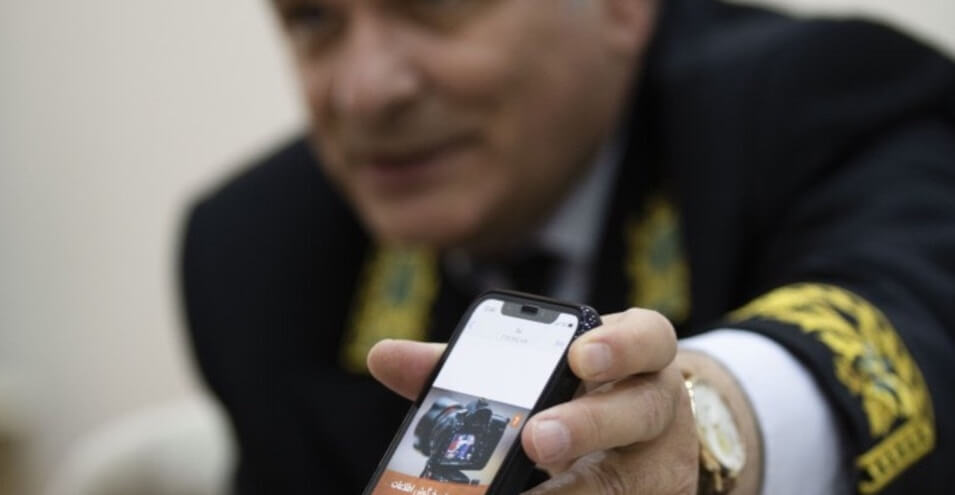
Russia’s ambassador to Iran, in response to reports about Russia’s demand for guarantees regarding the nuclear deal, has said: “We ask the Iranian people not to listen to statements from foreign radios like Radio Farda”.
Lovaan Jagaryan on Monday, March 7, in an interview with Tasnim news agency, which is close to the Islamic Revolutionary Guard Corps, without providing details about the specifics of Russia’s demand, said that “there has been a misunderstanding and we will provide the necessary clarifications through diplomatic channels to the Iranian side”.
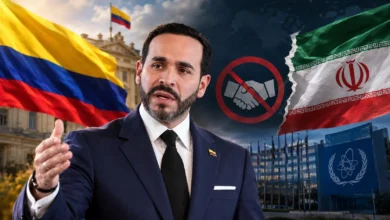
Sergey Lavrov, Russia’s foreign minister, on March 5 said that America must provide written guarantees that the new sanctions imposed against Moscow due to its aggression against Ukraine will not negatively affect Iran-Russia trade relations after the revival of the nuclear deal.
France called this demand “extortion” in the nuclear deal negotiations, and the United States also said that Russia’s request is “irrelevant”.
The Jomhouri-ye Eslami newspaper, Tehran edition, reported today that Russia’s demand “could actually prevent the Vienna nuclear deal negotiations from reaching a conclusion” and described it as “holding the nuclear deal hostage by Russia”.
In addition to attacks by Russia’s ambassador in Iran on Radio Farda, in recent days the Russian government has also intensified its pressure against Radio Free Europe, of which Radio Farda is considered a part, and has blocked access for users inside Russia to Russian-language news services of Radio Free Europe.
According to Radio Free Europe managers, following pressure from Russia’s tax administration and increased police harassment of journalists, the media outlet has suspended its operations in Russia.
Russia’s ambassador’s criticism of Radio Farda is not unprecedented. Last June, Lovaan Jagaryan, in response to the publication of several analytical notes on Radio Farda, accused the media of “trying to damage the friendly relations between Iran and Russia”.
In an interview published on June 17 of last year in the “Etemad” newspaper, Tehran edition, while showing an image of the note published on Radio Farda on his mobile phone screen, he criticized the publication of these articles.
In that collection of notes that angered the Russian ambassador, Reza Alijani, a political activist and analyst of Iran’s issues, examined the topic of Russian influence in the Intelligence Organization of the Islamic Revolutionary Guard Corps in four sections.
Also, recently the publication of news about Russia’s ambassador in Tehran paying respects at the monument to Alexander Griboyedov, the author of the Treaty of Turkmenchay, in Persian-language media outside the country, including Radio Farda, provoked the anger of the Russian embassy in Tehran, which called this reporting “provocative”.
In this regard, the Russian embassy in Tehran on February 13 considered the publication of news related to this event in Persian-language media outside the country as “provocative” and aimed at “weakening the friendly and cordial relations” between Russia and Iran.
Griboyedov, who during the Iran-Russia war in 1826-1828 became a kind of one of the Russian military commanders in the Caucasus, had prepared the Treaty of Turkmenchay, which due to the fact that this treaty resulted in the loss of large parts of Iranian territory, there have always been serious negative sensitivities about his name in Iranian public opinion.
Alexander Griboyedov was killed about 200 years ago, on February 11, 1829 (Persian calendar: 12 Esfand 1206), during an attack by protesters on the Russian embassy in Tehran.
In recent days, in addition to Russia’s military aggression against Ukraine, which was met with widespread opposition on social media, gatherings in front of the Ukrainian embassy in Tehran, and chants of “Death to Putin and Putin’s supporters,” Russia’s approach to the nuclear deal negotiations has also faced harsh criticism.
Mikhail Ulyanov, Russia’s senior representative in the Vienna nuclear deal revival negotiations, in an interview published on March 6 on Iran’s state news agency IRNA, said: “When I see many assessments in Iran’s main media outlets and on social networks based on the idea that Russia is against Iran, Russia is Iran’s enemy and opposes the nuclear agreement, I become upset”.
Source: Radio Farda