Sale of Counterfeit Rice Under Iranian Rice Name at Shahr-e Vand Store
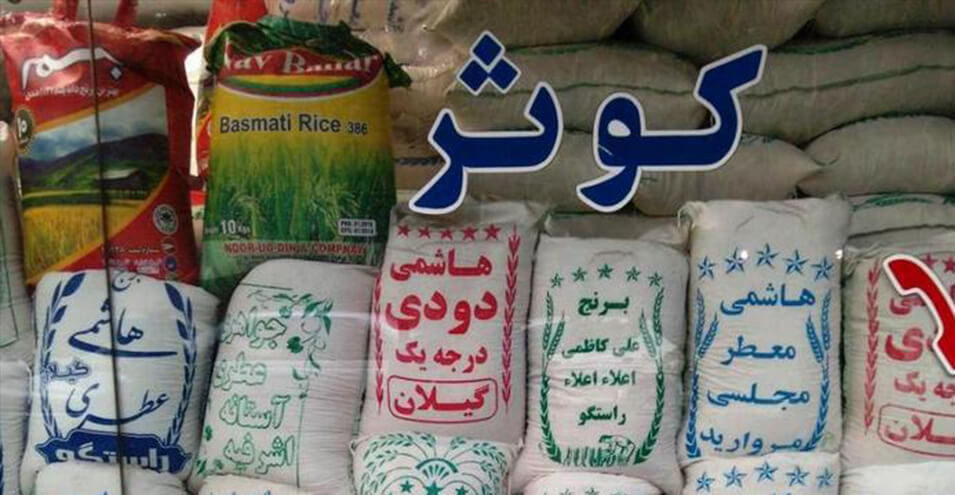
The CEO of the chain store Shahr-e Vand was summoned to court for offering and selling dozens of tons of mixed and low-quality rice under the name of premium Hashemi Iranian rice. The rice, 70 percent of which was Pakistani, was being sold at 28,500 tomans per kilogram.
The supply of low-quality and mixed rice under the name of first-grade Iranian rice at Shahr-e Vand stores resulted in the summons of the company’s CEO and the opening of a legal case in this regard. Masoud Sarieyeghlam, CEO of Shahr-e Vand company, acknowledged in a press conference the sale of substandard rice under the name of premium Iranian rice. In clarification, he stated: “In the first batch, rice was purchased from a rice supplier who has been one of Shahr-e Vand’s suppliers for 11 years. After sampling, it was determined that there was no problem with the rice quality. However, in the second batch, according to sampling conducted by the quality control department, it became clear that the rice lacked purity and required quality.”
Sarieyeghlam added that after the rice’s poor quality was identified, on April 18, he ordered their collection and storage to be returned to the supplier. This was while on April 20, the Taz’hir enforcement patrol encountered these rice batches at Shahr-e Vand branches and issued an order to sell each 10-kilogram bag at 10,000 tomans per kilogram.
According to Shahr-e Vand’s CEO, 200 tons of the aforementioned rice had been purchased from the supplier, of which approximately 115 tons were sold at 10,000 tomans per kilogram, and the remainder was sealed in a location outside Shahr-e Vand warehouses pending legal decision.
Sarieyeghlam, in justifying the continued supply of rice despite the identification of fraud, said there was not enough time to remove 100 tons of existing rice from the market: “Simultaneously with the presence of Taz’hir patrols at one of Shahr-e Vand’s stores, our colleagues in the inspection and security department, as well as the commodity quality team at the rice supplier factory in Fریدونکنار, appeared on site and prevented the supply of 30 tons of rice being packaged at the factory. According to the prosecutor’s order of the province, these rice batches were also deposited at the factory pending the outcome of the case.”
Rice Imports at 4,200 Tomans Exchange Rate
Hossein Izadi, head of Tehran’s joint Taz’hir enforcement patrols, stated: “The expertise conducted on this rice showed that 70 percent of this rice is Pakistani and 30 percent is Iranian.” Izadi deemed Shahr-e Vand’s violation in supplying counterfeit goods as definitive.
Nour Mohammad Torbati Nejad, spokesperson for the parliamentary Agriculture Commission, said on April 9 that prices exceeding 20,000 tomans per kilogram of rice represent dealers’ exploitation of the market’s psychological atmosphere: “Each kilogram of imported rice from Pakistan or India should be sold at approximately 7,000 tomans, and the price of domestic varieties depending on their quality grade should be set between 10,000 to 15,000 tomans.”
Abdollah Haqiqat, vice chairman of the Food Merchants Union, stated that the Hashemi label has been placed on all rice, but investigations show that nearly 80 percent of this rice is Pakistani and only 20 percent is Iranian.
Broken and low-quality rice was being sold at Shahr-e Vand at 28,500 tomans per kilogram while Iranian rice was 12,000 tomans per kilogram six months ago. The director general of the Supply Planning, Distribution and Market Regulation Office at the Ministry of Industry, Mine and Trade stated that rice imports at the 4,200-toman exchange rate continue to persist.
Source: DW