Scathing Response to Ahmad Alamolhoda for Attributing Iranian Luminaries to Afghanistan
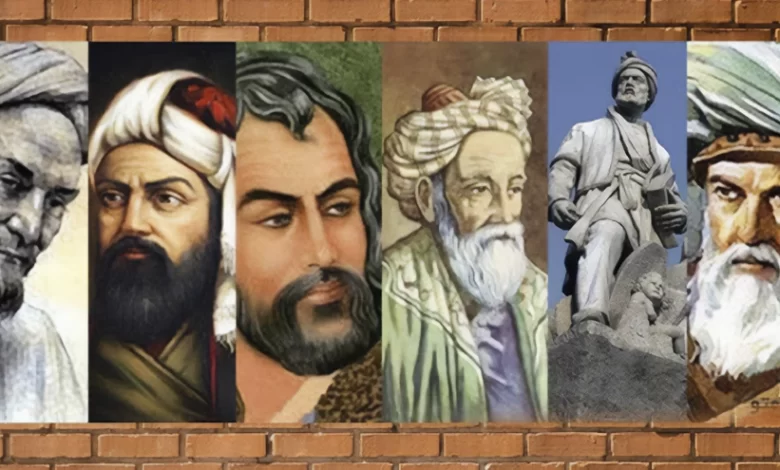
Ahmad Alamolhoda’s remarks claiming that all Iranian luminaries are from Afghanistan have provoked sharp reactions.
Alamolhoda’s statements regarding Iranian luminaries, most of which he attributed to Afghanistan, were widely reshared and not only represented a view beyond his personal opinion on the matter, but his remarks also sparked controversy on social media.
During the thirteenth administration, special facilities were provided for Afghans’ presence in Iran, from issuing national identity cards to issuing identification documents similar to those of Iranian citizens, as well as granting them voting rights, all of which provoked widespread reactions.
Reactions to Alamolhoda’s claim that all of Iran’s luminaries are for Afghanistan became newsworthy. Many have said in this regard: “It is strange that at a time when countries strive to add to their accomplishments, someone in Iran has emerged and from behind a podium is handing over Iranian luminaries to others! Why? Because he probably wants to theorize the strange and mysterious policy of widespread Afghan presence in Iran. A policy that even reached election debates, and the Speaker of Parliament, who had become a presidential candidate, promised to draw a border wall between Iran and Afghanistan to control the presence of Afghan citizens in Iran.”
Furthermore, many social media users expressed that as if Great Iran has no other prominent figures whose birthplaces are in present-day Afghanistan, and everything we had belonged to Afghanistan according to Alamolhoda! He not only possesses incorrect information, such as about Ibn Sina’s birthplace, but has also inverted the problem itself, because some current countries that have become independent were once part of Iranian territory, so it is natural that the aforementioned luminaries were also Iranian, and the territorial divisions that emerged do not negate the Iranian identity of these luminaries.
It is worth noting that a large portion of the Caucasus region, Afghanistan, Central Asia, Tajikistan, Uzbekistan, Transoxiana and Khorezm, the Caspian Sea, Pakistan and Kashmir, the Hindu Kush mountains, parts of China, Kurdistan, the entire Persian Gulf region, Mesopotamia (Bilad al-Rafidain), Armenia, and parts of present-day Turkey are among the regions that were once part of Iranian territory but after territorial division, Iran has now become a small cat on the vast map of the globe.
A user also challenged Alamolhoda’s literacy and said: “If only Alamolhoda loved Iran, and if only he would refrain from speaking about matters in which he lacks expertise and literacy, and if only he spoke with the same passion about luminaries born in present-day Afghanistan and Uzbekistan as he does about Iranian luminaries, he would also appreciate the value of contemporary Iranian luminaries, one of whom was Maryam Mirzakhani, whose death anniversary in exile was just a few days ago.”