Secret Message from Ayatollah Khomeini to the Kennedy Administration
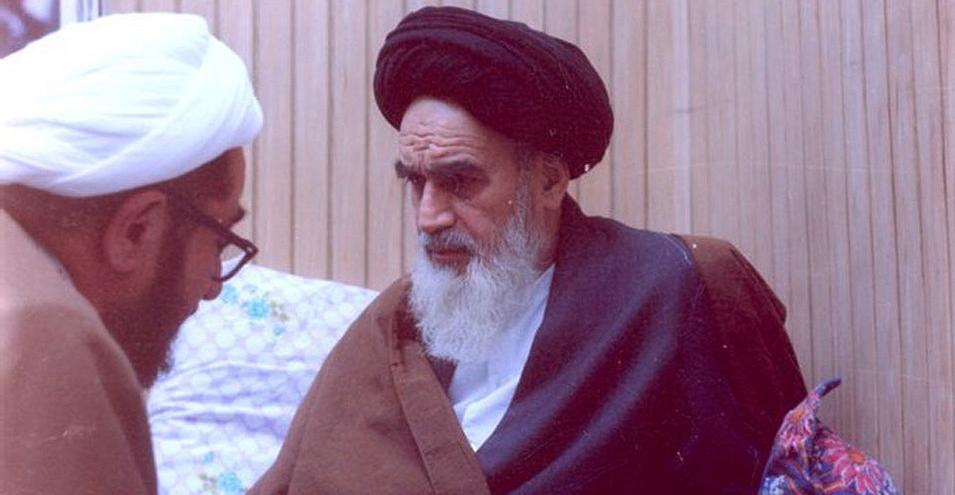
According to one of the CIA’s documents, half a century ago, one of Qom’s religious scholars who was under house arrest in north Tehran made contact with the American government away from the keen eyes of SAVAK.
Ayatollah Darbandi was not among Iran’s major religious references at the time, yet he attacked the Shah’s “White Revolution” more fiercely than all others; a controversial program of economic and social reforms that gave Iranian women voting rights and distributed much of the feudal landlords’ lands among the peasants.
Shah opponents called his reforms deceptive trickery. But the Ayatollah cried out that Islam was in danger.
He declared the Nowruz holiday of 1341 as a day of national mourning because “the oppressive regime intends to pass and implement equality of rights between men and women.”
A year later, in a harsh sermon that led to his arrest, he questioned the Shah’s faith and religion, addressing him as a tool of Israel, but said nothing against his main supporter, America.
However, the cleric mentioned in the CIA’s secret document “Islam in Iran” was none other than Ayatollah Khomeini, who after several months in Qasr Prison and house arrest in Qytarieh, Tehran, quietly sent a message to the Kennedy administration in mid-November 1342 to clarify that his verbal attacks should not be misinterpreted, as he actually supports American interests in Iran.
Summary of the Message
The American embassy’s report in Tehran containing the full text of Ayatollah Khomeini’s message is still classified in the American national archives, but a summary of the message appears in the “Islam in Iran” document.
This document is actually an 81-page CIA investigation report dated March 1980, which also includes the records of Ayatollah Khoi, Ayatollah Shariatemadari, and Ayatollah Khomeini.
The CIA declassified the report in 2005 but censored several sensitive sections, including the paragraph related to Ayatollah Khomeini’s message.
In December 2008, the Jimmy Carter Presidential Library released another version of the document digitally, in which this paragraph appeared uncensored but has remained hidden from most historians and researchers until now.
BBC Persian is publishing it publicly for the first time.
“Khomeini explained that he had no objection to American interests in Iran. On the contrary, he believed that America’s presence in Iran was necessary to create a balance against the Soviet Union and possibly British influence.”
According to this document, the message arrived at the American embassy in Tehran about 10 days before Soviet leader Leonid Brezhnev’s trip to Iran, delivered by an apparently apolitical cleric named Haj Mirza Khalil Kameraei.
The document states: “He also explained his views on close cooperation between Islam and other world religions, particularly Christianity.”
The author’s research shows that the message reached Washington on November 15, 1342 (November 6, 1963)—exactly four days after the government executed two Tehran drug dealers named Tayeb Haj Rezaei and Ismail Haj Rezaei for their involvement in the June 15, 1342 protests at Hashmatiyeh barracks in Tehran.
It is unclear whether the Democratic president read Ayatollah Khomeini’s message; Kennedy was assassinated in Dallas, Texas roughly two weeks later.
- “I am not one of those Mullahs”
Ayatollah Khomeini was released in Farvardin of 1343. The Ettelaat newspaper reported that he had compromised with the government. Ayatollah Khomeini was not one to compromise, but according to the circumstances of the time, he showed restraint.
A few days after his return to Qom, he denied the “dirty” Ettelaat newspaper’s report and explained the matter of tactical retreat to the people:
“Someone came—someone whose name I don’t wish to mention—and said, ‘Sir, politics is a matter of lying, deception, trickery, scheming, in short, shamelessness, and you should leave it to us.'”
It appears the official in question was General Hassan Pakravan, the head of SAVAK, who opposed Ayatollah Khomeini’s execution and visited him several times during his house arrest. General Pakravan was the second head of SAVAK and in Farvardin 1358 was among the first group of high-ranking officials of the monarchical regime to be executed.
Ayatollah Khomeini added: “Because the time was not opportune, I did not wish to argue with him. I said we have never been involved in the kind of politics you speak of from the beginning.”
Now that the time had become opportune, Ayatollah Khomeini clarified: “By God, Islam is entirely politics. Islam has been misrepresented.”
“I am not one of those mullahs who would sit here with a rosary in hand. I am not the Pope who… has nothing to do with other matters.”
Despite this, Ayatollah Khomeini was isolated in those days. Many of the more well-known religious references of the time, such as Ayatollah Shariatemadari, were not seeking renewed confrontation with the government.
The Shah’s reforms had also found supporters; peasants wanted land, and half the country’s population wanted voting rights. Attacks on the Corps of Knowledge and the Health Corps were not an effective way to attract educated supporters of Mossadegh or Tudeh party members in the cities.
Perhaps for this reason, Ayatollah Khomeini calculated his attacks to be directed at America, the same America that, with the collusion of Britain, the military, Ayatollah Behbahani, and Shaban Jafari, had overthrown Mohammad Mossadegh’s government but had become even more hated by the Iranian people than all of them.
“Sir, all our troubles are from America.” This was what Ayatollah Khomeini said in his famous speech on the fourth of Aban 1343.
A speech was held at his residence and it was passionate: “Inna lillahi wa inna ilayhi raji’un.
… I have slept little, I am distressed. My heart is under pressure.”
Parliament and the Senate had just approved that Iran borrow 200 million dollars from America as military aid and grant judicial immunity to American advisors in the military. Opponents called it a shameful concession and a revival of capitulations.
Ayatollah Khomeini was late in learning of the matter but reacted quickly: “We have been sold. Our independence has been sold.”
The audience wept and the preacher’s tone grew harsher: “America is worse than England, England is worse than America, the Soviet Union is worse than both, all worse than one another.”
“The President of America should know, should know that he is the most despised person among our nation.”
The speech led to Ayatollah Khomeini’s arrest and exile—first to Turkey and then to Najaf in Iraq. It was in Najaf that he presented the theory of Wilayat al-Faqih (guardianship of the jurist). Based on what he explicitly stated in the book “Wilayat al-Faqih and the Greater Jihad”: “Just jurists should be leaders and rulers, execute Islamic laws, and establish the social system.”
It appears that in Najaf, Ayatollah Khomeini did not expect his dream of ruling to be realized so soon, as he explicitly stated in the book “Wilayat al-Faqih and the Greater Jihad” that “this is a goal that requires time.”
He wrote: “A caliph said to an old man who was planting a walnut tree: ‘Old man! You are planting walnuts that will bear fruit only 50 years from now, after you are dead?’ The old man replied: ‘Others planted, we ate. Let us plant, let others eat.'”
The founder of the Islamic Republic, however, unlike that old man, not only planted but harvested the crop in less than 15 years by his own account.
In the fall of 1357, Ayatollah Khomeini was expelled from Iraq and settled in the suburbs of Paris. More than a decade of his media isolation in France finally ended, and he soon gained worldwide fame as the popular leader of a large coalition of Shah opponents.
The “Imam” of Iran’s Islamists, nationalists, and Marxists now achieved legendary popularity; millions of Iranians stared at the sky one night hoping to see his face on the moon’s disc.
As he was about to return to Iran, Ayatollah Khomeini said nothing about his theory of Wilayat al-Faqih. To those who were somewhat skeptical of his intentions and asked whether we would go from under the boot of despotism to under the hooves of despotism in this revolution, he said: “If you see Islamic governance, you will see that dictatorship does not exist in Islam at all.”
The leader of Iran’s revolution does not leave America without its promised share either. Based on a new collection of Carter administration documents declassified after 35 years, Ayatollah Khomeini and his assistants were deeply fearful of repeating the scenario of the August 28 coup; that is, that the White House would order the Iranian military at the last moment to suppress and disrupt their plans.
For this reason, in Neauphle-le-Château, he once again pursued a policy of quiet cooperation with America; though not through Haj Mirza Khalil Kameraei but through Ibrahim Yazdi; a member of the Freedom Movement who had lived in Texas for years and understood American well.
Ayatollah Khomeini’s promises to the Carter administration were detailed and specific. Including, according to a document dated December 29, 1357 (January 19, 1979), he responded to Washington that the Islamic Republic would not close the oil taps to the West; would not export the revolution to the region; and would have friendly relations with America.
He personally conveyed a message: “You will see that we have no particular enmity with the Americans and you will see that the Islamic Republic, which is based on Islamic philosophy and laws, will be nothing other than a humanitarian (government) and will help the ideals of peace and security for all humanity.”
Source: BBC