Shariatmadari Insists on Threatening South Korea After Iran’s Ambassador Was Summoned

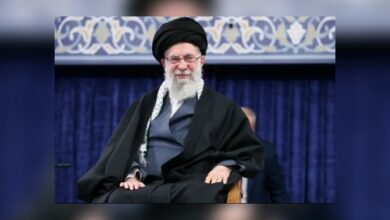
After the editor-in-chief of Kayhan newspaper recommended disrupting cargo traffic to South Korea through the Strait of Hormuz, Iran’s ambassador in Seoul was summoned. Shariatemadari says this should continue until the $7 billion of Iran’s blocked funds in South Korea are released.
The Supreme Leader’s representative at the Kayhan Institute recently called for retaliatory action by Iran in response to $7 billion of the country’s oil sales revenue being blocked in South Korea.
Hossein Shariatemadari wrote in the article that countries that have submitted to the United States’ secondary sanctions against the Islamic Republic and are complying with these sanctions “should not be safe from the heavy consequences and costs of their backward action”.
Shariatemadari’s specific recommendation to close the Strait of Hormuz to ships carrying cargo from or to South Korea led to the summoning of the Islamic Republic’s ambassador in Seoul to the Foreign Ministry.
Iran’s Ambassador in Seoul Distances Himself from Kayhan
Saied Badeamchi Shebastari, Iran’s ambassador in Seoul, who was summoned to South Korea’s Foreign Ministry on Monday, February 18, assured in a meeting with the ministry’s deputy that the Kayhan newspaper article does not represent the official position of the Islamic Republic.
Ali Khamenei’s representative at the Kayhan Institute wrote in his article: “We can and must close the Strait of Hormuz to South Korean commercial ships and oil tankers and all vessels carrying cargo for South Korea or loaded from South Korean origins, and as long as our country’s $7 billion claim is not paid, we will not allow them passage through the Strait of Hormuz.”
On Tuesday, Kayhan newspaper described its threatening article from a few days earlier as “Kayhan’s shot at Seoul’s Achilles heel” and wrote that South Korea “instead of paying its debt, summoned Iran’s ambassador!”.
In recent weeks, there have been reports suggesting that the US and Iran, alongside JCPOA revival talks in Vienna, are engaging in negotiations that could lead to the release of $7 billion blocked in South Korea in exchange for the release of several Iranian-American prisoners.
“Vienna Talks Will Lead Nowhere”
According to ISNA news agency, Hossein Shariatemadari on Tuesday, in a radio interview while repeatedly supporting the proposal to close the Strait of Hormuz to South Korean vessels, called the nuclear agreement and the Joint Comprehensive Plan of Action (JCPOA) a “golden document for America”.
The editor-in-chief of Kayhan said: “Vienna talks are about reviving what was taken from us in the JCPOA. In the JCPOA, they took cash benefits from us and gave us promissory notes and even broke those promises and breached their commitments. Talks will lead nowhere because American sanctions are not about our nuclear issues. Their problem is Iran reaching the position of the largest scientific and technological power in the region.”
Shariatemadari says the JCPOA brought no benefit to Iran and he has previously raised this issue with officials. The negotiations that led to the nuclear agreement and the talks for reviving the JCPOA have all been carried out with Khamenei’s approval and will continue to be so, and given the political structure governing the Islamic Republic, it is inconceivable otherwise.
The JCPOA revival talks began in mid-April of last year under Hassan Rouhani’s government and continued under Ibrahim Raisi’s administration. These negotiations were suspended in late March on the verge of reaching a final agreement due to some unresolved disagreements.
Source: DW