Sistan and Baluchestan: Undocumented People Deprived of Coronavirus Vaccination and Medical Services
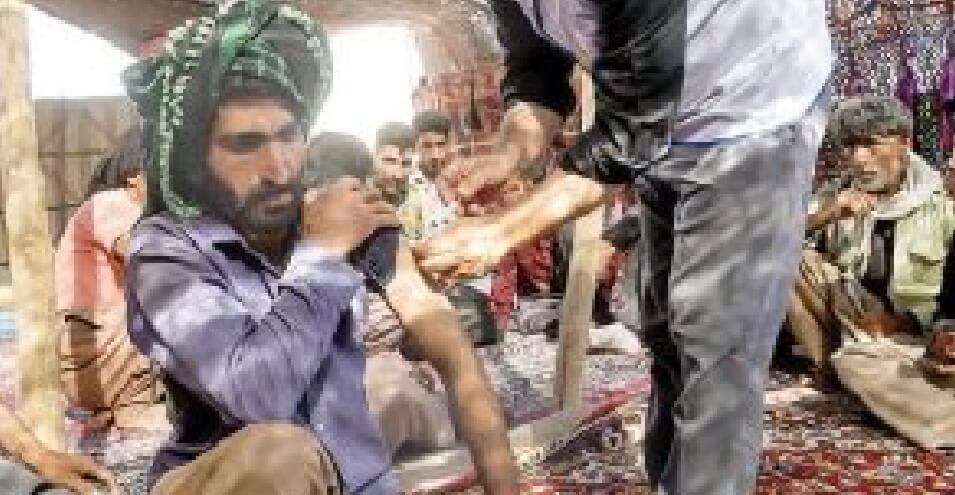
While multiple reports indicate a significant increase in the number of coronavirus cases and deaths in Sistan and Baluchestan, many undocumented people in this province, for whom no precise statistics have been announced so far, have been deprived of receiving the vaccine. These individuals, lacking health insurance, also often refrain from visiting medical centers due to insufficient financial resources. Furthermore, in the deprived province of Sistan and Baluchestan, some citizens have been deprived of coronavirus vaccination and medical services due to the lack of medical centers in their cities and villages, long distances, and rough roads to reach medical facilities.
According to Hrana news agency, citing Hamshahri newspaper, while multiple reports indicate a significant increase in the number of coronavirus cases and deaths in Sistan and Baluchestan, many undocumented people in this province, for whom no precise statistics have been announced so far, have been deprived of receiving the vaccine.
These individuals, lacking health insurance, also often refrain from visiting medical centers due to insufficient financial resources. Furthermore, in the deprived province of Sistan and Baluchestan, some citizens have been deprived of coronavirus vaccination and medical services due to the lack of medical centers in their cities and villages, long distances, and rough roads to reach medical facilities.
After the dark days of Tirmah when coronavirus swept through Sistan and Baluchestan, vaccination accelerated and has now reached 35-year-olds, but undocumented people watch with longing as vaccination passes by them and others receive their shots.
Fatemeh Key Khah, a general practitioner who participated in one of the Jihadi mobilization campaigns in the suburbs of Zahedan, said about this: “I visited 60 patients in the Hemmatabad neighborhood (on the outskirts of Zahedan), and I had the vaccine with me, but 50 of them had no identity documents so I could vaccinate them. Those moments were very bitter when they left the clinic without receiving the vaccine. The taste of discrimination this time is more bitter than ever for undocumented people; it may even be deadlier! The problem is not just the vaccine. Even if they die from coronavirus, due to lacking identity documents, they are not counted in any statistics. They didn’t exist from the beginning and they won’t exist at the end.”
Shafiyeh, an undocumented young girl, says: “They bring the dead to Lar or bury them in Gurbandband (near Zahedan). It’s horrifying. Everyone who sees it loses their spirit. Many of these deceased don’t have burial permits. When they were alive, they had no documents to prove they were living, so they bury them without any formalities. Every day, sounds of wailing and lamentation come from the cemetery next to our house. We’ve become neighbors with death. That’s why I want to get vaccinated; both myself and my mother.”
There are no specific statistics on the number of undocumented people in Sistan and Baluchestan, but some assessments mention up to 100,000 people, of whom, according to the former representative of Zahedan, 30 percent live in Zahedan.
Noor, another undocumented girl who heard that vaccine has arrived in the province and there is enough for everyone, says: “We are also people of this country. Just this once, if they would forget about national IDs and documents and vaccinate us, wouldn’t we get coronavirus? Isn’t our life in danger? What is this vaccine that they are withholding from us?”
Without Insurance, Without Treatment
The concerns of undocumented people are not just about vaccines. The heavy treatment of coronavirus disease has also weighed heavily on their shoulders and troubled them. Without an ID, there is no insurance, and without insurance, the costs of treatment reach the sky.
Dr. Key Khah says: “Some use insurance booklets from neighbors or other family members. For example, a 50-year-old woman brought her 6-year-old child’s insurance booklet, but I couldn’t write a prescription for a 50-year-old woman in a child’s booklet.” In her opinion, one of the reasons for the deaths of undocumented patients is their failure to go to hospitals. “Many of these people, with very low blood oxygen levels, refuse to go to hospitals because they don’t have identity documents and insurance, and this single issue makes their presence in the hospital difficult and exhausting. So they renounce going to the hospital, stay home, and their fate becomes unknown afterward. No one knows if they will die or survive.”
Many undocumented people live in neighborhoods far from clinics, schools, and other public places. Noor says they have to walk at least 2 hours to reach the road. Cars are not available, and they are forced to ride trucks or vans coming from the industrial park to get to the city. “At night, traveling to the city is almost impossible because no vehicles pass through that area.”
Provincial doctors say the minimum cost for treating an outpatient coronavirus patient, including one medication and simple serum, is about 100,000 tomans. Some female patients, who are often undocumented, sit in front of pharmacies with their children to collect this amount and ask people to pay for their prescriptions.
Vaccinating undocumented people who have neither insurance nor are under the protection of support agencies could reduce their suffering. But how can those whose homes are built on unauthorized land and whose names are not registered in any health center hope to receive 2 doses of vaccine?
In contrast to those who want to receive the vaccine, there are also those who mistakenly and due to wrong thinking and negative attitudes refuse vaccination. Those whose turn has come in public announcements but have not yet visited medical centers to receive the vaccine. Hossein Bromand, another Sistani doctor, says about this: “Alongside the first group that shows great enthusiasm for vaccination, we have patients who refuse vaccination.” Of course, distance from vaccination centers is also one of the factors that reduces the motivation of citizens in this region to get vaccinated.
Mohammad is one of those who has not been vaccinated for this reason and said: “Here the distance between one village and another is very long, let alone between one city and another. The centers designated for vaccination are very far, and this causes many people to give up on vaccination.”
Bromand believes that: “Perhaps in the suburbs of Zahedan, house-to-house vaccination programs, similar to what was done for polio vaccination, could be useful. Vaccinating undocumented people, as one of the most vulnerable groups against coronavirus, would help reduce the epidemic in city suburbs. In this process, non-governmental organizations, as the only supporters of these people, can help health centers in identifying and vaccinating them.”
According to the Director General of Civil Registration of Sistan and Baluchestan Province, since 2013, more than 9,000 families without ID documents have been processed, resulting in the issuance of approximately 30,000 IDs for some of them. Among these, over 1,500 cases have been rejected for citizenship. In 2020, 803 families also applied for files in the province’s Commission for Those Without IDs, of which 2,000 people successfully obtained IDs and citizenship for 311 cases was also rejected. Despite this, many residents of the suburbs and villages of Sistan and Baluchestan remain undocumented. With the amendment of the citizenship law, hopes for these people to obtain IDs have increased, but the complex procedures and difficult conditions for proving Iranian citizenship through the mother or foreign identity of the father have left many in limbo. People who are not covered by any support agency (welfare or relief committee) and are deprived of citizen services such as insurance, subsidies, and so on. A problem that has made life more difficult for them in the coronavirus situation.
Source: Hrana