Speech by Prince Reza Pahlavi, Experts and Researchers, at the ‘Iran Flourishing Project’ Conference
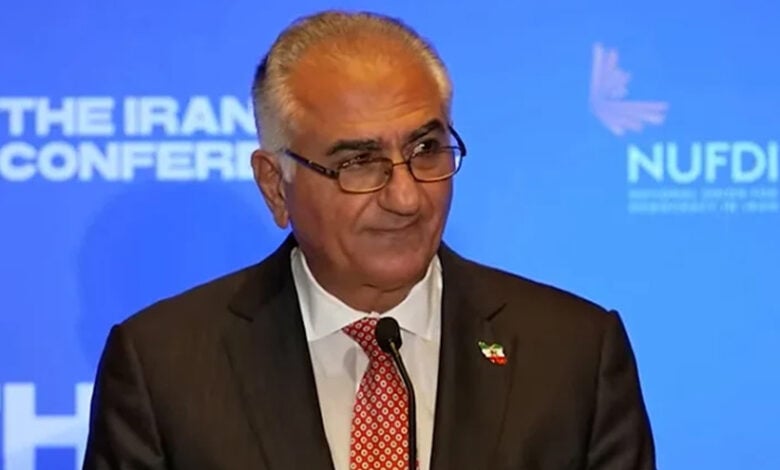
Prince Reza Pahlavi, experts and researchers, along with Princess Noor Pahlavi, delivered speeches at the ‘Iran Flourishing Project’ conference.
The unveiling of the Iran Flourishing Project took place yesterday, Wednesday, April 30, equivalent to 10 Ordibehesht, at the ‘Nufodi’ conference with speeches by Prince Pahlavi, Princess Noor Pahlavi and other experts and researchers. The conference addressed the presentation of opinions and studies regarding the importance, feasibility assessment and axes of Iran’s reconstruction projects during the transition period following the Islamic Republic.
The ten important principles emphasized in the project for economic flourishing in Iran are as follows:
- Empowering people to make economic decisions based on their interests
- Ensuring that the government creates opportunities for economic growth and does not create obstacles
- Promoting policies that reward innovation, accountability and entrepreneurship
- Guaranteeing and respecting private property rights
- Entrusting economic transactions to market mechanisms wherever possible
- Removing obstacles from the path of domestic entrepreneurs and creating a suitable business environment
- Establishing an independent central bank to curb inflation and ensure fiscal discipline
- Eliminating barriers to women’s participation in the labor market
- Directing growth through human capital development and technological progress
10. Returning Iran to the global economy and building confidence for investment and trade
The project is also divided into three phases as detailed below:
Phase 1: Focus on financial and social stability in the first 100 days following the regime’s collapse, including: organizing interim budget, stabilizing the currency system and financial systems.
Phase 2: Addressing political and legal stability during the transition period, including drafting a new constitution and establishing democratic institutions.
Phase 3: Focus on long-term economic reconstruction and providing opportunities for domestic and foreign investment.
According to the speeches of researchers, experts and authors who collaborated on this project, the project includes numerous research and studies in the fields of economics, health, welfare and social infrastructure necessary to advance Iran toward prosperity and flourishing.
Speakers in various sections emphasized that the Iran Flourishing Project is a roadmap for reconstruction and revival of Iran following the Islamic Republic, and announced that the project is part of Prince Pahlavi’s five-part program for victory and the post-victory period of the people over the Islamic Republic.
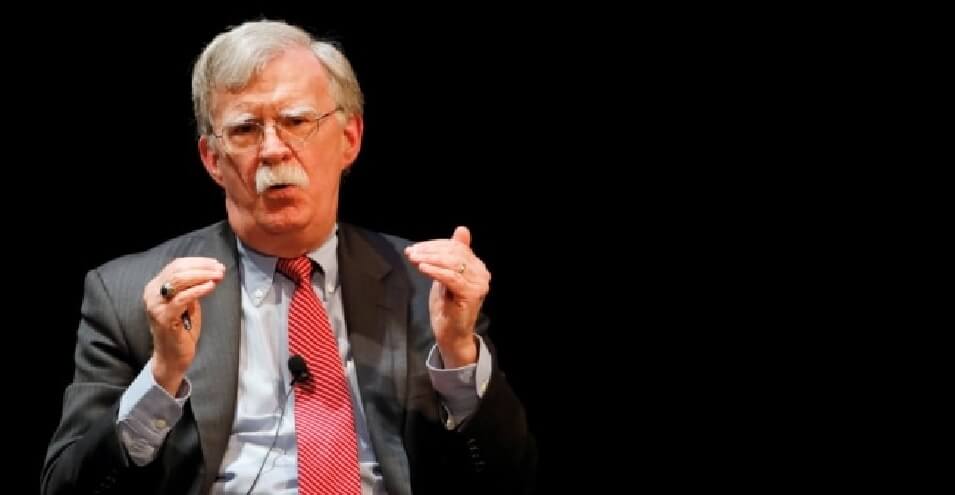
Prince Reza Pahlavi was the keynote speaker of this conference, and his full speech is presented below:
“Ladies and gentlemen, esteemed guests, dear compatriots
With great honor, I welcome you today at the unveiling ceremony of the ‘Iran Flourishing Project’ and its first group of papers. I stand before you not only with hope for the future of our homeland, but with pride in the remarkable work that has been done to realize this vision.
For a long time, conferences about Iran’s future have been held and have passed, often with beautiful words but minimal and fruitless content. Today is different. Today we have gathered here not merely to talk, but to present real work and plans, to present the result of months of meticulous research, planning and dedication by a team comprised of some of the brightest minds of the Iranian elite, brought together for a common purpose: the rebirth of Iran.
This is a project built not on slogans, but on solutions. Not on vague promises, but on detailed plans. Every article and every proposal is a step toward a free, stable and prosperous Iran. And most importantly, this is not the end of work, this is just the beginning of the journey.
Today, we are unveiling the first group of papers. But these documents are living and ongoing documents. They are receptive to feedback from experts, ideas and improvements. We invite Iranian experts from all walks of life to participate in this path, to refine, strengthen and mature these programs so that together we can advance this project.
We all know that the regime ruling Iran today is weak, weaker than ever. This government has maintained its power not through legitimacy, but through instilling fear and exercising violence. This very weakness and fragility must prepare us, because when the moment of change comes, merely celebrating the end of tyranny is not enough; we must be ready to build a nation.
At the invitation of my compatriots, I have stepped forward to lead the transition period following the collapse of the Islamic Republic. In accepting this task, I have taken a step not only to guide Iran toward democracy, but to restore prosperity and welfare to our country.
Today, with the unveiling of the first group of the ‘Iran Flourishing Project,’ I am presenting an economic roadmap, a plan so that from day one, we can begin the work of reconstructing Iran; a strong Iran, a free Iran, an Iran more flourishing than ever.
Have no doubt that our primary goal is to restore welfare and dignity to the Iranian nation. But there is also a message for the world: a free Iran ready for cooperation and commercial partnership, not through the empty promises of this corrupt regime and not through shorthand agreements that make dictators wealthier, but through the creation of real opportunities, opportunities for investment, opportunities for participation and opportunities for success in rebuilding a vibrant and democratic nation. This is the only true path forward for Iran and for all those who wish to be part of its future.
I thank you all for your presence here today, and I am grateful to everyone who has worked tirelessly to realize this project, especially ‘Nufodi’ and the architects, authors and management team of the ‘Iran Flourishing Project.'”
Princess Noor Pahlavi was also among the speakers at this conference, speaking about the health crisis in Iran, human rights and human dignity. The full text of Noor Pahlavi’s speech is as follows:
“For several years, I have been engaged in activities in the United States in the field of health. Healthcare services are not just policy-making, but human rights, and reflect and demonstrate how much value we place as a nation on the dignity and welfare of our people. In the future Iran that is built on the foundations of freedom, justice and equal opportunities, we must ensure and guarantee that all Iranians, regardless of income level or background, have access to quality and humane healthcare services and have the ability to pay healthcare costs.
This comes at a time when today in Iran, the structure of healthcare services is facing deep financial and moral crises, and while the government shirks its most basic responsibilities, the shoulders of ordinary people have been crushed under the burden of increasing healthcare costs.
The people of Iran, who receive minimal services in exchange for paying heavy insurance premiums, have become trapped in a system that operates not only without merit and compassion, but is based on mismanagement, negligence and corruption.
Out-of-pocket payments by people amount to approximately 40 percent of treatment costs, which is the highest rate in the region, and this share is expected to increase. This means that millions of Iranians could face financial collapse merely from contracting a disease.
Furthermore, the lack of access to hundreds of pharmaceutical items and vital medicines, including life-saving medications for treating cancer and rare diseases, has become a bitter reality. The Islamic Republic is unable even to provide medicines through an efficient structure without intermediaries and has failed in the medicine supply and distribution chain. As a result, counterfeit and unauthorized drugs have dominated the black market, endangering countless lives and forcing patients to gamble with their lives to survive. Parents are forced to face an impossible choice between providing medicine for their child or meeting basic livelihood needs.
Cancer patients forgo chemotherapy due to drug shortages in the market or worse, due to lack of financial means. Grandfathers and grandmothers ration their heart medications, cutting their dosage in half to stretch their supply for an extra month.
In today’s Iran, illness is synonymous with bankruptcy. The Islamic Republic has left its people alone in the face of this crisis. This is not merely a bankruptcy or budgetary shortfall, this is a betrayal. This is not a result of sanctions, but is due to the ideological priorities of the Islamic Republic and its war against the Iranian people.
This is why I am pleased that the ‘Iran Flourishing Project’ has placed this crisis on the agenda of its first working groups. The Social and Economic Stabilization Group of the ‘Iran Flourishing Project’ presents a conscious, academic and reality-based perspective for Iran’s reconstruction.
This plan seriously addresses the consequences of decades of inequality, mismanagement and neglect in the Islamic Republic. The plan addresses Iran’s complex demographic and economic challenges, including the aging population which puts pressure on public budgets, and proposes creative and bold reforms based on successful global models.
As we prepare for a prosperous and democratic Iran, we must remember the vision and goal that my father has presented for decades: that freedom is not merely an abstract concept but freedom means the ability to raise a child without fear of preventable diseases, it means peace of mind that your treatment will not bankrupt your family, it means believing that the government is here to serve and care for the people and not the reverse. To reach this model, we need systemic change in Iran, but the sustainability of this change requires economic programs that are being unveiled today by the ‘Iran Flourishing Project.’
Let us never forget that healthcare is a human issue and behind every statistic, there is a real human being. Mothers, fathers and children who deserve human dignity without fear of financial ruin from falling ill.
Reforming Iran’s healthcare system is not just a political issue, but a national challenge and necessity. Success in this endeavor will send an important message to the world that modern Iran values justice, life and welfare for all its citizens.”