Students Defenseless Against Sexual Harassment in Schools and Exam Prep Classes
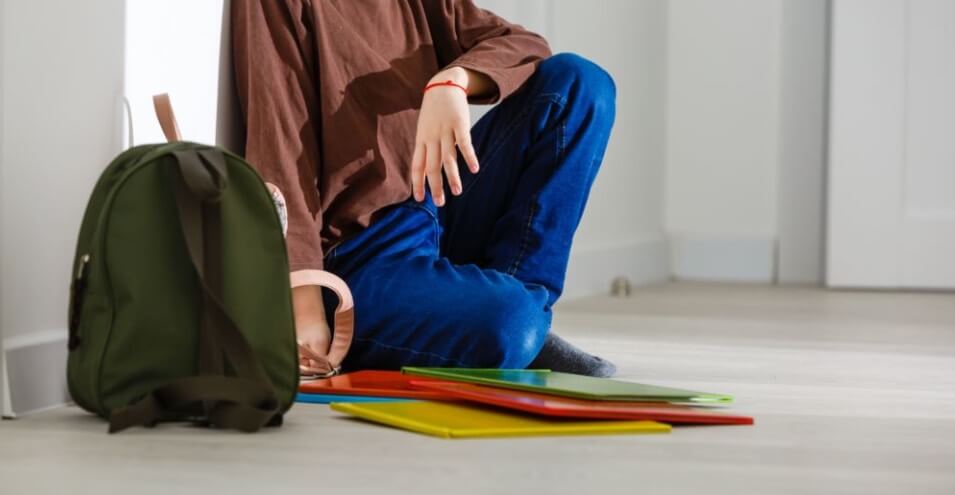
News occasionally emerges. Or perhaps it would be more accurate to say news leaks out. One time it’s a boys’ school in Marzdaran, another time it’s Saeed Toussi, a Quran teacher, and now the name of another teacher has surfaced; an exam prep instructor whose students have spoken on social media about his sexual harassment.
Handkerchief tricks, touching bodies, sexual jokes, requests for nude photos and things of that nature.
Students first wrote that their exam prep teacher had sexually harassed them, they wrote that apparently he had done this to most of his students. Both during regular class and in private classes at home.
Very soon, however, those same students deleted their posts and apologized to the teacher, in a tone that many observers said sounded frightened and dictated.
Regardless of what happened in schools this time and what means students and their families have to prove their claims, the question here is: to what extent do Iran’s educational and legal systems seriously pursue cases of this nature?
Rasoul Naffisi, a sociologist, says: “Even in cases where children have complained about teacher harassment, no severe reaction has been seen from teachers or administrators, but if someone doesn’t participate in a February 11 rally or similar ceremonies, they might even face dismissal.”
Do students who face harassment or sexual assault from teachers or school staff have no way to follow up on what happened? What does the law say on this matter?
Hossein Raisi, a legal expert, speaks about the recently passed law protecting children’s rights: “We cannot clearly say that the law specifically protects students in these situations to what extent, but we also cannot say that the law is silent and that there is no mechanism for demanding accountability from those who harass and torment students in school and educational environments. Specifically, given the recently passed child protection law, child abuse is very clearly defined. All children under 18 are covered by this law. One can use this law, and any form of sexual harassment, even verbal harassment and other forms of harassment including body touching are mentioned there. These are considered crimes both under Islamic Penal Law and under this child protection law.”
The image we have of schools and teachers is usually one accompanied by trust and confidence. School is where our children are supposed to study, progress, and be prepared for a healthy future life. In an environment from which such expectations are held, what criteria should be in place for selecting teachers?
Rasoul Naffisi speaks of criteria that are predominantly ideological, political, and religious in teacher selection: “For selecting teachers, usually three people are asked for their opinions. If in smaller towns and villages, only the local cleric’s opinion is sought. The questions asked are: did the person in question, particularly participate in the February 11 rally? Has anyone seen them drink alcohol and such matters? Ultimately, what is emphasized very strongly is practical commitment to the guardianship of the jurist. This means: has it ever been seen that they did something against the guardianship of the jurist or were insufficiently obedient to it? The process of turning religion into bureaucracy has become a system where they have a Supreme Prayer Council and a manager for evaluating the Supreme Prayer Council, measuring these things. It’s exactly a copy of the communist countries’ system, except instead of communist party branches they have mosques and now schools are their focus.”
Besides academic and educational criteria, shouldn’t mental health and moral integrity of teachers be among the most important criteria for teacher selection? Shouldn’t these be more important than teachers’ religious or political beliefs?
Mr. Naffisi answers: “We see in Iran the transformation of an educational issue into a bureaucratic one, and from there into a political system with these concerns. Therefore, when selecting teachers, we shouldn’t expect this person to undergo psychological screening or for psychologists to examine what mental state this person is in or whether they’re married or not. The problem that exists is that no other issue is raised except practical commitment to the guardianship of the jurist, and all other issues fall under this.”
Hossein Raisi, a legal expert, emphasizes the importance of creating a safe environment for students who are extremely vulnerable to such behaviors. He describes the educational structure in Iran as teacher-centric. Perhaps the educational structure, in addition to being teacher-centric, is also purely results-oriented, an issue that becomes even more severe regarding exam prep teachers, where the most important criterion for exam prep teachers is often the rate of their students’ university entrance exam success.
He says about this: “When the school environment is set up so that a teacher can do anything, or when the educational structure is set up to be very teacher-centric, this is dangerous. A teacher is made into a big figure because they now produce the best exam results, families flock to them, and they also get the impression that they are very important people with no one to answer to. This is where selection is the first condition, and then continuous monitoring.
Even if a student reports that this teacher behaves inappropriately, or the bus driver behaves appropriately or touches the children’s bodies when they get off, or when approaching children makes vulgar jokes—all these are issues that can lay the groundwork for assault.
These are matters that need to be monitored and while respecting children’s privacy and without damaging the dignity and honor of students as human beings, they need to be handled well.
But unfortunately, because the dominant atmosphere is ideological and religious, if someone apparently follows the rules, they think they’re a decent person and sometimes entrust important matters to them, and families don’t pay serious attention. When they see that this person’s students have higher success rates in, for example, physics, math, or biology, they flock to them.”
I ask Mr. Raisi: what steps should families take in this situation? Both to support the mental health of students who have reported such behavior and to prove what teenagers have reported about their teacher?
He says: “They should provide necessary evidence. When the children’s own statements are numerous, they gain significance. In the child and adolescent protection law, a mechanism is provided where it’s possible to speak with children through welfare workers and the welfare workers’ reports on this matter can be credible to the court and for subsequent prosecutions.
They should absolutely not remain silent, and if they have raised the issue, there’s no reason for them to take it back. Inappropriate behavior by a teacher, even if it is or isn’t a crime, must be identified. If this behavior violates a criminal law and is considered a crime, school authorities, parents, welfare workers, psychologists, and school counselors have an obligation. When I say obligation, it means the law has made them required and obliged to report to police and the judicial system. The law does not classify this crime as a private crime but as a public crime.”
Despite all this, past experiences regarding student sexual harassment cases by teachers, including in the most prominent case of recent years—the Saeed Toussi case, a Quranic reciter—are not particularly hopeful. Not only was Mr. Toussi ultimately acquitted, but judicial authorities prosecuted those who published news of his sexual assault accusation and considered their actions as spreading indecency.
Source: Radio Farda