Tehran Mayor Responds to ‘Bus Sleeping’ Report: We Don’t Charge
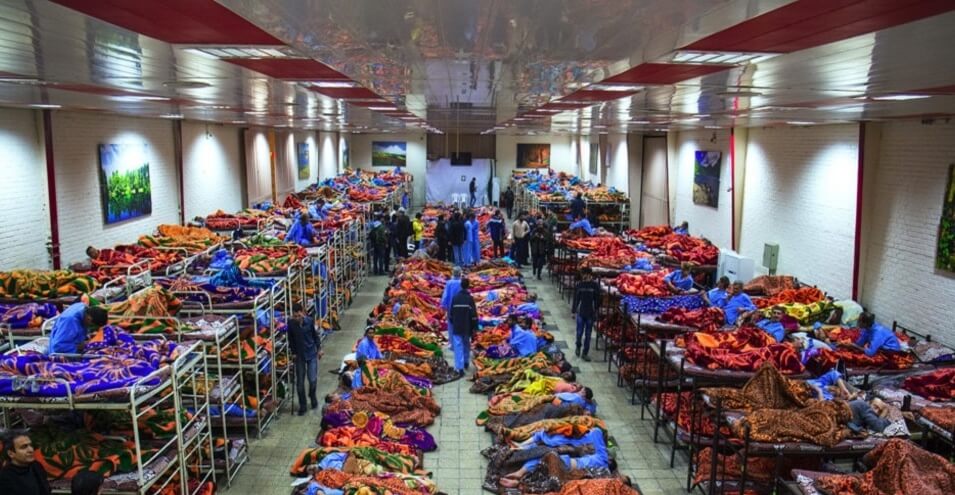
Two Tehran Municipality officials responded to a report about the phenomenon of “bus sleeping” among homeless people in the capital, describing it as containing exaggerated details.
Alirezа Zakani, Tehran’s mayor, on Thursday evening, December 9, in response to homeless individuals spending nights on express bus line vehicles, asked the victims to visit the warming centers operated by the municipality in different areas of Tehran.
Stating his lack of awareness about why homeless people are not visiting the warming centers, he added that the Tehran Municipality cannot “forcibly” transfer these people to warming centers, and any compulsion in this regard requires a legal ruling.
The Tehran mayor also denied that fees are charged for bus sleeping.
These remarks come at a time when, in addition to the very limited capacity of warming centers, there is no accurate official statistics on the number of homeless people in Tehran.
According to Tejarat News, unofficial statistics show that in 1398 (2019-2020), the number of homeless people in the capital was between 14,000 to 15,000 people, while a Tehran Municipality official announced in October of this year that the warming centers’ capacity in the capital only reaches “two thousand people.”
In this regard, Mahmoud Tarfa, the CEO of Tehran Municipality’s United Bus Company, also said that the existence of the bus sleeping phenomenon cannot be denied, but “this phenomenon is not as severe as stated in the report.”
Tarfa’s reference was to a report published on Wednesday, December 8, on the “Tejarat News” website. Based on this field report, some residents of the capital sleep at night on express bus line vehicles due to their inability to pay housing rent.
The cost of spending one night on Tehran’s express bus line (BRT) vehicles is 12 to 25 thousand tomans. This amount costs the bus-sleeping individual approximately 360 to 750 thousand tomans per month.
The publication of this report sparked widespread reactions on various social networks and once again raised the issue of the rampant increase in housing rental prices in Tehran and its suburbs among internet users and civil activists.
Source: Radio Farda