Tehran Military Prosecutor Explains Ukraine Plane Downing
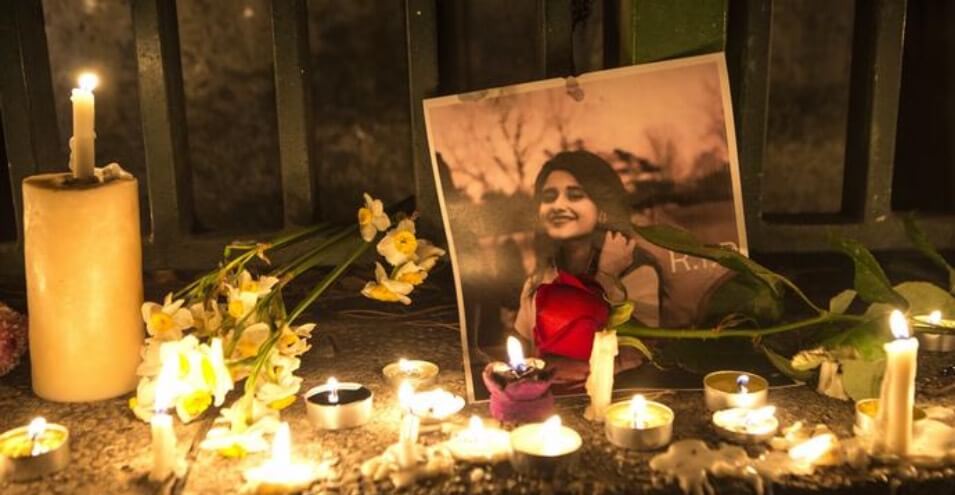
The military prosecutor of Tehran provided an “explanation” to families of victims of the Ukrainian commercial aircraft downing regarding the incident. He attributed the plane’s downing to a missile explosion from the IRGC air defense system near the aircraft due to human error.
Near seven months after a Ukrainian commercial airliner crashed near Tehran airport, the military prosecutor of Tehran Province addressed the incident and its legal proceedings for the first time.
According to IRNA news agency, Gholamabbas Torki on Monday, June 29, met with families of some victims and their lawyers, saying: “The explanation of the incident in today’s session is not intended to justify or rationalize it.”
Despite this claim, much of the military prosecutor’s statement repeated previous remarks by officials and included justifications for issues such as a three-day delay in announcing the true cause of the plane downing, delay in handing over black boxes, and failure to cancel civilian flights despite assessments of a possible American attack.
Flight 752 from Tehran to Kyiv crashed shortly after takeoff from Tehran airport on the morning of January 8, 2020. All 176 passengers and crew members aboard were killed.
Despite evidence and reports indicating that IRGC air defense missiles struck the aircraft causing its crash, Islamic Republic officials vehemently denied these reports until January 11 and provided false information despite having precise knowledge of what caused the incident.
Amirali Hajizadeh, commander of the IRGC Aerospace Force, took responsibility for the catastrophic error three days after the Ukrainian plane was downed in a televised interview, saying the IRGC air defense operator had “mistakenly identified the Ukrainian commercial aircraft as a cruise missile” and fired at it.
Explanation or Justification?
Regarding this delay, the Tehran military prosecutor said: “Among the reasons cited by responsible officials, there was a necessity for minimal investigation and examination to clarify how the firing occurred and the incident took place, including questioning relevant individuals, reviewing conversation recordings and recorded footage, comparing radar graphs, and examining various hypotheses and scenarios under investigation.”
The Ukrainian plane was downed hours after IRGC forces, in retaliation for the killing of Quds Force commander and his companions, launched missiles at two bases hosting American forces and allies in Iraq.
On the morning of January 3, two vehicles carrying Qassem Soleimani, four other Quds Force members, and five Iraqi hosts came under American drone attack near Baghdad airport, killing all occupants, including Abu Mahdi al-Muhandis, deputy commander of the Popular Mobilization Forces.
Fearing American retaliatory attacks after launching missiles at Iraqi bases, the Islamic Republic placed all air defense systems on full alert and deployed additional systems, including west of Tehran.
Failure to Stop Flights During “Combat Status”
Gholamabbas Torki regarding why civilian flights were not halted said: “According to existing regulations, if an enemy foreign air attack on the country is certain, a flight suspension order must be issued. Based on evidence and indications and assessment by the chain of command, there was only a possibility of attack and threat, therefore responsible authorities, in compliance with regulations, limited themselves to control measures, and the airspace was not completely closed to flights.”
He attributed the targeting of the Ukrainian aircraft to a “gross error” by the air defense system and lack of authorization to fire from the network, adding that six people have been arrested in connection with this incident, three of whom were released on bail.
This “explanation” came while the IRGC Aerospace Force commander had stated on January 11 that the night of the incident, “readiness was at war level and the highest level of alert was communicated to systems through an integrated air defense network.”
Equipment Malfunction?
The Tehran military prosecutor also points to other matters that could be interpreted as equipment defects. He says the mobile air defense system fired two missiles at the Ukrainian aircraft, with one missing the target and the second exploding near it, leaving visible marks on the aircraft’s fuselage.
Torki says the air defense system before the second firing “due to field conditions, cannot accurately determine true north, and this gross error causes the operator to observe the target identification direction with a difference of approximately 105 degrees.”
He also stated: “The air defense system lacked night vision cameras and friend-foe identification systems as manufactured from the factory.”
Another issue raised during the meeting between judicial officials and families of some victims was the Islamic Republic’s delay in handing over the black boxes of the downed Ukrainian aircraft.
Iran initially announced it would not hand over the boxes and demanded to receive equipment necessary to read them in the country. Tehran later announced its readiness to send the black boxes to Ukraine or France, and finally, after threats from Ukraine’s president to file a complaint against Iran in international courts, recently reiterated readiness to hand them over to a center in France.
The Tehran military prosecutor claims the country was prepared to send the black boxes abroad in late last year, but this coincided with the coronavirus pandemic, and “the foreign party stated that our laboratories lacked the capacity to accept the black box until the coronavirus pandemic subsided.”
This claim comes as “foreign parties” have repeatedly and severely criticized the Islamic Republic for the delay both before and after the coronavirus spread began.
AbbasAli Torki in Monday’s meeting also announced “payment of damages and compensation based on international rates” to families of victims of flight 752 of the Ukrainian airline, while stating this requires “completion of legal documentation.”
Demand for $1.1 Billion Compensation in Canadian Court
Last November, exactly one month after the Ukrainian commercial aircraft was downed, a Canadian legal team on behalf of some victims’ families filed a lawsuit in court demanding payment of 1.5 billion Canadian dollars (equivalent to approximately $1.1 billion US) in compensation.
The team is headed by Mark Arnold, a prominent Canadian lawyer who previously succeeded in obtaining a judgment of conviction against the Islamic Republic and seizure of two buildings belonging to it in another case.
The Office of Investigation of Accidents and Incidents of Iran Civil Aviation Organization announced in a report released on February 10 that 146 of the downed Ukrainian aircraft’s passengers held Iranian passports and five held Canadian passports.
52 of the victims were dual Iranian-Canadian citizens. Lawyers for Canadian families regard the downing of the Ukrainian aircraft as a deliberate and intentional terrorist act.
The Islamic Republic and Syria are the only countries Canada has placed on its list of countries supporting terrorism. Under Canadian law, assets of these countries can be seized and sold if convicted in court.
Source: DW