Tehran Prosecutor: No Embezzlement in Petrochemical Case, Only Personal Use
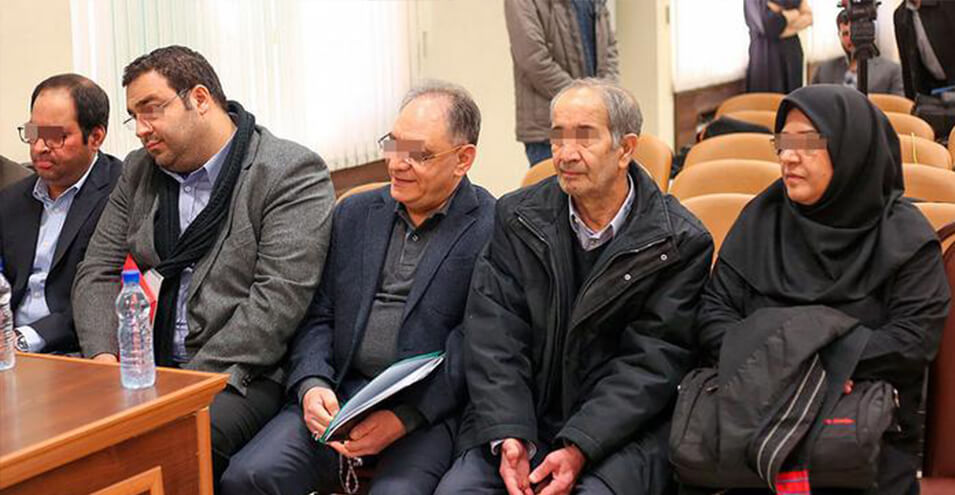
The “corruption in petrochemicals” case has turned into a major controversy. The Tehran prosecutor says the accused did not embezzle but rather made “personal use” of transactions. The first defendant claims all actions were based on “higher-level decisions.”
Abbas Jafari Dolatabadi, the Tehran prosecutor, believes the “corruption in petrochemicals” case is one of the most important cases formed in Iran since 2012. The Tehran prosecutor cited “heavy figures” and “very large financial volumes” in justifying the seven-year delay in hearing the case.
However, on Tuesday, March 12, he said there is “no embezzlement involved” in this case. Jafari Dolatabadi stated: “The crime of the accused is that they made personal use of the transactions carried out.”
The “corruption in petrochemicals” case, which has now become a major controversy for the accused due to its widespread media and social network coverage, is one of the financial corruption cases rooted in the Iranian government’s covert attempts to circumvent international sanctions.
Mahdi Sharifi Nikanfars, the current CEO of the Petrochemical Trading Company, told IRNA on Tuesday, March 12: “This case has been raised for several years, but so far only two court sessions have been held, and given the country’s conditions and export discussions, we requested that the issue of circumventing sanctions not be raised.”
“The total amount doesn’t even reach 30 million euros, don’t exaggerate“
According to Sharifi Nikanfars, the Petrochemical Trading Company exported 10 to 11 billion dollars in the years 2010, 2011, and 2012, and “settled accounts with all petrochemical complexes.” The current CEO of the Petrochemical Trading Company, noting that “the total amount of unlawfully obtained funds does not reach 30 million euros,” emphasized in an interview with IRNA: “These exaggerations will harm society.”
The Iranian government needs a private network outside the country to circumvent banking sanctions, which would serve as an intermediary for selling Iranian oil, gas, and petrochemical products. This intermediary, by establishing a company, receives money from buyers of Iranian oil and gas, delivers it to the government inside the country, and receives a commission or percentage. The percentage of this commission depends on the type of his activity.
Individuals appointed to establish such companies, or those who already have the ability to cooperate as intermediaries, or those who are trusted figures of the Iranian government, enter a dangerous game. Circumventing Iranian sanctions, of course, for these intermediaries, as happened to Reza Zarrab, can have severe consequences.
The “corruption in petrochemicals” case dates back to the Mahmoud Ahmadinejad administration and heavy U.S. sanctions against Iran’s oil and gas industries. The Petrochemical Trading Company, which was the main exporter of Iranian petrochemical products, was privatized by the Ahmadinejad government to help the government circumvent sanctions.
It is now clear that Reza Hamzelu, the CEO of this company (2009-2011), Amin Qoreshi Sarostani, the board chairman, Abbas Samimi, a board member, and two other company members, Ali Reza Alai Rahmani and Mostafa Tehrani Safa, kept the money from the company’s transactions in their personal accounts abroad and purchased the equivalent currency in Iran and transferred it to the original seller’s account.
Reza Hamzelu told the court that all his actions between 2008 and 2010 were “based on higher-level decisions.” Hamzelu stated in his defense: “The Petrochemical Trading Company during the sanctions period, by accepting risks and the personal positions of individuals who are now being pursued, not only did not benefit, but carried out these actions to help the system.”
Withdrawals and Personal Transactions
The Tehran prosecutor says the accused in the “corruption in petrochemicals” case – including the five people mentioned above – should have “immediately delivered the currency to the Central Bank.” However, the delay in currency delivery is not the only issue raised in this case.
Fourteen individuals named in this case are accused of unlawfully withdrawing some of the money or conducting personal transactions with it and profiting during the circulation of “6 billion and 656 million euros” inside and outside the country.
For example, Amin Qoreshi Sarostani, the third defendant in this case, the chairman of the board of directors of the Petrochemical Company at the time and the 45% owner of a company based in Dubai, according to the indictment report, transferred 31 billion and 863 million tomans to his own benefit.
Another defendant in this case is named Marjan Sheikhol-Eslami Al-Agha, who according to the Tehran prosecutor “fled” in 2012 after the case was formed. Marjan Sheikhol-Eslami Al-Agha, identified as the main partner of the first defendant, Reza Hamzelu, owned 50% of a company called “Deniz” in Turkey.
According to Reza Hamzelu, the “Deniz” company was established to transfer Iran’s blocked money into the country. Another company called “Hatra Trade” belonging to Marjan Sheikhol-Eslami Al-Agha also played a role in transferring money to Iran. The name of another company called “Pelican” has also been mentioned in the indictment.
The indictment states: “Reza Hamzelu is the first CEO of the Petrochemical Trading Company after its privatization in 2009, and with the cooperation of Ms. Marjan Sheikhol-Eslami in establishing the companies ‘Deniz’ and ‘Pelican,’ he did not comply with legal regulations.”
Who is the Unknown Player?
Marjan Sheikhol-Eslami Al-Agha is accused of, in addition to receiving commissions, unlawfully obtaining a total of 16 million and 653 thousand dollars together with Hamzelu.
According to the indictment, he transferred the funds received under the pretext of sanctions and the inability to deposit money into main accounts to the accounts of his own companies.
It is unclear what amount Marjan Sheikhol-Eslami Al-Agha received as a commission and who was his link to the Khatam Amir Al-Momenin Headquarters.
Source: DW