The Bloodiest Quarter Century: Iran Becomes Record Holder for Killing Protesters
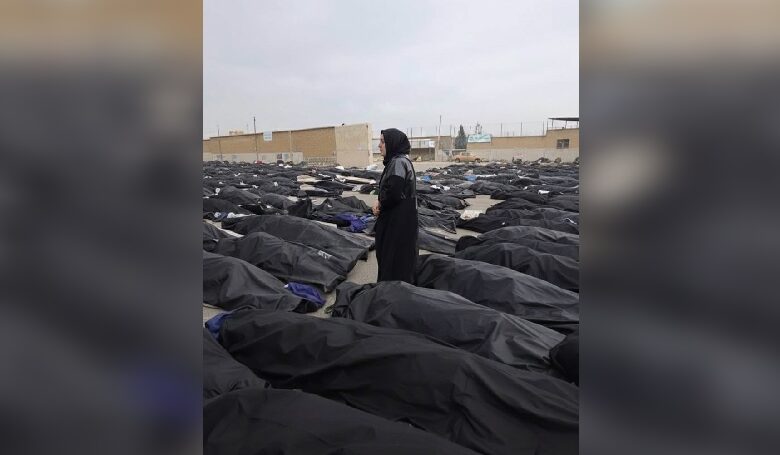
The Islamic Republic, during the 1404 protests, shed the blood of its own citizens within just a few weeks—more than many contemporary global crackdowns.
The death toll in Iran indicates that the Islamic Republic, within just one month, has turned the suppression of protests in Iran into one of the deadliest internal crackdowns against demonstrators compared to other countries in recent decades.
Just in the first quarter of the 21st century, Iran has repeatedly been the scene of popular protests, and the government’s response to these demonstrations has repeatedly resulted in the massacre of unarmed citizens through the use of security and military forces. If we add up these massacres, we see that Iran, alongside its economic and political crises, has become a country with one of the highest casualty figures in domestic protests.
Suppression of November 1398 Protests
The November 1398 protests, which began with a sudden increase in gasoline prices, spread across Iran within days. Security forces, particularly the Islamic Revolutionary Guard Corps and Basij, used heavy weapons against protesters, and reports indicate that in less than two weeks, approximately 1,500 people were killed, including at least 17 adolescents and around 400 women. These figures are based on reports from sources close to power circles and international media. This crackdown is recognized as one of the deadliest suppressions in Iran’s contemporary history.
The 1401 Uprising and “Woman, Life, Freedom” Movement
Following the death of Mahsa Amini, who was in the custody of the Guidance Patrol, a wave of protests emerged known as the “Woman, Life, Freedom” movement. Between September 26 and December 20, 1401, more than 540 people were killed, including 74 adolescents. Some human rights groups, such as the Iran Human Rights Organization, reported the death toll as exceeding 600 people. Additionally, dozens of execution sentences were issued for protesters, with some carried out, demonstrating the severity of extrajudicial measures as well.
December 1404 Protests / Winter 2025–2026: The Bloodiest Wave of Domestic Protests
The recent protests, which began on December 28, 2025, in response to unprecedented increases in prices, inflation, and the collapse of the rial’s value, spread so extensively that within less than 21 days it became one of the most severe crackdowns in Iran’s history.
The figures are highly variable, but several recent credible sources have officially reported:
- Iranian authorities reported that at least 5,000 people have been killed, including approximately 500 security personnel, characterizing these as “violent protests.”
- Active human rights sources in the US (HRANA) reported a confirmed and documented count of at least 3,919 people, stating that this figure is still increasing.
- Some reports and independent media outlets have even stated that the actual total death toll is significantly higher (12,000 to 20,000), although these figures remain under investigation and unconfirmed.
However, field evidence and medical reports also indicate hundreds of wounded with eye and head injuries suspected of being intentionally targeted by protesters with buckshot and direct gunfire.
Other shocking incidents, such as harassment and sexual assault of detainees, including adolescents, in detention centers, have been reported, demonstrating the severe scale of human rights violations that have yet to be widely reported and whose accuracy cannot be confirmed.
Comparison with Protests in Other Countries
To measure the scale of this crackdown in Iran, let us look at the figures from notable crackdowns in other countries:
- Myanmar: Protests following the 2021 coup resulted in the deaths of at least 6,800 people over more than four years, counted from the time of the coup.
- Syria (Arab Spring 2011): During the first 7 months of protests, more than 3,000 civilians were killed.
- Bangladesh (July 2024 Revolution): Approximately 650 to 1,000 people were killed, with some sources reporting higher figures.
Even if we base our assessment on the lowest official and independent figures for Iran (while the actual figures are significantly higher than Iran’s official numbers), compared to similar periods in other countries, Iran’s wave of protests in a very short timeframe has resulted in a significantly higher number of deaths.
Overall, three major periods of protests in Iran demonstrate that the crackdowns have not only been deadlier and faster than those in many countries worldwide, but in many cases are incomparable to longer periods of protest in the world.
This reality becomes more bitter when we know that many of the victims are unarmed citizens, adolescents, children, pregnant women, and peaceful protesters, and some reports even indicate the execution of death sentences and sexual assault in detention centers—matters that reflect the depth of the human rights crisis in Iran.