The Deadly Shadow of Cluster Munitions Scattered Near Shiraz
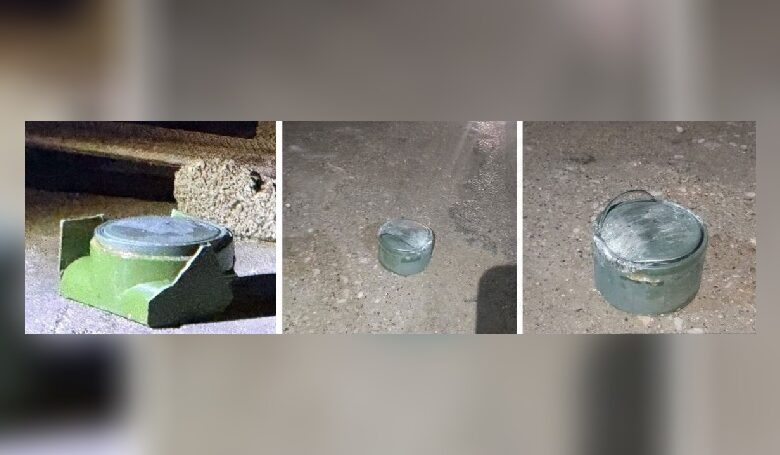
Reports of the discovery of cluster munitions scattered near Shiraz reveal a lethal and persistent threat to civilian populations in the area.
Recent reports based on open-source data analysis and published imagery reveal the use of dangerous weapons near residential areas surrounding Shiraz; weapons that, due to their uncontrollable nature, can threaten civilian lives for extended periods.
Based on findings released by “Bellingcat,” evidence has been obtained of the use of air-dispersed cluster munitions near the village of Kafri. This investigation, relying on image analysis, open-source data, and assessments by weapons experts, presents a concerning picture of the region’s condition.
Experts, upon examining the physical characteristics of remaining fragments, have suggested that these munitions may be “BLU-91/B” anti-vehicle mines deployed through a system known as the “GATOR.” This system is capable of dispersing large numbers of mines over a wide area; each use transforms an extensive area into a danger zone.
According to “NR Jenzen-Jones,” the presence of components such as “aerodynamic fuzing adapters” indicates that these mines were released via cluster bombs from the air. Additionally, “Amaël Kotelsky” has confirmed that these munitions belong to the “GATOR” system; a system capable of simultaneously dispersing a combination of anti-personnel and anti-vehicle mines across a wide area.
Estimates indicate that each unit of this system can disperse dozens of mines across an area of approximately 200 by 650 meters; a range that effectively eliminates the possibility of precise control over landing locations and rapid identification of them.
The technical characteristics of these mines have made them one of the most dangerous types of weapons for civilian environments. After release, these munitions activate with a delay and are equipped with a “self-destruct” mechanism; however, this timing can vary from several hours to several days.
Consequently, even after the end of military operations, the danger persists. Some of these mines may detonate if displaced or even if their position is altered, an issue that significantly increases the likelihood of accidental casualties.
According to compiled data, at least one instance of a civilian death resulting from contact with these mines has been reported; an indication of the immediate and real threat these weapons pose to local residents.
This investigation has also addressed the probable origin of these munitions and has emphasized that the United States is one of the few countries known to possess such systems. A review of data from the Stockholm International Peace Research Institute also shows that the transfer of such weapons to other actors has not been formally reported. This matter could help in identifying potential routes for the use or transfer of these weapons, although uncertainties in this regard remain.
From the perspective of international law, the use of mines (particularly cluster munitions) has always been accompanied by serious criticism. The Convention on the Prohibition of Anti-Personnel Mines (the Ottawa Treaty) and protocols related to the Convention on Certain Conventional Weapons emphasize the restriction of such weapons.
Even in cases where countries have not acceded to these treaties, fundamental principles of humanitarian law, including the distinction between military and civilian objectives, restrict the use of weapons with uncontrollable effects.
In this particular case, the proximity of the mine dispersal area to residential zones has intensified concerns. Although the intent in using these weapons may have been to restrict access to military facilities, in practice, the consequences directly affect civilians.
Given that the exact number of remaining mines is unclear and the possibility of undiscovered instances in the area exists, the danger continues. This situation not only threatens the lives of residents but has also severely disrupted their daily existence, from transportation to access to services.
In summary, the findings of this report demonstrate that the use of cluster munitions near residential areas is not merely a temporary threat, but creates a persistent crisis that can endanger civilian lives for years to come.