The Killing of Poya Molayi-Rad by Government Forces is an Attempt to Silence the Voices of Victims’ Families Seeking Justice
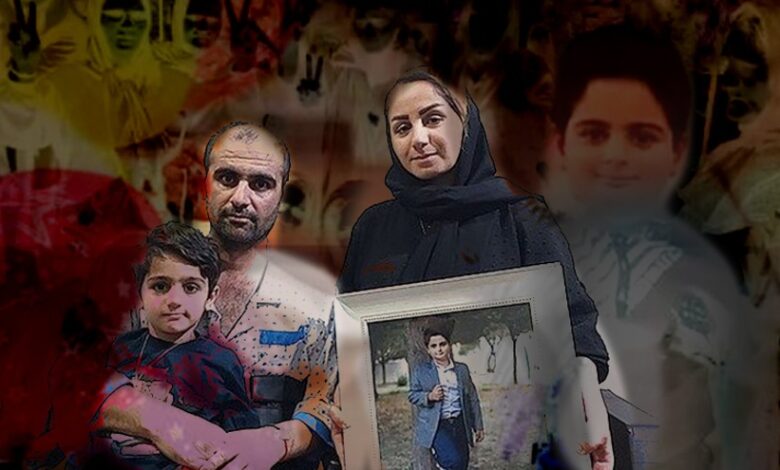
The killing of Poya Molayi-Rad, the maternal cousin of Kian Pirfalak, by law enforcement forces in the city of Izeh during a birthday celebration at Kian’s grave is a clear manifestation of the government’s attempt to silence the voices of families seeking justice for victims of popular protests.
Hadi Ghomi, director of the human rights campaign in Iran, referring to the killing of Poya Molayi-Rad by law enforcement, said: “The Islamic Republic authorities have given security forces the freedom to shoot and kill critics and opponents of their policies.” According to Hadi Ghomi, “The Islamic Republic’s machine of massacre is set in motion even with the holding of memorial ceremonies for victims, and families cannot mourn their lost loved ones.”
Hadi Ghomi added: “World leaders must increase the cost of the Islamic Republic’s escalating brutal and unlawful violence against the people for the leaders of the Iranian government.”
First They Killed 9-Year-Old Kian, and Months Later It Was 21-Year-Old Poya’s Turn
On June 11, 2023, Kian Pirfalak’s family, a 9-year-old child who was killed by military forces in the city of Izeh, held a birthday celebration for Kian’s 10th birthday at his grave in the village of Porchestan in Izeh. Following the birthday celebration, law enforcement forces went to the cemetery and secured the area, and Poya Molayi-Rad, the maternal cousin of Zeinab Molayi-Rad, Kian’s mother, was shot and killed by law enforcement officers. According to the government’s account, 21-year-old Poya drove his car toward the forces, causing an accident and killing a law enforcement officer. State media claimed that the forces were first attacked “deliberately” with a vehicle and they responded by shooting the attacker.
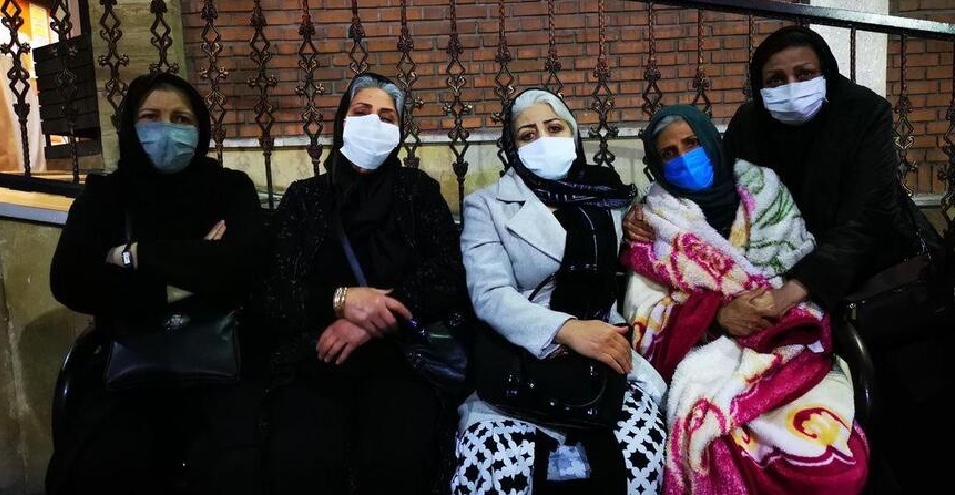
The government killing of 21-year-old Poya Molayi-Rad continues a pattern of severe pressure and threats against families seeking justice in Iran. These families have become more united than ever before in recent months, and their unity has greatly concerned the government. On Friday, June 9, a group of justice-seeking families from Sanandaj, Divandarreh, and Dehgolan visited families of those killed in the 2022 protests in Saghez and Boukan. On their return, the Ministry of Intelligence arrested more than 30 of them. After several hours of detention, most were released on the road between Saghez and Divandarreh, where they remained stranded on the roads until morning. The Islamic Republic’s history of exerting pressure and threats against justice-seeking families is very dark, and concerns about the intensification of these threats and security and judicial pressures have increased.
Kian’s Killing and the Government’s Scenario to Carry Out the Execution of Mojahed Korkor
On November 18, 2022, during popular protests in Izeh, armed forces fired on the vehicle carrying 9-year-old Kian Pirfalak and his father, killing Kian and seriously injuring his father. It was after this that Zeinab Molayi-Rad, Kian’s mother, took up the banner of seeking justice for her son and also filed a legal complaint against the shooter. However, judicial and security authorities, without providing accountability or transparency about this government killing, not only failed to pursue Zeinab Molayi-Rad’s complaint but claimed to have arrested the shooters of Kian. Mojahed Korkor, one of the Izeh protesters, was sentenced to death on charges of shooting at Kian and his father in a completely illegal and non-transparent process. Despite the government’s insistence on Mojahed Korkor’s guilt, Kian Pirfalak’s family explicitly stated that Mojahed Korkor is not their son’s killer and have no complaint against him. On March 2, 2023, Kian Pirfalak’s uncle wrote on his Twitter page: “It appears that there was a strong and biased will from the beginning in directing the case and attributing the charge of Kian’s murder to Mojahed Korkor.”
He also wrote: “The attribution of Kian’s murder charge to Mojahed Korkor, despite another case in the first branch of the Revolutionary Court with charges of enmity against God, suggests an attempt to make maximum use of defendant Mojahed Korkor.”
According to existing laws, Kian Pirfalak’s family, as the victim’s family, can request retribution, but when the family itself formally declares that they have no complaint against Mojahed Korkor, the government cannot proceed with the trial according to its own narrative and scenario. One of the reasons for intensifying pressure and threats against Kian Pirfalak’s family and especially Zeinab Molayi-Rad is this justice-seeking behavior that stands against oblivion and also to reveal the truth against the government. After the killing of 21-year-old Poya Molayi-Rad, state media began threatening Zeinab Molayi-Rad; the Tasnim News Agency, affiliated with the Islamic Revolutionary Guards Corps, and the Saberin News Telegram channel described Kian Pirfalak’s mother as “one of the main instigators and troublemakers” and accused her of “supporting terrorists.” The Noor News website, close to the Supreme National Security Council, also introduced Mahnoor Molayi-Rad alongside “counter-revolutionary currents as the main facilitators” of the death of a Fraja officer in Izeh and wrote: “Islamic mercy does not work for such people, and they must be dealt with decisively.”
Source: Human Rights