The Logic of Massacre Exposed; When Privileged Elites Consider Eliminating People ‘More Cost-Effective’
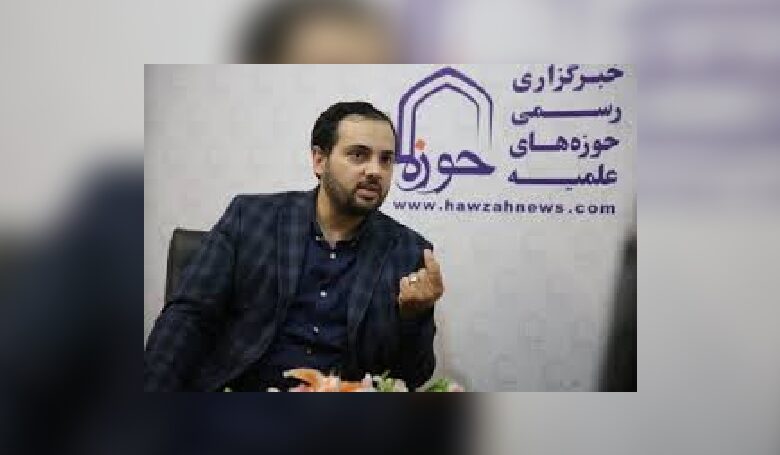
The logic of massacre has been exposed; statements by “Ahmad Qadiri Abianeh” reveal a regime perspective that considers eliminating people more cost-effective than accountability.
The statements recently released by Ahmad Qadiri Abianeh are neither marginal commentary nor harsh personal analysis. These statements should be understood as a candid confession of the logic of repression and crime in the Islamic Republic; a logic that has been executed for years in streets, prisons, and gallows, and now has directly flowed from the lips of one of the system’s privileged offspring.
He explicitly states: “If these people had been eliminated on the spot, the cost to the system would have been far less than what it is now, rather than you wanting to execute them one by one, each one becomes a pressure file on the Islamic Republic. No matter how you look at it, from any perspective, it was right that in a decisive action and showing an iron fist, you would have eliminated them on the spot. Now they say there were about 3,000 deaths in total; if it had been 5,000, the cost to us would have been less than now when you want to execute one today, another tomorrow.”
These statements constitute explicit incitement to mass killing of people; not from a field commander in a moment of crisis, but from someone raised in a diplomatic family, with university education, who presents himself as familiar with “international law.” This very fact makes the tragedy more nakedly apparent.
Ahmad Qadiri Abianeh’s statements are a direct confirmation of crimes that the Islamic Republic has committed against the Iranian people over decades, particularly during recent protests; from direct fire at protesters in the streets, to suspicious deaths in detention centers and hasty executions with security files. What he calls “more cost-effective” is precisely the policy that UN human rights investigators, international organizations, and families of victims have been warning about for years: “Physical elimination as a governance tool.”
These statements reveal a deep fissure: between people who came to the streets for their most basic rights and ivory tower dwellers for whom the absence of people is merely a computational problem. In this logic, humans are not citizens, but costs; a number to be increased or decreased to manage international pressure.
Qadiri Abianeh, who presents himself as educated in international law and has written works such as “Psychological Operations Techniques in Media and News,” is known not for academic research but for extremist and controversial positions; from openly defending the Islamic Republic’s attempt to obtain nuclear weapons, to praising military cooperation with Russia and calling nuclear retreat a “slaughter” of the country’s capabilities.
He previously, during the 2022 protests, referred to protesters not as opposing citizens, but as “foot soldiers of the enemy’s hybrid warfare,” and at the peak of dehumanization, reduced women protesting mandatory hijab to “street prostitution networks” and implementers of “undressing” projects, calling for their activities to be “shut down.” His recent statements are a logical continuation of that narrative; a narrative that first strips humans of their humanity and then makes their physical elimination justifiable.
This perspective is not rooted in one individual. His father, “Mohammad Hassan Qadiri Abianeh,” former ambassador of the Islamic Republic, has repeatedly spoken about people in dehumanizing language; including when, concurrent with the protests, he called protesters unrealistic and said: “The Iranian people have no right to compare themselves to Arabs. Arabs have the right to better lives.”
Placing these positions side by side provides a clear picture: “The Islamic Republic not only in practice, but in its internal discourse as well, sees people as a bothersome problem; a problem that if eliminated on the spot, is, by their claim, more cost-effective.”
Ahmad Qadiri Abianeh’s statements must be viewed beyond a media controversy. These statements are a living document of the crime-oriented logic of the regime against the Iranian people; a logic that no longer remains hidden, but is now coldly and calculatingly expressed in words.