The Role of Prayer and Christian Unity in the Midst of Venezuela’s Political Crisis
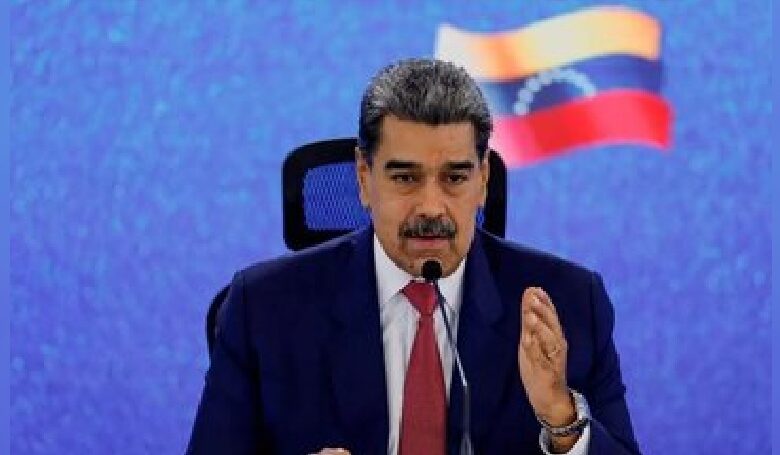
The prayer ceremony that “Nicolas Maduro” held with the presence of American and Venezuelan priests at the “Miraflores” Palace goes beyond a mere symbolic religious act in the midst of Venezuela’s political crisis.
This event took place after Maduro received a letter from a priest in Michigan, USA, in which he requested the holding of a prayer ceremony aimed at seeking peace for Venezuela. The holding of this ceremony took place at a sensitive point in Venezuela’s history, where geopolitical tensions, economic crisis, and social divisions have placed the country in an unprecedented situation. The main question is: “Does prayer have real power to bring change in such circumstances, or is it merely considered a tool of state politics?”
The Church of Venezuela has for years acted as a social mediator. Although some church leaders have criticized Maduro government policies, their presence at the prayer ceremony at Miraflores Palace demonstrates the Church’s great capacity to build bridges between political groups and even between nations.
Maduro’s invitation of American priests, especially amid severe tensions with Washington, conveys the message that faith can remain as a channel for interaction, even when diplomatic relations are closed or strained.
In Christian tradition, prayer, especially when performed collectively, carries deep meaning. Joint prayer by priests from both countries can be interpreted as an effort to reduce enmity, ease fears, and invoke divine blessing for peace. The quoted phrase from the American priest stating: “Let Christ take control of the situation and not allow any American soldier to fire upon Venezuela,” is not only a spiritual plea, but also a symbolic Christian protest against war.
This type of prayer has precedent in Christian history. Christians during the Cold War, Vietnam War, and Iraq War also held similar gatherings for peace. Therefore, this event can be considered a continuation of that tradition.
Venezuela’s Christian community has taken on a more prominent role in recent years due to an unprecedented economic crisis, food and medicine shortages, the migration of millions, and the collapse of currency value, in supporting the people. Churches have become relief centers, and this has strengthened their standing among the people.
The aforementioned prayer ceremony can convey to Venezuelan Christians the message that their voice is heard in the country’s political sphere, even if economic and political realities remain heavy.
From a diplomatic perspective, holding the ceremony with the presence of American priests can also be interpreted as a tension-reducing gesture. Maduro has repeatedly accused the United States in recent years of attempting regime change, but the invitation of American religious leaders shows that even at the height of disagreements, spiritual channels for dialogue remain open.
Of course, this action will likely not produce an immediate and practical change in American foreign policy, but it may in the long term influence the public opinion of American Christians, who constitute a very large and influential community. The American Christian community has a history of pressuring governments to reduce foreign tensions.
A significant portion of Maduro’s critics believe that his use of religious symbols at critical junctures is more of a political tool than a sincere religious conviction. This view is particularly raised among government opponents and some church figures.
However, even if the motivations are political, one cannot deny the real role and social impact of prayer and spiritual unity. In Venezuela’s heated environment, any measure that reduces the severity of potential violence is worthy of examination and support.
The prayer ceremony with the presence of American and Venezuelan priests, although it cannot replace formal negotiations or political reforms, carries an important message: “Faith can still be the common language of people whom politics has built walls between.”
In circumstances where the sound of weapons and military threats resonate in the region, prayer as a symbol of Christian peace can create a moment of calm and hope for the deeply injured people of Venezuela, even if the path to peace is difficult and long.