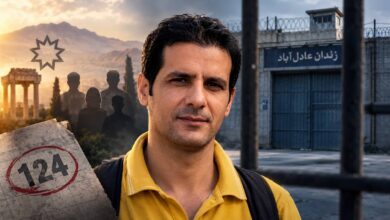
Three Arrests in Three Days for Supporting People and Defending Cultural Identity
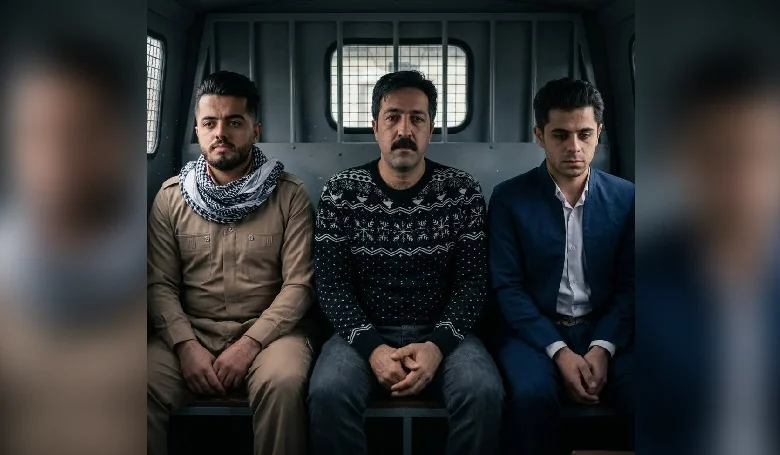
Abed Alizadeh in Takab, Karim Rasoli in Mahabad, and Vahid Valizada in Tabriz were arrested by the Islamic Republic’s security forces within a span of three days; three cases in which, according to human rights reports, there is no clarity regarding the presentation of court verdicts or clear charges, and once again concerns about the suppression of freedom of expression, civil activity, and citizens’ right to defend their social demands and cultural identity have increased.
Within three days, three citizens in different regions of Iran were arrested by the Islamic Republic’s security forces: Abed Alizadeh in Takab, Karim Rasoli in Mahabad, and Vahid Valizada in Tabriz.
The common factor in these three cases is not only the short time between arrests. In all three instances, based on published reports, the families and relatives of the detainees lacked precise information about their fate in the initial hours and days following arrest, and no clear information has been released regarding possible charges.
These arrests occur in circumstances where social, cultural, and media activities in many regions of Iran, particularly among Kurdish and Turkish activists, continue to face security crackdowns.
Abed Alizadeh, a Kurdish citizen from Takab and media activist, was arrested Wednesday evening, August 19, 2026, by government forces in the city and transferred to an unknown location.
According to reports, officers arrested him without presenting a court warrant. Other sources have reported that Alizadeh was active on social networks regarding social issues and people’s demands, including protests against inflation, support for victims of December protests, freedom of expression, and promotion and preservation of Kurdish language and culture. Until the time of the report’s publication, his place of detention, the reason for his arrest, and possible charges against him remained unknown. According to published reports, Alizadeh’s family’s efforts to find out about his condition have so far been fruitless.
One day before Alizadeh’s arrest, Karim Rasoli, a Kurdish citizen from Enderqash village in the Mahabad area, was also arrested by the Ministry of Intelligence forces.
According to Hengaw’s report, Rasoli was arrested on Tuesday, August 18, on one of Mahabad’s streets by Ministry of Intelligence forces and transferred to an unknown location. This report also emphasized that officers did not present a court warrant during his arrest. Rasoli has been identified as a member of the Enderqash village council in the Sharwian area of Mahabad.
Until the time of this report’s preparation, no information had been released about the reason for his arrest, possible charges, or his place of detention.
In the third case, “Vahid Valizada,” a Turkish civil and cultural activist, was arrested on Thursday, August 20, 2026, after Ministry of Intelligence forces entered his home in Tabriz. According to reports, security forces entered and searched the residence without presenting a warrant and confiscated some of his personal belongings. Valizada was then arrested and transferred to an unknown location. At the time of this report’s publication, there was no precise information about the arresting agency, his place of detention, the reason for his arrest, or possible charges against this civil activist.
The name Vahid Valizada has previously been mentioned in cases related to civil activities in Tabriz. Human rights sources have documented his previous arrest during protests related to the drying up of Lake Urmia in 2014; in that case, he was arrested along with several other civil activists.
These three cases, despite differences in location and type of activity, present a similar picture: citizens who have been active in media, social, cultural, or local spheres and, following the entry of security forces, have been removed from free access to society without transparent notification about charges and place of detention.
In the case of Abed Alizadeh, activity on social networks and support for people’s demands and Kurdish language and culture have been mentioned. Karim Rasoli was a member of a village council, and Vahid Valizada is known as a civil and cultural activist.
Of course, these facts alone do not prove that these activities were the definite reason for the arrest of all three; because the Islamic Republic’s judicial and security authorities have not, at least until the time of this report’s preparation, announced specific charges against them.
However, this very absence of official notification has itself become one of the main problems in Iran’s security cases: families remain unaware of where their loved ones are being held, charges are not announced, and society does not know exactly why the arrested person has been deprived of freedom.
What sets these arrests apart from ordinary legal news is the issue of freedom of expression and citizens’ right to participate in social and cultural matters.
In a society enjoying civil liberties, supporting victims of protests, criticizing economic conditions, engaging in media activity, defending one’s native language, or participating in local affairs should not in itself be considered a crime. However, in Iran, multiple reports over recent years have shown that civil, political, cultural, and media activists have faced summonses, arrests, security cases, imprisonment, and legal restrictions because of their activities or statements.
The history of similar cases also shows that security treatment of protest and civil activities is not a new issue. The Kurdistan Human Rights Network has documented multiple cases of arrests of Kurdish citizens and activists by security institutions in its reports.
This process raises a fundamental question for the Islamic Republic’s government: if a citizen criticizes the economic situation, remembers victims of protests, defends his language and culture, or participates in civil affairs of his society, exactly where is the line between “citizenship rights” and “security charges”?
The concerns of critics of the Islamic Republic are not limited to temporary arrests. In recent years, multiple cases have been filed against protesters and activists with security charges, and some of these cases have resulted in long prison sentences and, in some cases, even death sentences.
This very history has meant that the arrest of an activist or citizen in Iran is not merely understood as a few hours or days of deprivation of liberty. For families, the beginning of an arrest can be the start of an unknown path that leads from interrogation and uncertainty to the formation of a legal case and the issuance of harsh sentences.
In such circumstances, fear of the consequences of expression or political opposition can itself become a tool to silence society; that is, even before a citizen is arrested, the possibility of security action forces him into silence.
The arrests of Abed Alizadeh in Takab and Karim Rasoli in Mahabad alongside the arrest of Vahid Valizada in Tabriz also highlight another point. The issue is not merely about suppressing one ethnic group or one particular region. When a Kurdish activist is arrested for media and cultural activity, a village council member in Mahabad, and a Turkish cultural activist in Tabriz within a matter of days, a broader discussion—namely the state of civil liberties across the country—is raised.
Defense of local language and culture, social activity, or expression of economic protest are part of the diversity of Iranian society; however, security treatment of such activities can convey the message that any activity independent of the formal government structure may be viewed with security suspicion.
Until the time of this report’s preparation, no clear information has been released by official authorities regarding the fate of Abed Alizadeh, Karim Rasoli, and Vahid Valizada. This silence increases families’ concerns and makes independent investigation of the cases difficult.
If there is a charge against these individuals, it is natural to expect that the charges be announced transparently and their legal proceedings be carried out according to law and with respect for the rights of the accused. If no such charge exists, the continuation of detention and the silence regarding families raises more serious questions about the basis of these actions.
Ultimately, freedom of expression is meaningful when a citizen can criticize the government without fear of arrest and punishment, speak about society’s problems, and defend his cultural and social rights.
The case of three citizens arrested in Takab, Mahabad, and Tabriz once again raises this fundamental question: in the Islamic Republic, where exactly is the limit of the government’s tolerance for a critical citizen?
If the answer to this question is arrest, suppression, and in some cases the formation of cases with harsh punishments, what is lost is not merely the freedom of a few individuals; but rather a society’s right to speak, protest, and think differently.