Three Women Protesters Against Mandatory Hijab in Iran Sentenced to Total of 55 Years in Prison
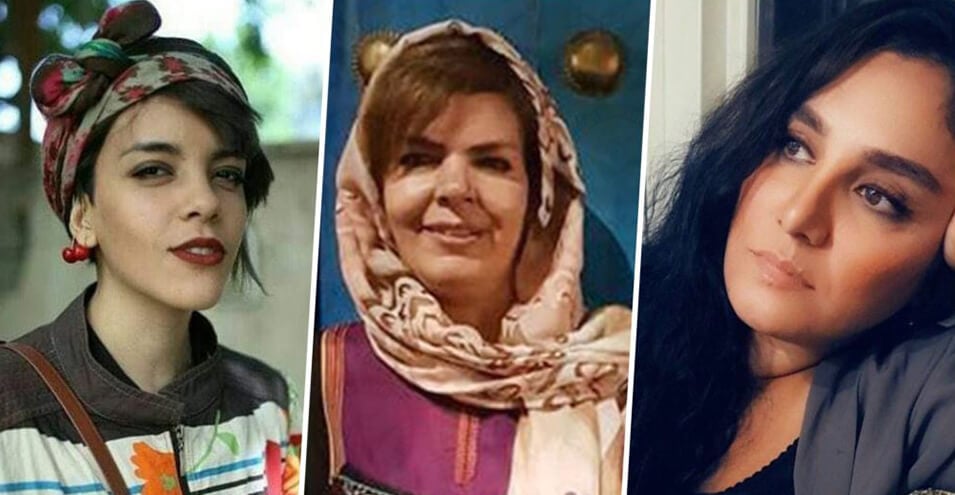
The lawyer of two of three female citizens protesting mandatory hijab who are held in Qarchak prison told the “Hrana” website that these three have been sentenced to a total of 55 years in prison.
Amir Raisian added that if the verdict becomes final, “the severest punishment, which is 10 years of punitive imprisonment for each of them, will be enforceable.”
According to a report published by “Hrana,” the verdict was announced without the presence of these three women’s lawyers, and only in the presence of Mojgan Keshavarz, Manizheh Arabshahi and Yasaman Aryani, the three imprisoned protesters.
Amir Raisian, the lawyer of Manizheh Arabshahi and Yasaman Aryani, also told the news and analysis website Ensaf News that “it appears the verdict includes ten years of punitive imprisonment that is enforceable.”
Mr. Raisian emphasized in a conversation with Ensaf News that he has not yet received details of the verdict and cannot yet speak about sentences issued in other criminal charges.
The charges brought by the Islamic Republic’s judiciary against Arabshahi, Keshavarz and Aryani include “assembly and conspiracy with the intent to act against national security,” “propaganda against the system,” “incitement and provision of means for corruption and obscenity,” and additionally, in the case of Mojgan Keshavarz, “insulting sacred values.”
Mr. Raisian states that “throughout the case, neither during the investigation stage at the prosecutor’s office nor in court sessions have lawyers been allowed entry under any circumstances.”
This was previously met with protests from Amnesty International. The international organization had stated that these three female citizens “are in prison without having access to a lawyer.”
According to reports, the arrests of Mojgan Keshavarz, Manizheh Arabshahi and Yasaman Aryani took place in connection with a video released on social media. In this video, which was recorded on International Women’s Day, these three individuals are seen without headscarves distributing flowers among female passengers in the Tehran metro and discussing hopes for women’s rights in Iran.
Amnesty International stated that their arrest “is part of the widespread suppression and arrest of women’s rights activists and protesters against mandatory hijab that began in January 2018.”
Amnesty International in another statement released on July 15 also said that detained protesters “are living in unsuitable conditions” and that the Islamic Republic is engaged in a “relentless effort” to force them into “televised confessions.”
Broadcasting “televised confessions” on the Islamic Republic’s state television has precedent and has occurred with other groups of people, including civil and political protesters, as well as detainees in security and economic matters.
The court hearing for Arabshahi, Keshavarz and Aryani was presided over by Judge Moghisseh. Mohammad Moghisseh, head of Branch 28 of the Revolutionary Court of Tehran, has been the judge in the court cases of Nasrin Sotoudeh, Bahareh Hedayat and many other political and civil protesters arrested in Iran.
Source: Radio Farda