Tremors in Tehran’s Power Structures, with Military Rifts and Collapse of the Islamic Republic’s Foreign Arm
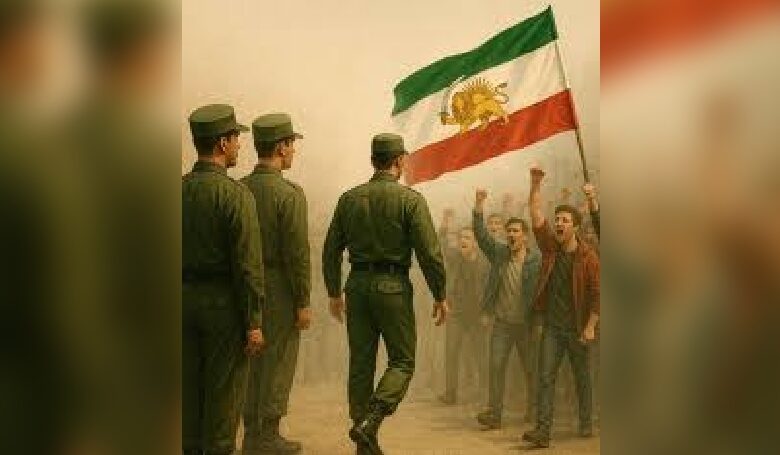
Rising waves of insubordination in the military, thousands joining the “national cooperation” campaign, and weakening of the Islamic Republic’s foreign arm are clear signs of tremors in Tehran’s power structures.
At a time when signs of turmoil from within Iran’s military structure are leaking outward, sources say the country is on the brink of a new crisis. Released reports indicate a massive wave of insubordination among armed forces, a trend that according to witnesses is rapidly spreading and has exposed internal rifts in the system more than ever before.
Based on released data, more than fifty thousand military and security personnel have joined a campaign called “national cooperation;” an action that has created a wave of concern and confusion within the government. Some dissenting officers have declared that their goal is to “restore Iran’s glory,” even if the price is imprisonment or suppression.
According to observers, these developments are occurring while an unprecedented fear has formed at security levels near the Supreme Leader’s office, and pressures to control the situation have reached their peak.
Simultaneously, the Islamic Republic’s foreign arm has also become unstable. With declining Iranian influence in Gaza and the decline of Iran-backed groups, particularly Hamas, analysts speak of “the severing of one of the system’s most important foreign arms.” On the international level as well, the Washington-Tel Aviv coalition appears more cohesive than ever.
In this regard, the recent speech by Israel’s Prime Minister at the United Nations General Assembly was a defining moment. He described Iran’s nuclear program as a “global threat” before world leaders and called for the complete return of sanctions. Analysts say the message of this speech was designed for three audiences: the international community, Israeli public opinion, and the commanders of the Islamic Republic.
The combination of these two scenes (the collapse within Iran’s military body and international consensus against Tehran) paints a dark and inevitable picture for the Islamic Republic. Observers believe the government faces not one option, but an inevitable path to collapse.
Released reports and recent developments show that the Islamic Republic faces a multi-layered crisis; a crisis that is no longer merely political or economic, but has reached a stage of structural erosion in the loyalty of armed forces and security apparatus.
In centralized power systems, when cohesion within the military body is lost, political stability rapidly collapses. If reports of tens of thousands of military personnel joining protest movements are accurate, Iran is effectively on the brink of a command and control crisis.
On the other hand, reduced regional influence and successive defeats of the Islamic Republic’s proxy arms, particularly in Gaza, Lebanon, and Iraq, signify the collapse of Tehran’s strategic depth doctrine. As a result, the Islamic Republic finds itself in an unprecedented situation, facing insubordination from within and increasing isolation and direct military threats from without.
In the international arena, there are signs of a new axis forming among the United States, Israel, and Arab allies against Tehran, an axis whose goal is perceived not merely as containment, but as fundamental behavioral change in Iran’s system.
In the view of experts, what is occurring today is not a temporary crisis, but a turning point in Iran’s political transformation. In these circumstances, the government’s path forward is narrowed between two limited options: fundamental reform or gradual collapse. Moreover, signs from within and without indicate that time for choosing is running out.