Trump’s Sharp Attack on Catholic Leader; New Tensions Between Politics and Religion Over Iran and Global Security
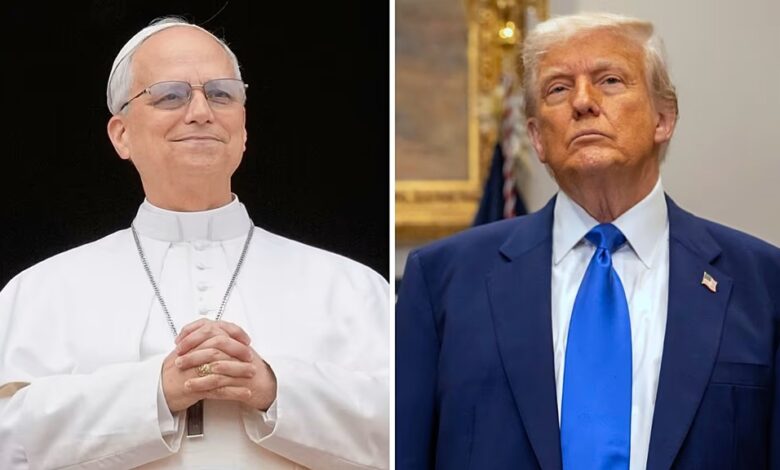
Donald Trump’s sharp attack on Pope Leo XIV, the leader of Catholics worldwide, comes as tensions between politics and religion over Iran and global security have become one of the main axes of discussion in the international sphere.
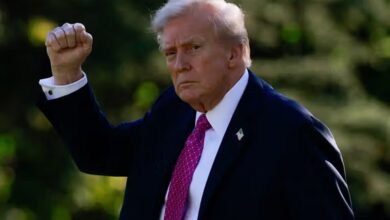
In the latest example of confrontation between politicians and religious leaders, Donald Trump, the President of the United States, issued a statement with a harsh tone against Pope Leo, the leader of Catholics worldwide, and severely criticized his views.
In this statement, Trump described the Pope’s positions in various areas, including security, foreign policy, and dealing with crime and delinquency, as “weak,” and said: “He is weak on crime and terrible on foreign policy.” These remarks come at a time when the role of religious leaders in shaping public opinion on global crises, including Iran, has received more attention than ever before.
The American President also responded to the Pope’s remarks about “fear” of his government’s policies, and referring to the coronavirus pandemic period, stated: “He talks about fear of the Trump administration, but he doesn’t mention the fear that the Catholic Church and other Christian organizations had throughout COVID. When they were arresting priests, preachers, and anyone else for holding church services, even when going outside and maintaining a distance of ten and even twenty feet from each other.”
Trump, in another part of his remarks, referred to geopolitical issues and directly questioned the Pope’s positions on Iran. He stated: “I don’t want a Pope who thinks there’s nothing wrong with the Islamic Republic of Iran having nuclear weapons.” These remarks come at a time when Iran’s nuclear program and international concerns about it remain one of the main issues in global relations.
He also addressed the issue of Latin America and spoke about policies related to Venezuela, saying: “I don’t want a Pope who thinks an American attack on Venezuela is terrible.” He further accused this country of sending drugs and criminals to the United States.
Trump, continuing his statement and emphasizing his government’s performance, said: “And I don’t want a Pope who criticizes the President of the United States, while I am doing exactly what I was elected by a decisive vote to do: an unprecedented reduction in crime and establishing the best stock market in history.”
Among the most controversial parts of this statement was his claim about the Pope’s election. He claimed: “Leo should be grateful, because as everyone knows, his election was a great surprise. He was not on any list to become Pope and was only chosen because he was American and the Church thought this was the best way to interact with President Donald J. Trump. If I had not been in the White House, Leo would not have been in the Vatican.” This claim comes at a time when the process of electing the leader of Catholics has traditionally been conducted within the framework of the Church’s independent structure and through the assembly of cardinals.
Trump also criticized the Pope’s meetings with political figures and specifically referred to David Axelrod, saying: “Such connections with these people are not acceptable to me.”
This verbal tension has formed at a time when in recent years, disagreements between some political and religious leaders over issues such as immigration, social justice, war and peace, especially how to deal with the Islamic Republic of Iran, have increased.
On the other hand, Iran’s domestic situation, including the suppression of popular protests, widespread social restrictions, and pressure on religious minorities, has made this country one of the main axes of ethical and political discussions at the global level.
Experts believe that such confrontations represent a deeper gap between political perspectives and moral-religious views on managing global crises; a gap that in the current tense circumstances could have broader consequences for international relations and public opinion.