Uncertain Future of Turkey-EU Refugee Agreement
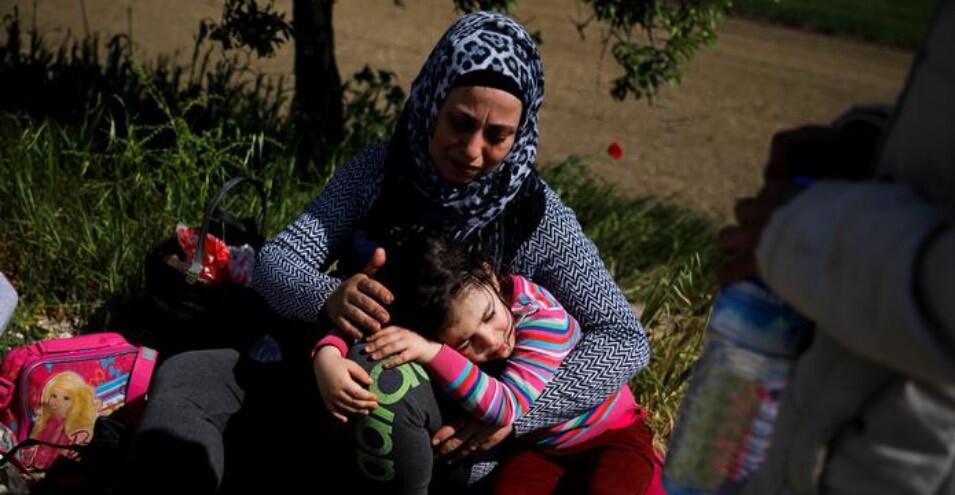
Ankara and Brussels agreed in 2016 to prevent irregular entry of refugees from Turkey into the European Union. However, neither Turkey nor the European Union is satisfied with the implementation of this agreement. Revising the agreement is also not straightforward.
Initially, it appeared that the European Union’s agreement with Turkey on refugees was working well and progressing. The number of refugees coming from Turkey to the European Union—primarily to Greece—decreased sharply, as Ankara was effectively controlling its borders. However, Turkey’s willingness weakened. The reason given was that the European Union was not fulfilling its commitments regarding financial assistance. Even threats to cancel the agreement were heard.
Doubt about the agreement also increased in Europe. Some countries argue that the agreement sends the message that one can extract concessions from the European Union.
Meanwhile, leaders and governments of EU member states are concerned that ending this agreement could once again increase the number of refugees and that far-right movements and populist movements could exploit this to gain power.
Merkel’s Preliminary Measures
Germany will assume the presidency of the European Union Council in July 2020. Angela Merkel, German Chancellor, is making efforts to keep the agreement with Turkey alive and is using the executive authorities related to this agreement.
The German Chancellor, in her latest meeting with Recep Tayyip Erdoğan, Turkish President, last January, expressed appreciation for Turkey’s efforts in accepting millions of Syrian refugees. Furthermore, Merkel emphasized the continuation of financial aid to Turkey. In the March 2016 agreement, the payment of six billion euros to Turkey over several years to support Syrian refugees was approved.
Gerald Knaus, one of the architects of the Turkey-EU agreement, believes: “The most important point in the Istanbul meeting was Merkel’s outlining the prospect of continued financial assistance for refugees.” According to this refugee affairs expert, the agreement faces the risk of collapse without financial support.
Asylum System “Collapsed”
Knaus also observes other urgent problems that, if left unsolved, could jeopardize the existing agreement. He says: “The European Union is not in a position to fairly and respectfully handle asylum requests on Greek islands while respecting human rights. The asylum system has essentially collapsed. Currently, the chances of returning [refugees whose asylum applications are rejected] to Turkey are almost zero.”
According to Gerald Knaus’s prediction, if the European Union cannot solve these problems, the agreement with Turkey will soon collapse.
To advance the existing agreement, the German government has intensified negotiations with interested and influential parties within the European Union. Berlin is now engaged in behind-the-scenes negotiations with Croatia, the current president of the European Union Council, Josep Borrell, the EU’s foreign policy chief, and Oliver Varhelyi, the EU’s development commissioner.
Laura Battaia, Secretary General of the Turkey Caucus in the European Parliament, considers consensus among European Union member states to be decisive. According to Ms. Battaia, “The European Union should continue to provide financial support for Syrian refugees. There is a need to continue investment in providing for Syrian refugees and thereby strengthening social resilience. It appears that there is sufficient political will for such measures. Both Turkey and the European Union are willing to continue this.”
A Heavy Shadow Over Bilateral Relations
However, Pano Putjara, a migration expert at the Institute for Economic Research in Munich, Germany, is skeptical about the continuation of the Turkey-EU agreement. He says: “Turkey carried out its latest military operations without coordination with its NATO allies.
These military operations increased the number of refugees. Under such circumstances, one cannot necessarily expect the European Union to give Turkey a blank check. If the European Union decides to continue cooperation, it would naturally raise the demand that such military operations not be repeated.”
Further, fundamental questions are being raised. Given the current political situation, it is questionable whether cooperation on refugee policy will continue. The weakening of democracy and human rights in Turkey, as well as that country’s military operations in northern Syria, which have drawn worldwide criticism, have severely negatively affected the relations of European Union members and other European countries with Ankara.
Special Summit on February 20
Merkel’s success in advancing the agreement with Turkey also depends on money. EU member states are now negotiating over the European Union’s budget for the next seven years.
These negotiations have become more difficult with Britain’s departure from the European Union, as London will no longer contribute funds to their common treasury. Charles Michel, President of the European Council, has called member states to participate in a special summit on February 20 in Brussels to facilitate their reaching consensus.
Whether, as part of a common refugee policy, billions of euros will continue to flow to Ankara or not will be one of the items on the agenda of the forthcoming summit.
Source: DW