US Dollar Breaks Record Price of 13,000 Tomans in Iran’s Free Market
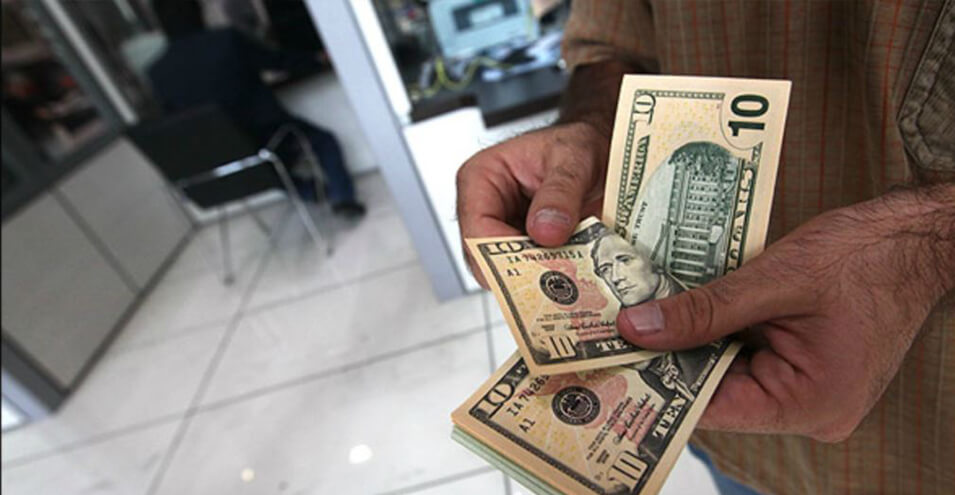
Reports from Iran’s free currency and coin market indicate new record prices being set. The latest recorded price for each US dollar reached 13,000 tomans in the afternoon of Monday, September 3rd, marking an unprecedented record for this currency.
Hours before this price was recorded, each dollar had crossed the 12,000 toman threshold, and the price of each coin also reached 4,585,000 tomans.
These figures indicate that the value of Iranian rial has lost up to 15 percent of its value over the past three days.
The value of Iran’s national currency has collapsed by more than 70 percent over the past year.
According to reports, the price of each euro was also traded at 14,150 tomans, the pound at 15,744 tomans, and the UAE dirham at 3,311 tomans.
The full Bahar Azadi coin of the new design was traded at 4,585,000 tomans and the full Bahar Azadi coin of the old design at 4,011,000 tomans.
The website of the newspaper “Donya-ye Eqtesad” wrote in an analysis of market conditions on Monday that “it appears that what created the conditions for the return of market volatility was caused by the re-entry of speculative and precautionary demand into the market. On the other hand, according to market activists, successive breaches of price levels have caused significant technical demand to enter the market day by day”.
The website added: “Some other activists believed that seasonal demand from student migration also exists in the market; under the influence of this type of demand, the price of Canadian dollar reached around 9,800 tomans yesterday”.
One of the main reasons cited for renewed tension in Iran’s coin and currency market despite the implementation of new currency policies is the statements of Abdolnasser Hemmati, the Central Bank Governor.
Mr. Hemmati said on Saturday that “foreign exchange reserves are the honor of the central bank” and the policy is that “central bank resources should not be used to regulate the foreign exchange market” and control of the currency market should be achieved through the entry of revenues from non-oil exports.
However, economic analysts and market activists say that exporters of non-oil goods who are required to present their currencies in the market to bring it into balance, only enter a portion of it into the market which is insufficient to meet its needs.
Based on statistics presented by Iran’s Central Bank Governor, Iran’s non-oil exports amount to 40 billion dollars annually.
On the other hand, as the deadline for major US sanctions approaches on November 4th, which is set to target Iran’s oil industry, the future outlook for economic actors has become dim, and statements by Islamic Republic officials have been unable to restore calm to the market.
Iran’s financial markets, which have been severely turbulent in recent months, achieved temporary calm after the Central Bank presented new currency policies on August 7th, to the point where the dollar price fell below ten thousand tomans.
However, in recent days, the price of foreign currency and gold coins has surged, and according to ISNA news agency’s report on Sunday, “market activists” say: “Now ordinary sellers are very rare in the market, and if there are sellers, they are people engaging in transactions for speculation”.
With the United States’ withdrawal from the nuclear deal between six world powers and Iran known as the “JCPOA” on May 8th of this year, Iran’s economic situation has become tense, and in addition to reduced oil exports over the past month, prices of essential goods, currencies, and coins have increased significantly.
Source: Radio Farda