Welfare Organization Distances Mental Health from Science with ‘Autism Jurisprudence,’ an Ideological Attack on Mental Health
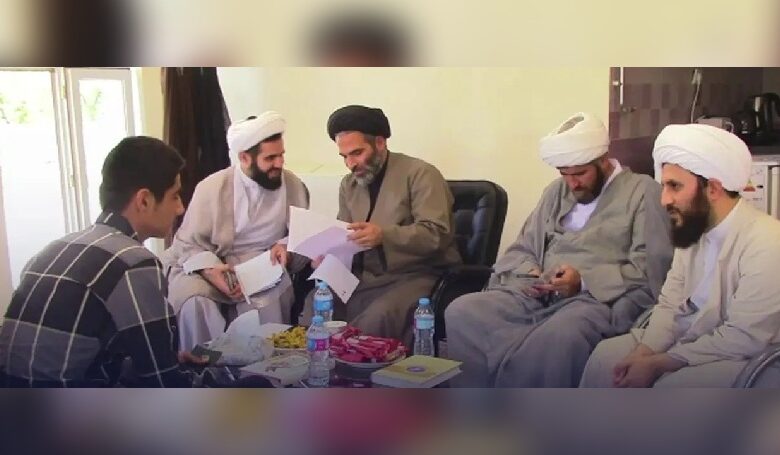
Amid a shortage of specialists and resources, an ideological attack on mental health has been formalized with the signing of a memorandum of understanding between the Welfare Organization and official religious seminaries.
At a time when Iranian psychology faces chronic shortages of specialized personnel, inadequate infrastructure, and mounting pressures from social crises, the Welfare Organization has taken a controversial step that has intensified the concerns of mental health experts.
By signing a memorandum with the religious seminaries of Qom, this organization has paved the way for replacing scientific methods with jurisprudential teachings—a measure that observers describe as “an explicit encroachment by religious institutions into the realm of specialized sciences,” which openly distances itself from science by promoting concepts such as “autism jurisprudence.”
This agreement was signed yesterday, Thursday, December 4, 2024, titled “Expanding Cooperation in the Field of Counseling and Mental Health” between Javad Hosseini, head of the Welfare Organization, and Alireza Aref, director of the religious seminaries. Critics argue that this cooperation is not a scientific project but rather part of a macro policy to ideologize civil structures—a policy that has now reached the most sensitive aspect of public health: mental health.
In remarks that many consider the pinnacle of departing from scientific standards, Hosseini claimed that psychology is “deeply indigenous and religious” and that the organization under his management would require “autism jurisprudence” and “disability jurisprudence” to function effectively.
These statements come at a time when Iran faces severe shortages of specialists, resources, assessment equipment, and standard treatment services. Experts warn that replacing evidence-based protocols with jurisprudential concepts could directly harm vulnerable groups such as autistic children and cause delays and deviations in the diagnostic and treatment process.
At this meeting, new statistics were presented showing that religious institutions are developing a parallel network with psychology clinics. According to official reports, the number of centers called “Samah Islamic Counseling” has doubled in five years, and it is planned to establish 15 additional centers.
This process occurs while, according to officials’ own announcements, more than 53,000 people were referred to these centers last year. Experts believe these numbers are not the result of free choice but rather the consequence of a systematic policy to shift the therapeutic referential source of society from trained psychologists to clerics who have not received specialized training in behavioral sciences.
On the other hand, Alireza Aref described the young generation as “storm-struck” and “troubled” and even spoke of “the collapse of the bridge of communication with the new generation.” Despite this admission, his proposed solution was not reforming educational methods or listening to this generation’s voice, but rather a more prominent presence of the clergy and the design of an Islamic counseling system—a prescription that, in the view of experts, only deepens the social divide instead of providing treatment.
This memorandum is being signed at a time when the head of the Welfare Organization himself has acknowledged the increase in psychological tensions and the prevalence of social despair, warning that existing resources are only “one-thousandth” of the country’s actual needs. Nevertheless, instead of investing in science and training specialized personnel, the government has chosen the path of cultural engineering—transforming the mental health field into an arena for ideological entrenchment, rather than genuinely improving the psychological condition of society.