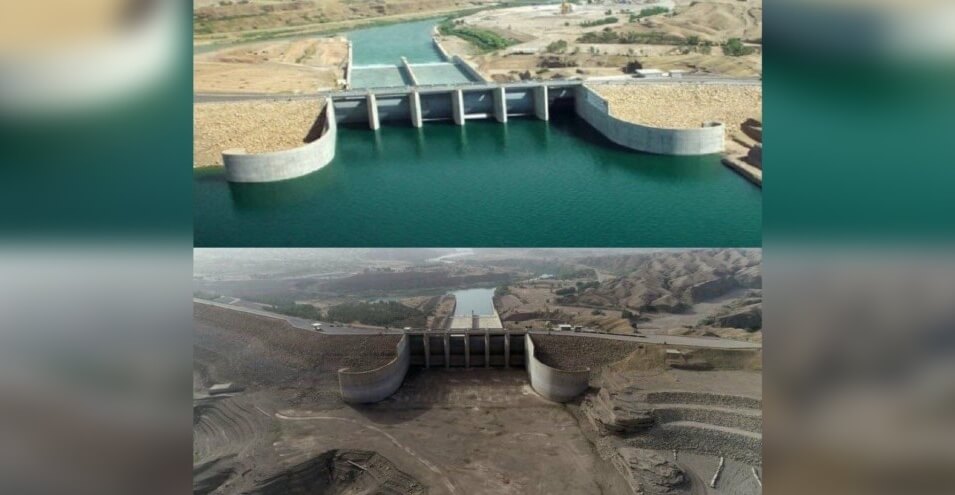
What is the Cause of Crisis and Flooding in Cities of Khuzestan Province Following Recent Rainfall?
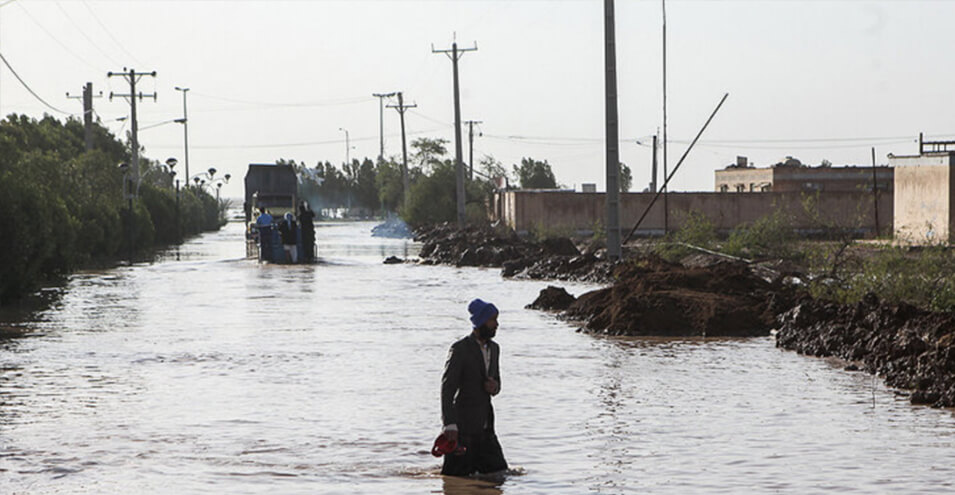
Heavy rainfall in recent days in various Iranian provinces, including Khuzestan Province, has caused flooding in different cities and villages, causing significant damage to homes, agricultural lands, and commercial buildings.
These rains have caused the breach of the levee in the border city of “Rafea” with 1006 households adjacent to the Hawizeh Marsh, and this city has lost its defensive shield and is exposed to flooding.
On the other hand, the Khuzestan Provincial Government has announced that the city of Rafea must be evacuated; although most people are reluctant to leave the city, and it has been reported that more than half of Rafea’s residents are still in their homes.
The ISNA news agency reported that people who refused to leave their homes said, “We cannot empty our homes. We have nowhere to go; we must stay in our homes.”
According to this report, residents of the area said that since last night when the Rafea levee broke, water has entered the city and made conditions extremely difficult.
Photos show that people with bare hands and the most basic tools have worked to repair the Rafea levee, and although this levee has been broken since last night, the necessary machinery and equipment have still not reached this city.
IRNA also reported that efforts to repair levees in the sections and villages of Shueibiyeh, Bamdej, Daghaghle Safak in Bavi County continue, and this is while after extensive flooding in some villages, residents have been evacuated.
However, the flood of agricultural lands in the Azadegan Plain in Khuzestan has also submerged them and caused significant damage to farmers.
Although Hossein Marmazi, chairman of the Agricultural and Natural Resources Guild Association of Azadegan Plain, in an interview with ILNA news agency attributed the main cause of these damages to “the negligence” and “carelessness” of the Khuzestan Water and Power Organization, saying that “if they had made the effort and reinforced the levees and dredged the Karun outlets to the Hawizeh Marsh, the disaster of these days would not have happened.”
Some images published in domestic Iranian media also show people standing in front of floods to save agricultural lands in Khuzestan.
Previously, in 1395 (2016), as a result of flooding, most of the levees in Khuzestan Province were damaged, and now two years have passed since this incident.
This is while, according to the Governor-General of Khuzestan Province, only “in the last 30 to 40 days, the levees that had been destroyed in 1395 in most areas were repaired.” However, it is unclear with what quality these levees were repaired, as many cities and villages in this province have still been so severely affected by these rains and the outbreak of floods.
However, it appears that flooding caused by rainfall in the coming days will also affect southern and western provinces of Iran. Domestic Iranian media, quoting officials from Khuzestan Province, have announced that the Dez and Karun rivers are in critical condition and villages in six counties—Azadegan, Howiseh, Dezful, Shushtar, Ahvaz, and Susa—are threatened by floods.
Recent Flooding in the Shadow of Environmental and Water Crises in Iran
Recent flooding has occurred at a time when Iran is facing an environmental crisis and water scarcity in recent years, and the ineffectiveness of the Islamic Republic of Iran’s government in dealing with these crises has brought numerous problems for the people.
Earlier, Mike Pompeo, U.S. Secretary of State, in May of this year, while declaring support for the Iranian people, said, “We are witnessing financial and environmental crises in Iran. Corruption has engulfed the country. The regime steals from its own people. The violent men of the Iranian regime fear women and their protests.”
Also, Benjamin Netanyahu, Prime Minister of Israel, recently announced his readiness to help the people of this country by publishing a video, referring to the water scarcity crisis, saying that Israel will share its knowledge in the field of water with the Iranian people.
Mr. Netanyahu had said, “The people of Iran are victims of a ruthless and despotic regime that even deprives them of the water they need.”
Source: Voice of America