Why Does the Iranian Government Fear the Destitute and Youth?
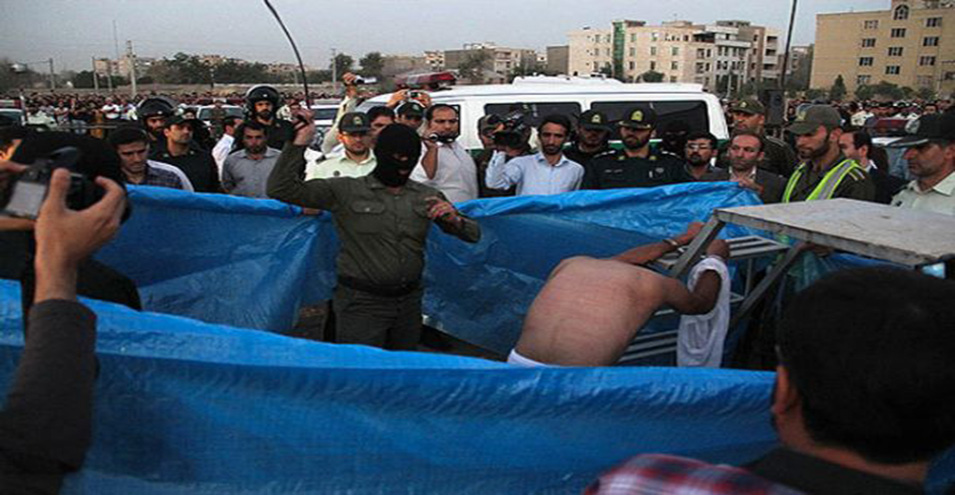
Shortly after seventeen protesting workers at the “Aqdara” gold mine in West Azerbaijan were flogged, this time the Yazd judiciary sentenced another group of protesting workers from the Bafq iron ore mine to imprisonment and suspended lashing. In both cases, the protesting workers were sentenced to lashing and imprisonment on charges of “disturbing public order,” despite Ali Rabiei, the labor minister of the eleventh government, arguing that in light of Iran’s economic crises and constraints as well as workers’ growing poverty, issuing lashing sentences against the country’s workers is not in the interest of the Islamic Republic of Iran.
Up to this point, it can be said that the Islamic government of Iran is not only aware of the consequences and dangers—political and social—of the country’s economic crises, but its powerful faction within the judiciary, law enforcement, paramilitary forces, and the Islamic Revolutionary Guards Corps, all operating under the Supreme Leader’s oversight, has no response other than flogging or, in fact, intimidation against accumulated demands, particularly the economic demands of the most deprived segments of society. This approach somewhat reflects the continuation of economic deadlock following the nuclear deal, which Iran’s leaders, including the Supreme Leader himself, believed would be prevented from resulting in potential “bread riots” domestically through the resumption of oil exports and Iran’s renewed access to the global financial system (SWIFT) and its frozen assets abroad.
It is perhaps not without reason that Mohammad Ali Jafari, the commander-in-chief of the Islamic Revolutionary Guards Corps, amid the issuing of lashing sentences against workers and youth, called for “commanding good and forbidding evil,” which in effect means intensifying crackdowns on the main sources of protest and defiance in the country.
The Iranian authorities’ reaction, meanwhile, reflects their concern about another matter: that the source and driver of potential protests this time are the most deprived and simultaneously “most radical” segments of society, including wage earners, the unemployed, and slum dwellers, who together constitute some 60 percent of the country’s “active” population.
Based on scattered statements by Iranian officials, the number of unemployed in the country amounts to at least 10 million people, including 5.5 million university graduates. In the absence of sufficient oil revenues, last year’s national budget faced a deficit of 68,000 billion tomans, while government debts to the banking system, contractors, and institutions such as the Social Security Organization exceed 500,000 billion tomans.
According to Farhad Dehqan Pand, deputy director of the Management and Planning Organization, thousands of development projects across the country remain incomplete due to lack of necessary capital, and their completion requires 400,000 billion tomans, which neither the government nor the banking system—which is virtually bankrupt as a result of its unpaid claims—can provide.
The ministers of industry and interior have also acknowledged these problems. Mohammad Reza Nematzadeh, the minister of industry and mines, on Tuesday, June 18, during an open session of the Islamic Consultative Assembly, citing the decline in investment in Iranian industry over the past four years, stated that this decline has “brought a catastrophic situation to Iran’s industry,” such that Iran ranks 106th among 129 countries globally in economic growth. In separate remarks, Abdolreza Rahmani Fazli, the interior minister of the eleventh government, acknowledged that without foreign investment, the 8 percent economic growth necessary to address Iran’s fundamental economic problems will not be achieved, and the short-term results of continuing the current situation are a doubling of unemployment and inflation rates.
Evidence shows that contrary to the expectations of Iran’s leaders, the nuclear agreement has so far not led to hope for resolving the country’s major economic problems, and it is unlikely that such hope will materialize in the near future, at least as long as unilateral American sanctions prevent foreign capital and technology from entering Iran.
Although American leaders have claimed that their unilateral sanctions against the Islamic Revolutionary Guards Corps in no way prevent Iran’s lawful cooperation with European companies and banks, the unilateral American sanctions and Washington’s emphasis that Iran’s economic cooperation with the outside world must be lawful (or in reality subject to American laws) have effectively closed the door to any real cooperation between European banks and companies and the Islamic Republic of Iran.
It is not without reason that Mohammad Javad Zarif says that due to unilateral American sanctions, European banks and companies “fear” cooperating with Iran, and it is not without reason that he and the Rouhani government, disappointed with real cooperation from major EU countries, are now seeking cooperation with peripheral European countries such as Poland, Latvia, or Finland; overlooking the fact that if major European powers such as Germany, France, or Italy “fear” serious cooperation with Iran due to American sanctions, this “fear” regarding countries such as Poland or Latvia, which are traditionally most subject to American policies in Europe, is many times greater and deeper.
Moreover, recent statements by Adam Szubin, the U.S. Treasury Deputy Assistant Secretary for Terrorist Financing, during his discussions with French and German officials about Iran, show that the Washington government, given the ultimate effect of international sanctions in closing down Iran’s nuclear program, is not prepared to easily abandon its unilateral sanctions leverage against the Islamic Republic of Iran until achieving its strategic objectives.
From America’s perspective, the current economic and political turmoil in Venezuela (holder of the world’s second-largest oil reserves), a country that in many respects resembles the economic and political structures of the Islamic Republic of Iran, somewhat delineates this country’s future should the current situation continue, with the difference that compared to Venezuela, the Islamic Republic of Iran is today directly involved in major regional wars and conflicts in Syria, Iraq, and Yemen, as well as their dangerous political consequences within the country. It is quite possible that one of the reasons for the continuation of internal wars in Syria, Iraq, and Yemen is the intensification of these very consequences and their impact within Iran.
Iranian officials, who until recently denied this country’s military presence in Syria in various forms, increasingly claim that they have become involved in Syria’s (and Iraq’s) internal war to prevent “ISIS” from entering and in effect the war from spreading to Iran’s borders. They hope that with this argument, or in reality by arousing concerns about war breaking out within the country, they can prevent potential protests and stop important segments of the dissatisfied society from joining the ranks of protesters; in addition to the fact that this very argument itself provides the authorities with justification for intensifying crackdowns on so-called “high-risk” segments of society, particularly the destitute and youth.
However, this argument and the financial and military consequences of Iran’s military presence in Syria and Iraq can, in the context of the country’s concerning economic situation, intensify domestic crises and produce counterproductive results in the minds of the people who have been harmed. Historical experience shows that the mixture of military defeats and acute economic crises sometimes triggers major political changes, particularly in societies where there are severe cultural, political, and economic contradictions between power and society, and sometimes these have turned into major rifts. The Supreme Leader himself, during a meeting with representatives of the tenth Islamic Consultative Assembly, asked them not to let these rifts result in a political earthquake in the country. It is not without reason that Akbar Hashemi Rafsanjani recently said in an interview with the “Aftab” website that the Islamic Republic of Iran has become entangled in the region’s ongoing crises and wars and must extricate itself from these crises as soon as possible.
Source: RFI