Why Don’t Religious Minorities Have the Right to Run for President?
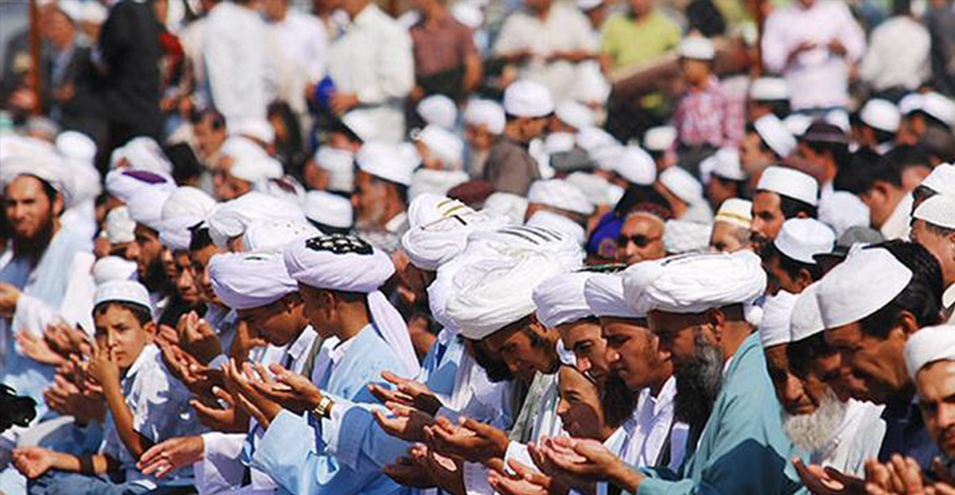
To date, Sunni religious candidates have not been granted the right to compete in Iran’s presidential elections. Followers of other religions are similarly excluded and have been barred from the competition arena by the laws of the Islamic Republic.
This deprivation took on broader dimensions when Ahmad Jannati, Secretary of the Guardian Council, issued a circular containing the opinions of the council’s jurists, requesting “relevant authorities” to prevent the qualification of religious minority candidates in council elections in areas with a Muslim majority.
The International Campaign for Human Rights in Iran has discussed with Hashem Daase, a former member of parliament, the exclusion of religious minorities from participating in political power. Daase believes that denying these minorities the opportunity to participate in political competition, particularly for high-ranking government positions, is rooted in the Islamic Republic’s constitution, and this law should be reviewed.
In this discussion, Article 12 of Iran’s constitution was mentioned. This article states that the official religion in Iran is the Twelver Shia faith, and “other Islamic schools, including Hanafi, Shafi’i, Maliki, Hanbali, and Zaidis, are granted full respect, and followers of these schools are free to perform their religious ceremonies according to their own jurisprudence.”
Article 115: A Barrier Against Religious Minorities and Women
According to Article 115 of Iran’s constitution, “the president shall be elected from among religious and political personalities who have the following qualifications: Iranian by origin, subject to Iran, prudent and wise, of good background, trustworthy and pious, believer in and devoted to the foundations of the Islamic Republic of Iran and the official religion of the country.”
As a result, many—those who do not qualify as “men” and non-Shia Muslims—are excluded from running in presidential elections and cannot become president of the country.
Hashem Daase, former representative of Sardasht and Piranshahr in the sixth parliament, told the International Campaign for Human Rights in Iran about his and other Sunnis’ objections to this article: “I, political activists, and those who worked for the revolution all object. A Sunni who has paid a price for this system is excluded, and this causes disappointment and division. It prevents national unity and national cohesion from being realized in practice.”
He also stated: “In all political meetings and sessions among Sunni and Kurdish elites, these objections are raised.”
Daase expressed hope that officials would make addressing this deprivation a major concern and not pass by it lightly. He told the human rights campaign: “This is one of the topics we discuss in private meetings. We cannot even make it public because it might create sensitivity. We object and hope that top scholars in Qom will intervene for national unity and resolve this issue once and for all. Currently, at least 20 million Iranian Sunnis and other religious minorities are excluded from this participation. If the presidency is good for them, meaning for Shias, why shouldn’t it be good for me as a Sunni? This is the main question, and it will have negative effects on future generations.”
The Consequences of Discrimination and Inequality
Provinces with predominantly Sunni populations have been deprived of many facilities from the start, and this deprivation has fueled deep discontent among people in these areas for years. Beyond economic deprivation, social and political deprivation have cast a heavy shadow over the lives of Sunnis in Iran.
The former parliament representative warned: “If this discrimination and inequality results in frustration, it could turn into other problems that we see in neighboring countries. I hope Iran never goes in that direction. Rationality should prevail so that these issues are addressed compassionately, and people can actually see the results.”
The Sunni minority in Iran is excluded from reaching many high-ranking government positions. The highest position a Sunni has achieved in the Iranian government has been deputy minister or ambassador to Vietnam and Cambodia during Hassan Rouhani’s administration.
Sunni and Kurdish representatives occupy only 21 parliamentary seats. The International Campaign for Human Rights in Iran noted that Mohammad Qasim Osmani, representative of Boukan and member of the Hope faction, is the first Sunni representative to reach the parliamentary presidium in 38 years.
Source: DW