World Bank: Up to 100 Million People Worldwide Will Fall Into Extreme Poverty
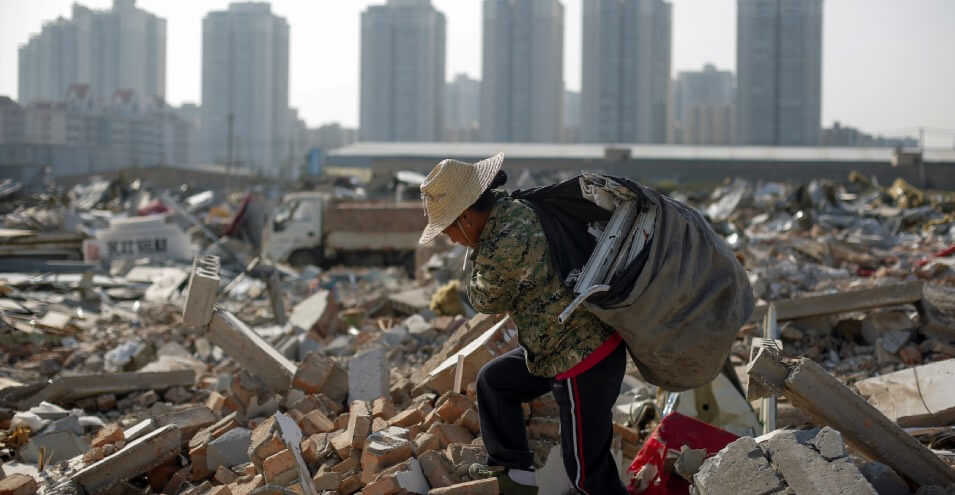
The World Bank in a new report predicted that the coronavirus crisis will push up to 100 million people worldwide into extreme poverty. According to experts, the continuation of social restrictions will deal a severe blow to the economy and shrink it by up to ten percent.
The World Bank has warned in its new report about the biggest blow to the global economy in the past seven decades.
On Monday, June 19 (June 8), the World Bank reported that the economic crisis and health crisis resulting from the outbreak of the new coronavirus, which is currently spreading across the world at an unimaginable pace, will ultimately cause such a massive economic shock that countries have not experienced its like in the past seven decades.
According to the Associated Press, the World Bank in a report titled “Global Economic Prospects” predicted that global economic activities will decrease by 5.2 percent in 2020. This is the largest economic recession since the 13.8 percent recession caused by the consequences of World War II.
The International Monetary Fund reported in April that the world economy would shrink by three percent in the current year.
The rate of negative economic growth is indeed more severe for developed countries than for other countries. In first-tier countries, negative growth reaches up to 7 percent. In developing countries, this figure will be around 2.5 percent. However, the problem is that developing countries, due to higher population growth rates, require greater economic growth than developed countries to provide employment and minimum income for their populations. Therefore, a decline in each percentage point of economic growth has far more severe consequences for these countries compared to developed countries.
The economic blow predicted by the World Bank is much more severe than the report recently announced by the International Monetary Fund.
Increase in “Extreme Poverty” in the World
World Bank experts have also predicted that due to the impact of the new coronavirus pandemic on businesses and income, the number of people facing “extreme poverty” will increase and will reach 70 to 100 million people in the current calendar year.
Oil-rich countries are also among the main losers of the decline in economic growth in the world. These countries initially faced a sharp drop in oil prices and are now forced to lower oil prices to stabilize the raw material market. However, given the decline in demand, greater risks loom for these countries.
Regarding Iran, sanctions have effectively reduced this country’s oil exports to a minimal extent, and therefore it is not even possible to access reduced oil revenues. This, along with the consequences resulting from restrictions imposed to control the coronavirus, has placed Iran’s economy in an unprecedented bad situation.
David Malpass, President of the World Bank, while calling the coronavirus pandemic a severe blow to the global economy, warned that the economic recession resulting from this crisis will grip everyone for up to a decade.
Continuation of Social Restrictions and Impact on Economy
The World Bank report states that the prediction of economic recession has been made based on current social restrictions, meaning that this report assumes that social restrictions and businesses will be lifted from the beginning of July.
In a second possible scenario, this financial institution predicted that if restrictions continue for another three months, negative economic growth in advanced countries will be between 8 to 10 percent and emerging economies will shrink by up to 5 percent.