Zarif: Europeans Moving in Right Direction to Preserve JCPOA
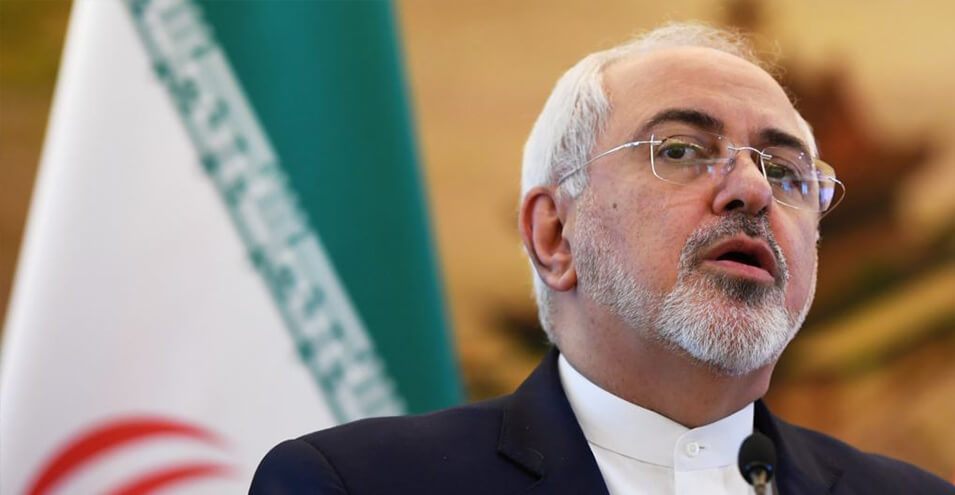
Iran’s Foreign Minister says European efforts to preserve the nuclear agreement are “not at the level we expected, but we believe they are moving in the right direction.” Regarding possible negotiations with the U.S. government, Zarif stated that such a thing is “not taboo” but “no side wants to enter a time-consuming, tense, and fruitless process.”
Mohammad Javad Zarif, in an interview with IRNA news agency published on August 7, stated that the European Union’s proposed package to preserve the JCPOA after America’s withdrawal “has specific general lines.” According to Mr. Zarif, these lines include “a banking channel for Iran’s financial transactions” or “selling Iran’s oil at current levels.”
Donald Trump, a staunch opponent of the JCPOA, signed an order on Monday to reinstate the first phase of sanctions against Iran, and these sanctions came into effect on Tuesday. The next phase of sanctions, reflected in Iran’s Foreign Minister’s statements, namely the issue of oil sales, is expected to be implemented in November.
Zarif says Europeans have not only conducted extensive work “within the European Union but also outside of it [to preserve the JCPOA].”
The European Union, unlike the United States, wanted to preserve the nuclear agreement and expressed regret after America’s withdrawal from the JCPOA. However, recently the Supreme Leader’s international adviser criticized “contradictory behavior” by Europe regarding the JCPOA, and Zarif himself had said that the Union’s political support “is not sufficient” and should “take more practical steps.”
Iran’s Foreign Minister, in his interview with IRNA, spoke about some European Union measures, including “activating small and medium-sized companies,” as well as “consultations to revive the law preventing sanctions enforcement” and “issuing authorization for the European Investment Bank.” Topics that have been somewhat discussed in statements by some senior European Union officials.
On Tuesday, Federica Mogherini, the European Union’s foreign policy chief, said the institution encourages small and medium-sized companies to increase exchanges with Iran. Günther Oettinger, the European Commissioner for Budget and Human Resources, also said on the same day that German credit and deposit institutions have the capacity to solve the problem of relations with Iran despite American sanctions.
These statements come as Donald Trump has warned about non-compliance with sanctions. The U.S. President wrote on his Twitter account, “Anyone who does business with Iran will not do business with the United States.” Trump emphasized that Iran sanctions are the “most biting” sanctions ever imposed and another phase will be implemented in November.
Zarif says “we believe an important part of [the European Union’s] commitments should be operationalized before the implementation of oil and banking sanctions.”
The U.S. Treasury Department said it will implement the reinstatement of Iran sanctions in two phases. The second round of sanctions, which primarily targets Iran’s oil industry, is set to be implemented on November 4. American officials say they are trying to bring Iran’s oil exports close to zero by that time.
“Negotiations are not taboo, but have prerequisites”
Iran’s Foreign Minister, in his conversation with IRNA, once again raised the statements of recent days by some Islamic Republic officials saying that possible negotiations with the U.S. government “have prerequisites” but “the issue is how much we can conduct these negotiations with confidence until reaching a result.”
Mr. Zarif says engaging in possible negotiations with America “is not taboo” but “no side wants to enter a time-consuming, tense, and fruitless process.”
He also said that, as far as he knows, there are currently no talks between the two countries. Zarif, however, added in another part of his remarks that “surely messages will be raised by countries for mediation” and “if someone goes and tells the Americans to be wise, surely no one will object to them, but that direct talks between Iran and America are taking place or that messages have been exchanged in this regard, to the best of my knowledge, such a thing has not happened, and I think my information is not that bad.”
These clarifications were made in response to a question regarding reports on Oman’s mediation between Tehran and Washington; Oman’s previous efforts have precedent.
Donald Trump, the U.S. President, said he is willing to sit down with Iran’s President without preconditions. In similar statements, he emphasized that such a thing ultimately depends on Islamic Republic officials. The U.S. Secretary of State also said: If Iranians demonstrate from themselves that commitment to make fundamental changes in how they treat their people, reduce their destabilizing behavior in the region, enter into an agreement that truly prevents the proliferation of nuclear weapons, then the President said he is ready to sit down and talk with them.
Iran’s Foreign Minister responded to these statements saying “Trump announces unconditional negotiations and then two hours after his announcement, the U.S. Secretary of State announces three impossible-to-meet conditions for negotiations.”
Yesterday, the U.S. State Department spokesman emphasized during his press conference that the United States government wants to negotiate with Iran’s government, but Washington is seeking Tehran’s commitment to make fundamental changes in its behavior.
Heather Nauert said her country is looking for a new agreement with Iran that includes not only nuclear issues, but also, in her description, “destabilizing behaviors of Iran’s government.” In clarification, she referred to Iran’s missile program, “the Islamic Republic’s support for terrorism,” and “destabilizing regional behaviors.” Iran has rejected the “support for terrorism” charge and says it does not interfere in the affairs of regional countries. The Islamic Republic does not hide its support for some groups that are “terrorist” from Washington’s perspective, such as Lebanon’s Hezbollah.
Source: Radio Farda