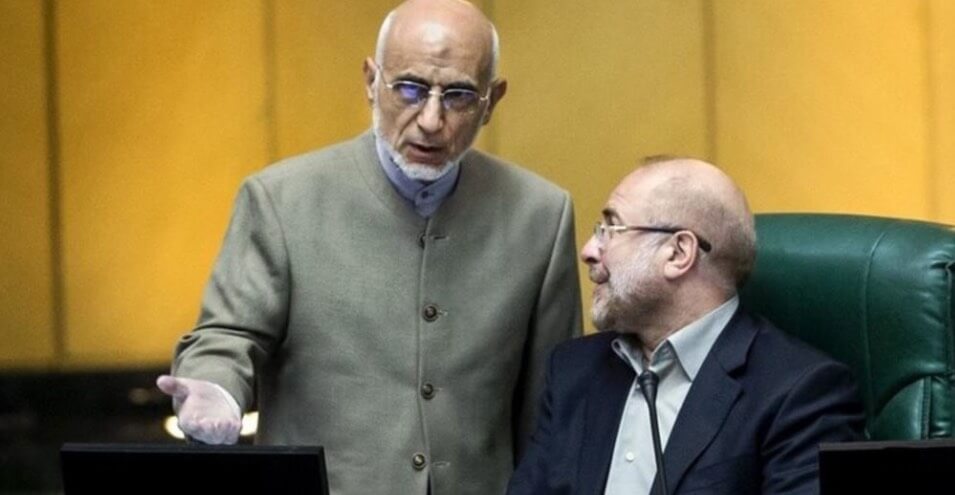
Zarif Summoned to Parliament Over ‘Sidelining’ Assad’s Tehran Visit
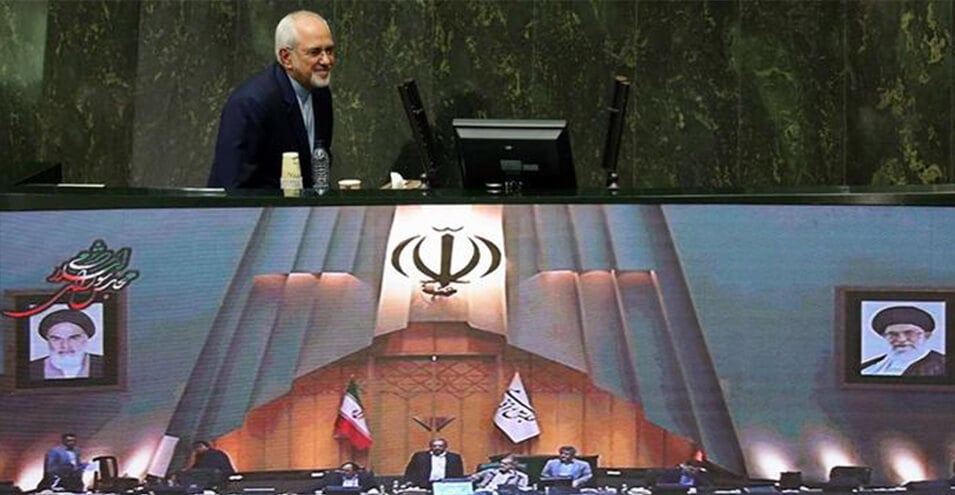
15 parliamentary representatives have submitted a question to Iran’s Foreign Minister regarding his controversial resignation. According to them, Zarif’s resignation has questioned the “achievement” of Assad’s visit to Iran. Rouhani rejected Zarif’s resignation after 30 hours.
Iranian media have reported on the intention of several parliamentary representatives to summon Mohammad Javad Zarif, Iran’s Foreign Minister, to parliament over his controversial resignation. These representatives have accused Zarif of “sidelining” the “major achievement” of Syrian President Bashar Assad’s visit to Iran and dealing “a severe blow to national interests.”
According to Mehr News Agency, 15 representatives have submitted a question to Zarif regarding the timing of his resignation with Syrian President Bashar Assad’s visit to Iran. Some domestic news agencies have identified the designers of this question as “representatives of the Resistance Front.”
These 15 representatives have requested that the parliament’s leadership “convey” their “reminders” and read a summary of them in an open parliament session. In their “question” addressed to Iran’s Foreign Minister, it states: “At minimum, prudence and attention to national interests should have prevented you from overshadowing the achievements related to Bashar Assad’s meetings with the Supreme Leader and the President with the marginalization caused by resignation.”
In the text of this question, it is claimed that while Bashar Assad’s meeting “as the axis of resistance” with Ali Khamenei, the Supreme Leader “as the leader of resistance,” and his meeting with Iran’s President “conveyed the message of the Resistance Front’s victory and gratitude to Iran to the world,” Mohammad Javad Zarif “with poor judgment and strange behavior revealed his differences with the President at the worst possible time and sidelined this major achievement.”
Overnight Resignation “A Severe Blow to National Interests”
15 parliamentary representatives concluded their question to Iran’s Foreign Minister by writing: “Attention to the achievements related to the Resistance Front’s great victory could have, in addition to positive security and defense consequences, led to economic prosperity of the country and the defeat of sanctions, which you, as the head of the diplomatic apparatus, not only failed to benefit from but dealt a severe blow to national interests.”
Mohammad Javad Zarif unexpectedly announced his resignation on Instagram Monday evening. His resignation coincided with Bashar Assad’s meetings with Ali Khamenei and Hassan Rouhani, both of which were attended by Qasem Soleimani, commander of the Quds Force. However, Iran’s Foreign Minister was not present at these meetings. Many analysts had considered Zarif’s absence from these meetings as the primary reason for his decision to step down from leading Iran’s diplomatic apparatus.
However, Hassan Rouhani, about 30 hours later, deemed his Foreign Minister’s resignation “contrary to the country’s interests” and rejected it. Qasem Soleimani, who was present at Assad’s meetings with the Supreme Leader and Iran’s President, also announced that Zarif’s absence was not “intentional.” Zarif then returned to work by publishing a brief message, expressing hope that the Foreign Ministry could “fulfill all its responsibilities within the framework of the Constitution and the laws of the country and general policies with authority and firmness.”
Mohammad Javad Zarif had previously responded to the news of his resignation by protesting a number of diplomats and Foreign Ministry officials, on the one hand asking them not to do so, and on the other hand expressing hope that his resignation would be “a catalyst for the Foreign Ministry to return to its legitimate position in foreign relations.”
Assad’s Formal Invitation to Zarif to Visit Syria
Following Zarif’s return to the Foreign Ministry, it was announced that Bashar Assad had formally invited him to visit Syria.
Iranian media reported yesterday that following a telephone conversation between the Iranian and Syrian foreign ministers, Syria’s ambassador to Tehran also informed Mohammad Javad Zarif in a telephone call of Syrian President Bashar Assad’s invitation to Iran’s Foreign Minister to visit Syria.
The Iranian Foreign Minister’s resignation overshadowed the news of Bashar Assad’s sudden visit to Tehran and quickly became a leading story in world media. In his letter rejecting his Foreign Minister’s resignation, Rouhani wrote that Zarif remains the “trusted” official of his, of the “entire” Islamic Republic system, and “particularly” of the Supreme Leader, and should “continue on his path.” Iran’s President added: “As I have repeatedly ordered, all institutions, whether governmental or sovereign, must be in complete coordination with this ministry in the field of foreign relations.”
The “Entekhaab” website wrote last Tuesday that they had asked Zarif via text message about the reason for Iran’s Foreign Minister’s resignation, and Zarif replied: “After today’s meeting photos, Javad Zarif no longer has credibility as a Foreign Minister in the world.” Some sources had even claimed that Zarif was not aware of Assad’s presence in Tehran in the first place.
Source: DW