IAEA: Iran has stockpiled more than 17 kg of 20% enriched uranium
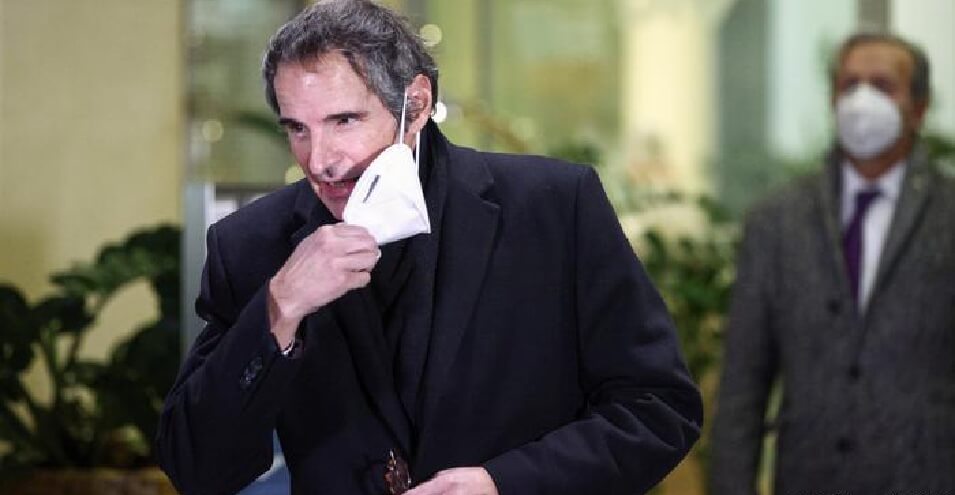
According to the International Atomic Energy Agency, there are some very concerning aspects of Iran's nuclear activities. The IAEA Director General has likened the new agreement with Iran to a black box that holds necessary information.
The International Atomic Energy Agency (IAEA) said in its latest report on Iran's nuclear activities, published on Tuesday (February 23), that there are aspects of these activities that have experts very concerned. Iran's illegal stockpile of enriched uranium has increased to more than three tons, according to the report. The report states that this stockpile has been increased by another 500 kilograms since November. This uranium also includes more than 17 kilograms (17.6) of 20 percent enriched uranium.
Under the 2015 nuclear deal, Iran is allowed to stockpile a maximum of 200 kilograms of low-enriched uranium.
The IAEA also expressed deep concern in its report that Iran has not provided an explanation for the origin of uranium particles at two sites inspected by the agency last year. This information could shed light on the extent of Iran's nuclear activities. The Islamic Republic has also not provided the IAEA with an explanation for the third site where uranium particles were found.
Two and a half months ago, the Islamic Consultative Assembly approved the “Strategic Action to Lift Sanctions” law and mandated the Rouhani government to implement it. Among other things, the government must “immediately begin the necessary measures to produce 20 percent enriched uranium and maintain a stockpile of 120 kilograms of it annually.”
The black box of Iran's nuclear activities
During the two-day visit to Iran by the Director General of the International Atomic Energy Agency, Rafael Grossi, there were talks between him and Iranian government officials, according to which technical inspections for verification will continue for another three months and the number of inspectors will not be reduced, but access to nuclear sites will be more limited than before. Grossi told reporters at the end of the visit: “To be honest, access will be less, but we have maintained the level of supervision necessary for verification.”
The two sides have also agreed to continue intrusive inspections. Grossi said the agreement was “technical” and “provisional.” Details of the agreement are confidential, but Rafael Grossi, the director general of the International Atomic Energy Agency, described the system as a black box in which data is collected, even on Iran’s most sensitive activities, such as uranium enrichment, in a speech at the Nuclear Threat Initiative think tank.
According to Grossi, this is a system that will allow the agency to continue to monitor and record all of Iran’s key nuclear activities over time, so that at the end of the period, the agency can retrieve all of this information. “In other words, we will know exactly what happened, exactly how many parts were made, exactly how much material was processed, or refined, or enriched, etc., etc.,” Grossi said.
He pointed to the concerns of some parties in this regard: "Some say that in the end, if Iran wants to (and such an agreement is not reached) it can destroy this information. Yes, but if in the end that agreement is not reached, everything will be destroyed."
Grossi stressed the importance of his agreement with the Iranian government, saying that if the agreement had not occurred, “the situation would not have been reversible or recoverable.” He said then “we would have had to fly blind, with our eyes closed, without any idea of what was happening with regard to Iran’s enrichment activities and other nuclear activities.”
Grossi has said that he hopes that while this technical agreement between Iran and the IAEA is in place, negotiations between Iran, the United States, and the European Union on a nuclear agreement will be held at a higher level.
Source: DW