EU: Iran must disclose details of centrifuge parts manufacturing
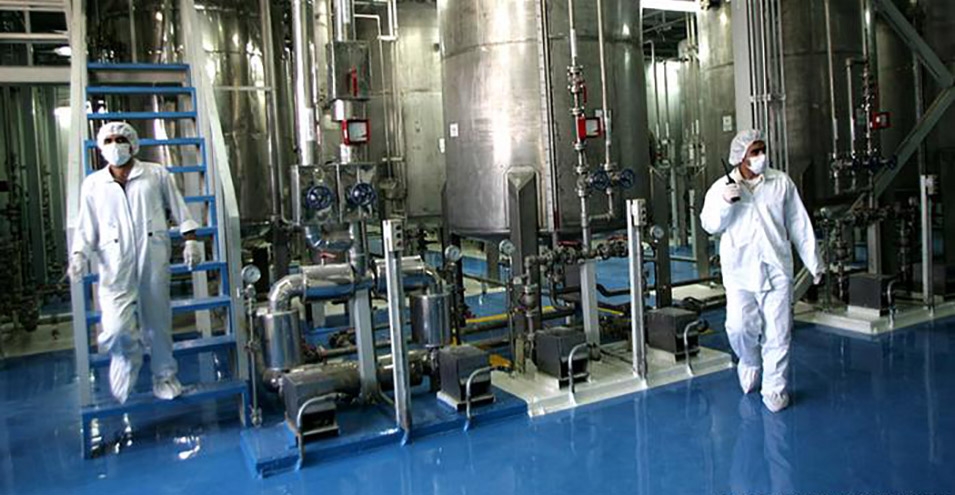
The European Union has asked Iran to share with the IAEA details of its production of components that could be used in nuclear weapons. A week ago, the IAEA expressed concern over Iran's resumption of production of centrifuge rotor tubes.
The European Union has issued a statement calling on Iran to fully share with the International Atomic Energy Agency details of the production of components that could ultimately be used in the production of nuclear weapons.
The Associated Press reported that a draft of the EU statement was provided to the agency on Friday (September 16). The statement is scheduled to be sent to the UN Atomic Energy Agency’s Board of Governors next week. The statement comes just a week after the agency reported that Iran had resumed production of centrifuge rotor tubes in June. In a recent report, the agency expressed concern about the resumption of production of centrifuge rotor tubes, despite insisting that Iran had complied with all provisions of the nuclear deal.
For this reason, the European Union has called for Iran's "full cooperation" with the Agency on this issue and has also asked the Agency to share the information it receives with its members.
Iran currently has 5,060 low-tech centrifuges. Under the JCPOA (the Joint Comprehensive Plan of Action between Iran and six world powers), Iran is allowed to use parts from its old centrifuges to replace parts for its remaining centrifuges.
Under the nuclear deal, the IAEA must monitor how many centrifuge rotor tubes have been produced and for which centrifuge model. This way, the IAEA can ensure that the number and model of centrifuges comply with the 2015 nuclear deal.
If the number of rotor tubes produced exceeds the limit, it could be a sign of covert Iranian efforts to upgrade its centrifuges, which would be a controversial issue. Access to advanced centrifuges means faster access to highly enriched uranium, which can be used to make nuclear weapons.
Source: DW