Women's performance of sports exercises in Qasr Shirin was met with protests from the Basij and government officials.

Women's collective exercise with music in front of Islamic Republic officials in the city of Qasr-e Shirin caused a stir.
On Wednesday, February 14, a group of women performed aerobics to music in front of Iranian sports officials at a women's sports festival in a park in the city of Qasr Shirin in Kermanshah province, which prompted strong reactions from the city's Basij force and some media outlets close to the IRGC.
Immediately after the ceremony, the Qasr Shirin Basij Resistance District issued a statement condemning the act, describing it as “contrary to the high and valuable position of women in Islam.” The Fars News Agency also reported that the Director General of Sports of Kermanshah had apologized for the incident.
The Islamic Republic calls sports accompanied by music a form of “musical movement,” which women are not allowed to do. In Iran, not only is dancing not permitted for women, but sports that involve movement, such as Zumba, are banned from state-run gyms.
Women in Iran are only allowed to participate in some international sports if they wear the mandatory hijab. Of course, after 40 years of the Islamic Republic, women cannot participate in aquatic sports, gymnastics, some martial arts, and any type of sport that involves movement and music at the international level.
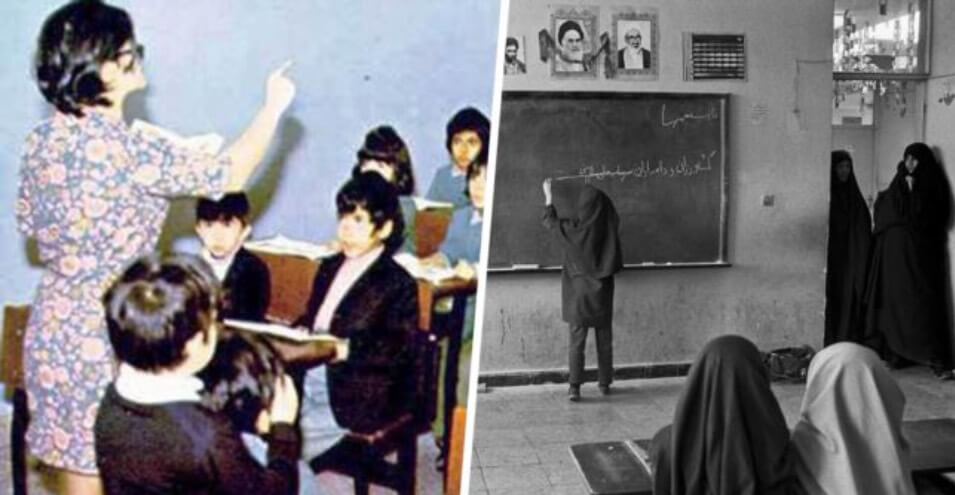
After the Islamic Republic came to power, many of women's rights and freedoms were taken away, and they went back many years.
In a detailed interview with Setareh Derakshesh, head of the Persian service of the Voice of America, Queen Farah Pahlavi described the regulations regarding women in Iran as "horrific" and said: "Before the revolution, women were given freedoms and opportunities that did not even exist in societies like America."
Earlier, Brian Hook, the US State Department's special representative for Iranian affairs, said that before Ayatollah [Khomeini] came to power in 1979, the Iranian people enjoyed many personal freedoms. And especially in the area of women's rights, Ayatollah Khomeini quickly rolled them back."
This is not the first time that the presence of women in public places in the name of performing "melodic movements" or dancing has been marginalized in Iran. Previously, a dance performed by several children in front of the then mayor of Tehran caused controversy, and some even attributed Mohammad Ali Najafi's resignation to this event and the protests that followed.
Source: Voice of America