Iranian users protest on Twitter: Why is the Islamic Republic not taking action to purchase coronavirus vaccines?
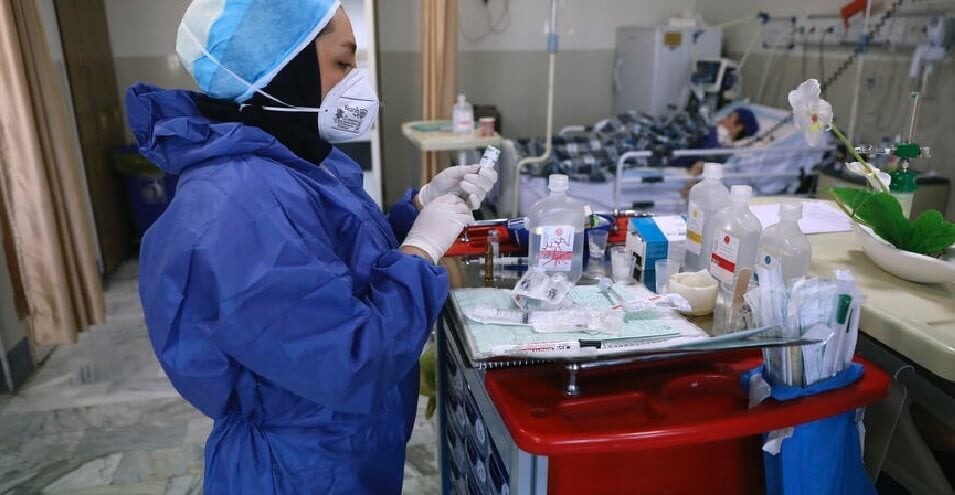
While efforts by countries around the world to prepare and administer a coronavirus vaccine have peaked, and some countries have begun vaccinations, the vague and contradictory statements made by Islamic Republic government officials about vaccine preparation have sparked protests from Iranian Twitter users.
In recent days, after the start of public vaccination in the United Kingdom and the United States, Israel and Saudi Arabia have also begun administering the Covid-19 vaccine, while it is still unclear when and how Iranian citizens will obtain this vaccine.
Officials from the Islamic Republic's Ministry of Health initially announced the purchase of the vaccine with the help of an Indian businessman. About two weeks ago, the governor of the Central Bank claimed that it was not possible to purchase the vaccine from the COVAX coalition (through the World Health Organization) due to US sanctions and the problem of transferring money. This is despite the fact that the US has repeatedly stated that the purchase of medicine, food, and humanitarian items is not subject to US sanctions.
The deputy head of the Health Economics Commission of the Tehran Chamber of Commerce also admitted that the drug is not subject to US sanctions and that more than 100 million foreign exchange is allocated to importers monthly through the Central Bank for the import of drugs.
On the other hand, a spokesperson for the COVAX consortium also told the Washington Post that Iran has no obstacles to receiving the vaccine through this consortium.
The contradictory statements by the Islamic Republic's officials continued, with Iranian Health Minister Saeed Namaki announcing on December 16 that the COVID-19 vaccine for injection into about 8.4 million Iranians would be provided through the COVAX consortium. He also mentioned the purchase of about 40 million doses through another source, but did not specify which manufacturer or country was selling the vaccine.
The vague and contradictory statements of the Islamic Republic's officials have increased concerns and prompted criticism from citizens on social media. Users used the hashtag " Buy_Vaccine" to protest the incompetence of the Islamic Republic's officials in providing the coronavirus vaccine.
One user, using the hashtag #vaccine_buy , wrote: "The government in Iran is riding the horse of Corona, riding on the pain, suffering, and poverty of the people. Because there is no longer any strength left for anyone to stand up and say, 'Don't walk over us, we are still alive.' I arrive at this combination from the combination of Corona, poverty, and the people's inability to protest."
A number of users have used this hashtag in their Twitter messages, including Iranian Lives Matters.
Mehdi Hajati, a former member of the Shiraz City Council, also tweeted using the hashtag, saying that this demand is no longer political or security-related. He added: " Report to us how many vaccines you plan to buy from which country?! "
He wrote in another tweet: "If you have signed a contract with companies approved by the World Health Organization, please tell me when the vaccine delivery date is?! If you haven't signed it, please tell me why you haven't signed it. With all this power, it's not too much to expect a little responsibility."
Some users also used this hashtag to post the sentence "The drug is not a sanction."
A number of users also pointed out that the problem with the Islamic Republic purchasing vaccines is likely due to its failure to join the FATF, the mechanism for combating money laundering and terrorist financing, which has made it difficult for Iran to transfer money.
In recent months, US officials have repeatedly confirmed the concealment and contradictions of Islamic Republic officials regarding the fight against the coronavirus.
The US State Department also expressed concern about the severe coronavirus outbreak in Iran and announced that the United States is ready to assist Iran in this regard.
Source: Voice of America