Revealing the Murder of "Salehe Akbari", a Shocking Narrative of Direct Shooting and Bloody Repression in Iran
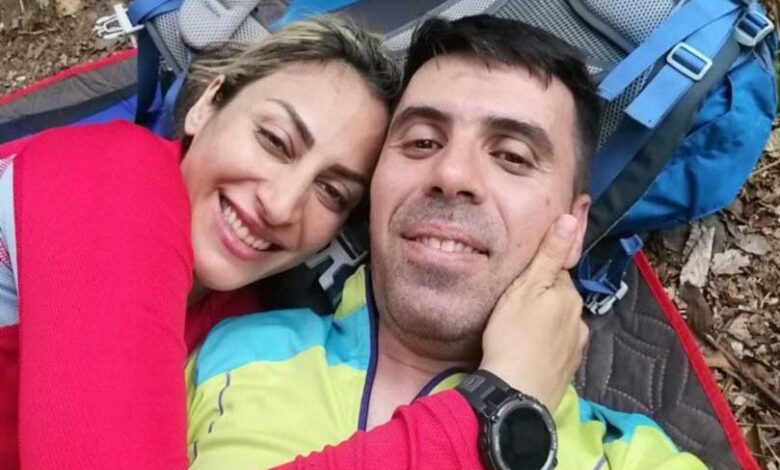
The murder of "Salehe Akbari" in her private home by the repressive forces is the revelation of a truth that was delayed in the media due to pressure on the family.
In the wake of revelations about the violent suppression of popular protests in Iran, new details about the killing of "Salehe Akbari" have been released, revealing shocking aspects of the behavior of the Islamic Republic's security forces; a story that, according to informed sources, had been kept secret for a long time due to severe security pressures on the victim's family and has now just been leaked.
According to the report, Salehe Akbari, an operating room technician from Arak and an active athlete and mountaineer, lived in Ardabil with her husband and eight-year-old daughter after marrying Ahmad Khodayi, a former mountaineer. The couple participated in the popular protests in Ardabil during the nationwide uprisings in January that took place in response to calls for protests.
Informed sources say that the two, due to their skills in providing first aid, rushed to help the injured during the days of the protests; a humanitarian act that cost the life of one of them. According to the same sources, after identifying the couple, security forces raided their home on January 12.
The source's account states: "After attacking their house, the security officers beat Ahmad Khodai, tied his hands and feet, and intended to take him away with them. At that time, Ahmad Khodai's wife, Saleha, stood up to defend her husband against the security officers. She took out a small mountaineering axe, the only means of defense she had, and threatened the officers with it to release her husband and untie his hands and feet. However, the security officers responded by shooting Saleha in the chest with a combat weapon, and she died instantly."
This is not the only part of the story. What makes this story one of the most bitter examples of human rights violations in recent months is the continued behavior of the security forces after this murder. The informed source continues: “In front of Ahmad’s eight-year-old daughter, the security agents took her away with her handcuffs, along with Salehe’s body covered in blood, leaving the eight-year-old girl alone and crying at home. Ahmad was in prison for some time until, after a long time, he was released from prison on a heavy bail. During the time that Ahmad Khodayi was imprisoned, the security agents handed over Salehe’s body to her family in Arak and forced them to bury their daughter’s body without a name or identification and with a grave number in the Arak cemetery.”
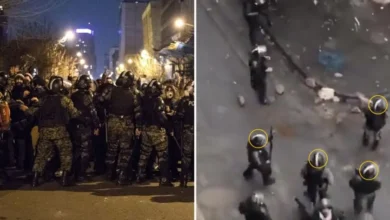
The release of this narrative has once again drawn attention to the methods of repression in Iran in recent months, a period in which there have been numerous reports of the use of deadly violence against protesters, mass arrests, pressure on families, and attempts to conceal the truth.
Human rights monitors have repeatedly warned that the Iranian government has not only used unprecedented violence against protesters, but has also tried to suppress the truth by threatening and intimidating the families of victims. In many cases, families have been forced to remain silent or pressured into holding funerals without public notification.
Meanwhile, stories like the one published about Salehe Akbari show how even humanitarian actions, such as providing aid to the wounded, are not immune from the eyes of security forces and can lead to a deadly encounter.
The late disclosure of this news is itself a sign of the heavy security atmosphere prevailing in society; an atmosphere in which the truth sometimes finds a way to be revealed only after the passage of time and a relative reduction in pressures. However, the publication of such narratives presents a clearer picture than that presented during the past protests against Iranian citizens; a picture that continues to be accompanied by serious questions about accountability and justice.