Akbar Ganji
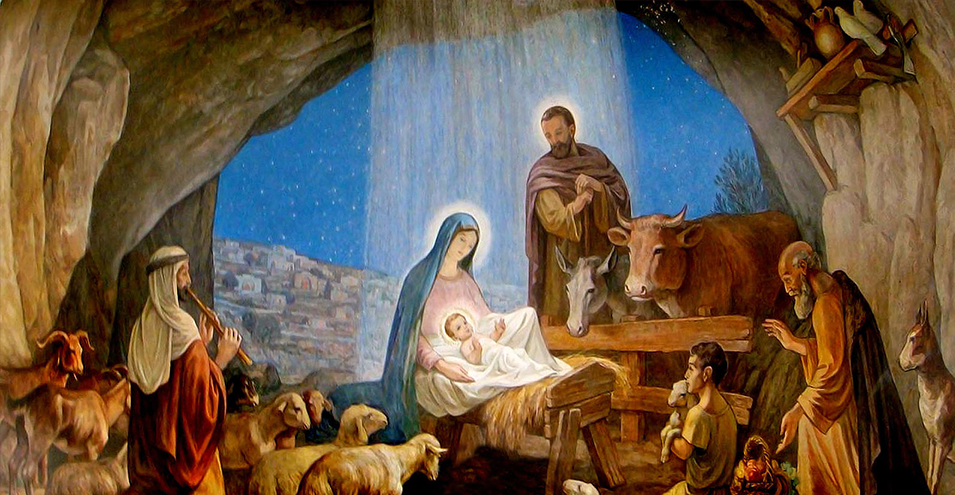
December 25th is considered the birthday of Jesus. Some groups have raised serious doubts about the historical existence of a specific individual with this life. But billions of people throughout history have believed in him and lived with his name, memory, stories and narratives. Without that story and narrative, it seems they would lack collective identity. Who was Jesus?
God Incarnate?
Jesus, through his words and deeds, identified himself as God and the Messiah, and his followers recognized him as God incarnate. God personified anthropomorphically was incarnated in Jesus Christ. “The Word became flesh” (John 1:14).
Jesus not only claimed to be the promised Messiah of the Israelites, but said that God had entrusted everything to him:
“The Father has entrusted all things to me, and no one knows the Son except the Father, and no one knows the Father except the Son and anyone to whom the Son chooses to reveal him” (Matthew 11:27).
The Son is one with the Father, and the Son is the only way to reach the Father. He said to his disciples:
“I am the way, the truth, and the life. No one comes to the Father except through me. If you knew me, you would know my Father as well. From now on, you do know him and have seen him” (John 14:5-7 and John 1:18).
He considered himself equal to God and identified himself as such (John 17:5-47).
This incarnate God was a forgiver of sins and a healer of incurable diseases (Mark 2:5-11).
The Jews knew God as the creator and owner of the Sabbath and its commandments, and still do. But Jesus said: “The Son of Man is Lord of the Sabbath” (Mark 2:27-28) and thus could change its rules.
This young man in his thirties claimed “Before Abraham was born, I am” (John 8:48-59). The Jews, understanding the meaning of this claim—that he was God—wanted to stone him, but he escaped from them. When God revealed himself to Moses, He said to him: “I am who I am” (Exodus 3:14). Jesus repeated those same words.
After Jesus rose and appeared among his disciples, Thomas the apostle said to him: “My Lord and my God” (John 20:28)
Justice, Truth, and Peace
Truth-seeking, justice-demanding, and peace-seeking are liberating and emancipating. Jesus said:
“Blessed are those who hunger and thirst for justice, for they will be satisfied” (Matthew 5:6).
Without justice, human life will be trapped in discrimination, poverty, misery, and apartheid. His morality and way of life were not those of capitalism and wealth accumulation. He considered wealth accumulation a cause of self-conceit and lack of justice, and said:
“Beware! Guard against all kinds of greed; life does not consist of an abundance of possessions.” He then told the story of a man whose wealth was his support, and when God took his life, due to this very replacement of virtues, he was called to account (Luke 12:13-21 and Luke 16:19-31). He constantly said: “What good is it for someone to gain the whole world, yet forfeit their soul?” (Mark 8:36).
Compare this commandment of his with “unbridled capitalism” and “discriminatory neoliberalism” that are promoted in his name:
“Go, sell everything you have and give to the poor, and you will have treasure in heaven. Then come, follow me” (Mark 10:21).
He said and emphasized that it is very difficult for the powerful and wealthy to enter the kingdom of God:
“How hard it is for the rich to enter the kingdom of God… How difficult it is for those whose hearts are set on their wealth to enter the heavenly kingdom where God reigns. It is easier for a camel to go through the eye of a needle than for a rich person to enter the kingdom of God” (Mark 10:23-25).
Humans need to draw near to truth to gain understanding. But that very truth, when grasped, will also be liberating. Jesus said:
“If you hold to my teaching, you are really my disciples. And you will know the truth, and the truth will set you free” (John 8:31-32).
In the Sermon on the Mount, which is actually “blessed are” the groups possessing various virtues, he says: “Blessed are the peacemakers.”
“Therefore, if you are offering your gift at the altar and there remember that your brother or sister has something against you, go and be reconciled to them” (Matthew 5:21-24).
These fine virtues bring great results in their wake (teleological ethics). He says: “Blessed are the meek, for they will inherit the earth.”
He had no relationship with the stubborn and arrogant and said: “For all those who exalt themselves will be humbled, and those who humble themselves will be exalted” (Matthew 23:12).
He considered rulers, thugs, and tyrants insignificant and regarded service to the people as great, and said:
“You know that the rulers of the Gentiles lord it over them, and their high officials exercise authority over them. Not so with you. Instead, whoever wants to become great among you must be your servant, and whoever wants to be first must be your slave—just as the Son of Man did not come to be served, but to serve, and to give his life as a ransom for many” (Mark 10:42-45).
Love Your Neighbor
Peace-seeking and universal love are expressed in the motto “Love your neighbor.” He is asked what the most important commandments of the law are. He answers:
“Love the Lord your God with all your heart and with all your soul and with all your mind. This is the first and greatest commandment. And the second is like it: Love your neighbor as yourself. All the Law and the Prophets hang on these two commandments” (Matthew 22:37-40).
He was a friend of the weak, poor, and marginalized of society and identified himself as their servant. He said:
“The Spirit of the Lord is on me, because he has anointed me to proclaim good news to the poor. He has sent me to proclaim freedom for the prisoners and recovery of sight for the blind, to set the oppressed free, to proclaim the year of the Lord’s favor” (Luke 4:18-19).
Followers of the Cross, Bearing the Cross
Jesus was a peacemaker, not a warmonger. But he did not consider the path he described—the path of truth, justice, and peace—an easy one. He said:
“Whoever wants to be my disciple must deny themselves and take up their cross and follow me. For whoever wants to save their life will lose it, but whoever loses their life for me will find it” (Matthew 16:24).
Christ was a messenger of peace, justice, truth, and love. The tragic world of warmongers, plunderers, discriminators, and exploiters who make all laws in favor of the one percent of the world has nothing to do with Jesus’s message and following him. His true followers bear the cross of peace, justice (equality), truth, and love on their shoulders.
Source: Gooya Newsletter