Another admission of "weakness and negligence"; who is responsible for flights that do not reach their destinations in Iran?
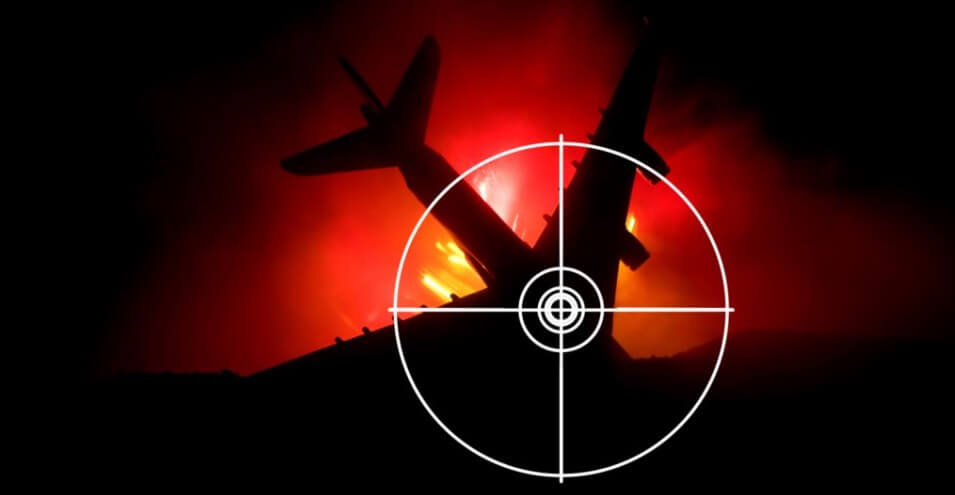
Perhaps if US officials had not declared the Ukrainian passenger plane suspicious immediately after it crashed, and the Canadian government had not pursued the details of the suspicious crash, the Islamic Republic officials would have declared the cause of the plane crash to be a "technical fault," as they did in the first three days after the incident, and not admitted that the missile fired by the Revolutionary Guard Corps was the cause of the crash.
But now more than ever, there are more uncertainties and questions about the numerous air accidents in Iran, especially since today, after 27 months, the Islamic Consultative Assembly announced that Aseman Airlines had provided false information about the crash of the Tehran-Yasuj plane and was the main culprit, along with the Iranian Civil Aviation Organization. However, until now, as in most air accidents in Iran, the pilot had been declared the culprit.
Now the obvious question is, in how many other crashes have officials and officials been the main culprits, and what guarantee is there that this series of mistakes will not be repeated and will not kill Iranian citizens?
Below is a list of the most important air accidents in Iran in the past 10 years and the stated reasons for them:
Ukraine International Airlines Flight 752
January 8, 2019 – 179 killed – Cause: IRGC missile strike – Outcome of follow-up: Unknown due to Iran's refusal to hand over the black box
Tehran - Yasuj flight Aseman Airlines
February 19, 2017 – 66 killed – Reason: Initially, adverse weather conditions and pilot error were announced; after 27 months, it was determined that Aseman Company and Civil Aviation were responsible.
Tehran - Tabas flight Sepahan Air
August 9, 2014 – 38 killed – Cause: technical malfunction
Tehran - Urmia flight Iran Air
January 19, 2010 – 78 killed – Reason: Adverse weather conditions and pilot error
If we continue this list, the claim of technical failure and pilot error as the cause of the crash will be repeated more and more. This is an issue that is not easily accepted given the history of the Islamic Republic's authorities in not accepting responsibility for errors and failures, along with the lack of transparency in information dissemination and the lack of free media in Iran to pursue evidence and documentation.
The presence of military figures and IRGC generals in Iranian airlines and the Civil Aviation Organization is another issue that seriously questions the specialized and technical management of Iran's aviation industry. This is not just limited to Mahan Air, which is openly used for the Islamic Republic's military and political purposes and has also been sanctioned by the United States. Aseman Air, which was revealed today to be responsible for the plane crash that killed 66 people, was also headed by Brigadier General Hossein Alaei, a former IRGC commander, at the time of the incident.
It seems that with the prominent presence of IRGC figures in this area, it is not possible to have much confidence in the Islamic Republic's official reports about the reasons for the plane crash.
For example, the Director General of the Civil Aviation Organization of Iran's Accident Investigation Bureau announced that the cause of the crash of the Ukrainian passenger plane was a technical defect, but after the Islamic Republic admitted to firing the IRGC missile, he announced that he learned about the issue through television and that from now on, "the direction of our investigation will change."
In this way, he, who is the highest official in the Iranian Civil Aviation Organization for investigating accidents, is kept informed of the events through the Iranian Broadcasting System, and as he himself said, instead of conducting a technical and detailed investigation, he has only repeated the positions of the military forces: "When they didn't give us information, we didn't know what happened."
In the name of the Iranian people, for the benefit of terrorist groups
Iran's air fleet is aging. U.S. officials have repeatedly warned that the Iranian regime is spending the country's resources on supporting terrorism around the world, rather than on the well-being of its people.
A month ago, Mike Pompeo said about Iran's response to the coronavirus that the Iranian regime is spending the country's wealth on terrorism and says it does not have the money to take care of its people.
A month ago, Mike Pompeo said that Mahan Airlines was a terrorist company.
Also, US State Department spokesperson Morgan Ortagus called for non-cooperation with this sanctioned company owned by the Islamic Republic, citing the role of Iran's Mahan Air in the spread of the new coronavirus pandemic.