Flood crisis in various Iranian cities; death toll in Shiraz reaches 17
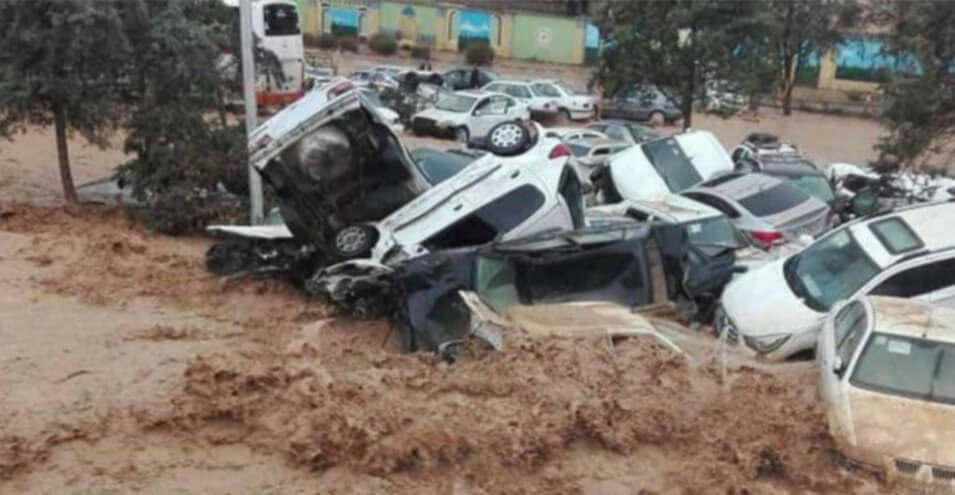
The flood crisis in various northern and southern Iranian cities has caused significant financial and human losses. Following these floods on Monday, the fifth day of Farvardin, flooding in the city of Shiraz resulted in at least 17 deaths and 35 injured.
The director general of the legal medicine office of Fars Province confirmed the death of 17 people in the Shiraz flood, stating that among the victims were six men, seven women, three boys, and one girl.
According to the head of Iran’s Emergency Services, 20 of the 35 injured from this incident have been transferred to hospitals.
The flooding in Shiraz occurred when, based on released images, many vehicles at the Quran Gate of the city were caught in the path of the flood. The raging torrent swept the vehicles along, causing severe collisions.
Many people at the Quran Gate in Shiraz were trapped in the path of the flood, and some images showed that a mother and daughter barely managed to save their lives from the flooding.
Following this incident, the head of the Traffic Information and Control Center of the Police Traffic Organization announced that more than 200 vehicles were caught in the water.
Images released from the Shiraz flooding showed that the flood had severely frightened residents and Nowruz travelers in the city.
The flood also reached the cities of Khorramabad and Pol-e Dokhtar in Lorestan Province, as this province faced the overflow of the Karun River and flooding from the early hours of Monday, the fifth day of Farvardin.
Released images show flooding and water accumulation in various cities of this province, including Khorramabad and Dore Chogni.
Reports indicate that drinking water and communication routes have been cut off in Pol-e Dokhtar. Additionally, the director general of the Crisis Management Office of the Ministry of Energy announced that due to severe flooding in Lorestan Province, water has been cut off in 60 villages and 50 villages have experienced power outages.
The presence of the Karun River in the middle of Khorramabad city and the Kashkan River in Pol-e Dokhtar have been cited as among the reasons for the intensification of the flood situation in this province. Musa Khademmi, the governor of Lorestan, stated that if rainfall continues, we will face serious dangers in Pol-e Dokhtar.
The ISNA news agency also reported on Monday, the fifth day of Farvardin, that dikes of the Arvand River in Khuzestan have been breached. It is said that the flood has entered Arvand River villages.
Also, released images show that the flood has reached the earthquake-stricken area of Sarpol-e Zahab.
The continuation of these floods occurs while warnings of flooding in other Iranian provinces continue. The Alborz Regional Water Company has warned of the possibility of the Karaj River overflowing and has asked residents living along the river and travelers on the Chalus road to stay away from the Karaj River.
Elham Fakhhari, a member of Tehran City Council, also warned on Twitter about a heavy storm expected in the afternoon today. Some images from Tehran also show flooding of the capital’s streets.
The CEO of the Tehran Regional Water Company has also warned of heavy rainfall and flooding of rivers in the province in the coming days.
The CEO of the Central Province Regional Water Company stated that “given that the useful life of some dams in the Central Province has ended, there is a possibility of these dams breaking if exposed to heavy rainfall.”
However, the northern provinces of Iran, namely Mazandaran and Golestan, have also not yet emerged from the flood crisis.
The governor of Aq Qala city reported that five days after flooding in this city, the situation of Aq Qala city and its 37 villages remains critical.
Previously, the Ministry of Energy and the Meteorological Organization warned of flooding in 10 provinces of the country, including Lorestan.
Iran has been facing flooding in various cities since the late days of Esfand 1397 (March 2019) to the present. In recent days, flooding in Mazandaran, Golestan, and North Khorasan provinces has caused financial and human losses, and the crisis of this devastating flood has not yet been resolved in these provinces.
The continuation of the flood crisis in Iran occurs at a time when the delayed response of government institutions to flooding in Golestan Province, the lack of responsiveness from officials, and the presence of the Golestan governor on a trip abroad had sparked considerable criticism. This led to the complete cancellation of leave for governors involved in flood relief.
Mike Pompeo, the US Secretary of State, had stated in Ordibehesht of last year while expressing support for the Iranian people that “we are witnessing financial and environmental crises in Iran. Corruption has engulfed the country. The regime steals from its own people.”
Also, Brian Hook, the US Special Representative on Iran Affairs, referring to the fact that 600 dams have been built in Iran since the revolution “without any environmental assessment,” stated that the Islamic Republic regime has mismanaged and destroyed the country’s water resources over the past forty years.
Source: Voice of America