Agreement Without Freedom; Washington Seeks Nuclear Containment While Tehran Faces Heavy Human Rights Burden
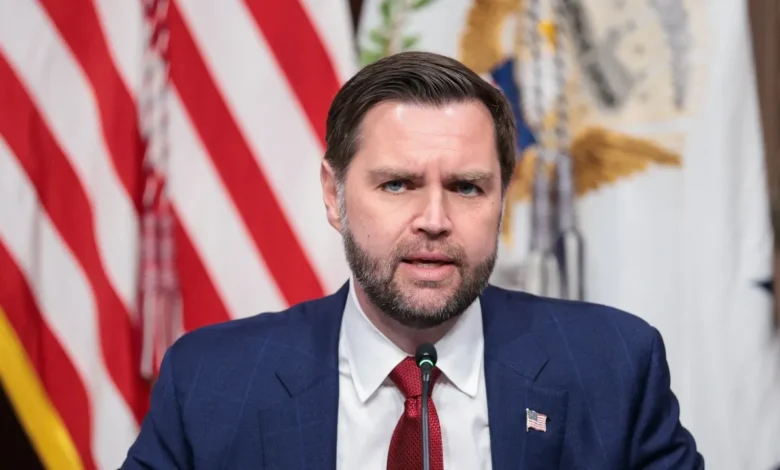
While American officials describe the new agreement with the Islamic Republic as a step toward ending war and containing regional tensions, recent remarks by U.S. Vice President JD Vance suggest that changing the power structure in Iran has never been part of Washington’s objectives. This position has once again raised questions among many Iranians about whether, in recent negotiations, the fate of millions of citizens who have faced decades of repression, imprisonment, execution, and widespread human rights violations was ever actually part of the calculations of global powers.
In an interview with Megan Kelly, JD Vance stated clearly: “Donald Trump never said that the goal of his actions was to bring Reza Pahlavi to power in Iran.” He explained that the American president’s primary focus from the outset has been preventing the Islamic Republic from acquiring nuclear capabilities that concern Washington, not regime change in Iran.
These statements actually confirm the position that Trump himself emphasized after announcing the ceasefire. The American president, rejecting the idea of “regime change,” said that experience over the past decades has shown that such projects often do not achieve their intended results, and ultimately such developments must emerge from within societies.
Nevertheless, critics of the recent agreement believe that focusing solely on the nuclear issue has resulted in overlooking one of the most important realities of contemporary Iran; a reality that has been repeatedly documented in reports by international human rights organizations. From suppressing nationwide protests and detaining thousands of citizens to widespread execution of death sentences, restrictions on religious freedoms, and pressure on ethnic and religious minorities, the Islamic Republic continues to maintain one of the world’s most challenging human rights records.
In this context, Prince Reza Pahlavi described the recent agreement as “the result of dealing and compromising with a criminal regime” and warned: “An agreement with a regime that killed more than 40,000 protesters in just two days is not only morally wrong but will also be a catastrophic strategic error.” In an interview with Time magazine, he emphasized that any long-term agreement with the Islamic Republic will ultimately fail, because in his view, the nature of this system is incompatible with the principles of a free world.
Another part of Vance’s remarks also captured observers’ attention; where he spoke of the possibility of Iran’s return to the global economy if it adheres to the agreement. The American vice president announced that Washington is prepared to facilitate Iran’s reintegration into the international economy if it fulfills its commitments. From some analysts’ perspective, this position suggests that the Trump administration’s primary priority is not political transformation in Iran, but rather achieving an agreement that addresses America’s security concerns and prevents the escalation of crisis in the region.
Meanwhile, the confidential nature of the memorandum of understanding continues to raise many questions. Vance, while referring to the role of mediators such as Qatar and Pakistan, said that certain diplomatic and regional sensitivities have prevented the immediate publication of agreement details. Nevertheless, critics believe that Iran’s public opinion has the right to know what decisions have been made about their country’s future and what concessions have been exchanged between the parties.
For many civil activists, the main issue is that throughout all discussions regarding the nuclear program, sanctions, and regional security, the rights of the Iranian people have once again been marginalized. From this perspective, while the recent agreement may reduce the risk of a large-scale military confrontation, it is unlikely to address the demands of a large segment of Iranian society unless the issues of fundamental freedoms, justice, and accountability for human rights violators in Iran are addressed.
From the perspective of many observers, the new agreement is more a reflection of a pragmatic approach between two governments than a turning point for Iran’s political future; one seeking to ensure its own survival and the other seeking to secure its own security and strategic interests. In the meantime, it is still the Iranian people whose fate and aspirations have remained on the margins of negotiations.