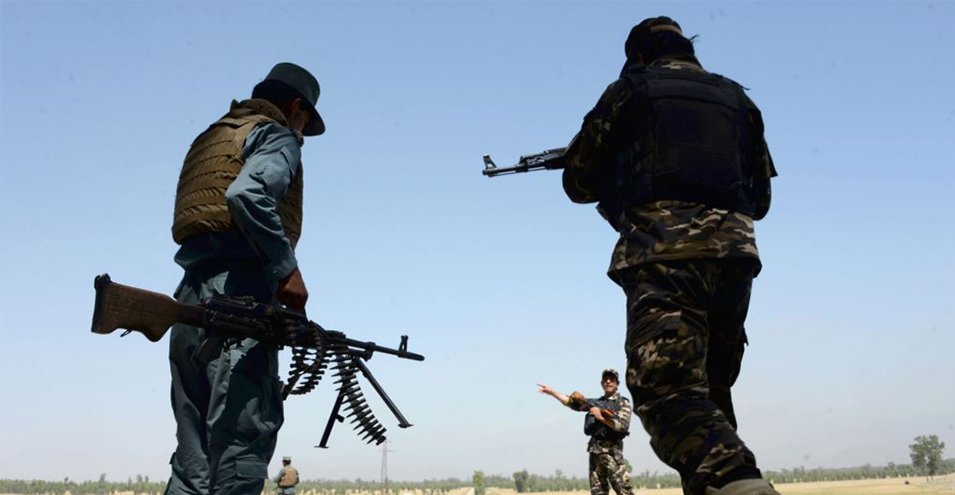
After years of denials, Israel says it is involved in the Syrian civil war
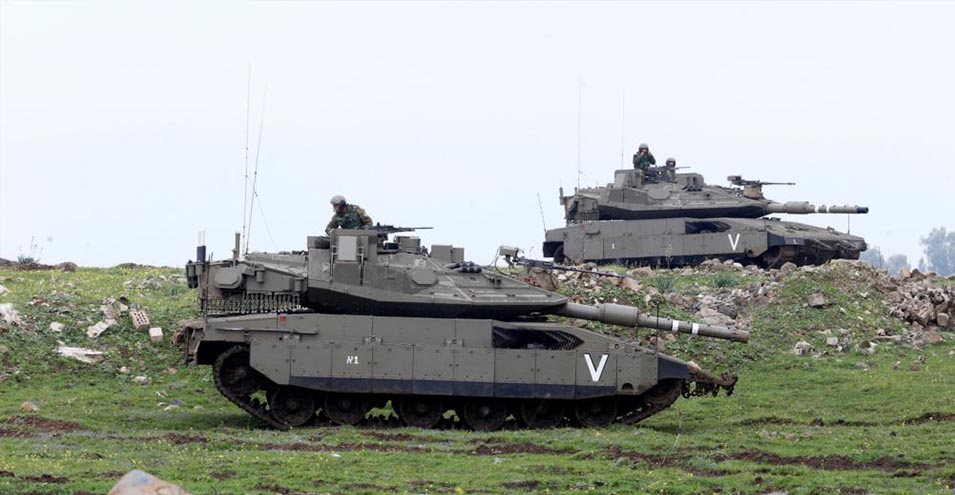
After years of denial, Israel is now confirming that it is involved in the Syrian war, and that it is doing so to ensure its own security and not to influence the political course in that country.
Israel has said it will not intervene in the Syrian war since it began six years ago, but the country's army chief of staff has now revealed that Israel is providing money and weapons to a group considered to be secular opponents of President Bashar al-Assad, who are also fighting ISIS.
General Gadi Eisenkot, the chief of staff of the Israeli army, who made the revelation in a speech at an academic conference, declined to give details about the extent of the aid. However, Israeli media outlets have published more detailed information on the matter in recent days.
Political analysts are asking how Israel is breaking its previous silence and revealing some of the dimensions of its involvement. The question is, could this be related to the increased US military involvement in the Syrian war and the downing of Iranian Revolutionary Guard drones?
Until recently, Israel's declared policy was summarized in two goals: one was to prevent Iran from dominating Syria, and the other was to prevent the transfer of Iranian weapons to Hezbollah in Lebanon through Syrian territory.
In this regard, Israel carried out several airstrikes in Syria, some of which were against the military presence of IRGC commanders in the Syrian border areas with Israel, and several other attacks aimed at destroying arms convoys from Damascus to Lebanon.
General Eisenkot's recent remarks suggest that Israel has not been very successful in preventing weapons from reaching Hezbollah. The Israeli army chief of staff said in his remarks that large quantities of Russian weapons have also reached Hezbollah in Lebanon.
Also regarding the first goal: Israeli military operatives are deeply concerned that with the fall of the city of Raqqa, the ISIS government center in northern Syria, Iranian Revolutionary Guard forces will triumphantly enter that city and a direct land route will be established from inside Iran and through Iraq to Syria and Lebanon.
Eisenkot said in his speech that Hezbollah, with its financial and weapons support from Iran, would be the biggest security threat to Israel. Obviously, if the IRGC itself were permanently stationed in Syria, this risk would increase and Iranian threats would reach Israel's borders.
Israeli military sources have revealed that the country's army is providing weapons, money, and supplies to a group of Syrian opposition groups, right in front of UN peacekeepers stationed along the Syrian border with Israel.
According to Ingahan, the number of these groups has reached twenty, all of whose members are local and secular, and by strengthening them, Israel wants to prevent ISIS from approaching its borders or the deployment of Revolutionary Guard personnel in those areas.
Another Israeli initiative is accepting civilian casualties from the civil war in Syria. It is said that in the three years since this initiative began, at least 3,000 wounded have been treated free of charge in that country.
But Israeli opponents deny that the wounded are all civilians, saying that a number of the wounded are affiliated with fighters opposed to Bashar al-Assad and that ISIS members may also be among them. General Eisenkot's revelation at least partially confirms this claim.
In his remarks, General Eisenkot said that Israel has excellent intelligence sources inside Syria – which, according to sources, is provided through such aid and other means.
With the more active involvement of American forces in the Syrian war, the regional equations will change slightly, and Israel must adapt to it and coordinate as much as possible with American forces.
This political and military reality becomes especially important when one considers that there is also some kind of cooperation between Israeli and Russian forces. Both sides keep the nature and extent of this coordination secret – but it is an undeniable fact that most of the Israeli airstrikes against IRGC and Hezbollah targets in Syria have been carried out with the knowledge and possibly permission of Russian forces stationed in that country.
Senior Russian parliamentarian Konstantin Kozakov said that the governments of Moscow and Jerusalem should increase the scope of their coordination on Syrian soil. His comments came after the US military shot down a Syrian Su-22 fighter jet, prompting a warning from the Moscow government.
Some political analysts agree that from the perspective of Israel's national interests, it may be better for Bashar al-Assad to remain in power. The Israelis believe that Syria's secular groups (which number over a thousand) are weak and that if Bashar's government is overthrown, there is a fear that ISIS will replace it.
But a major risk of Bashar al-Assad remaining in power is that he might hand over his country to the Revolutionary Guards because of the debt he owes to the Islamic Republic of Iran for his continued survival, which would be disastrous from an Israeli security perspective.
Source: Voice of America