Trump: Iran will be forced to return to negotiating table
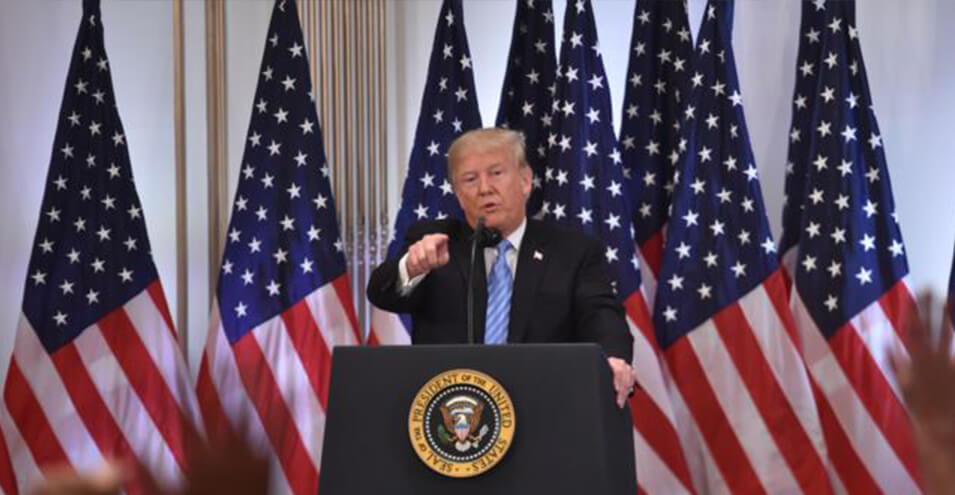
Donald Trump, the US President, emphasized on Wednesday, September 25th, in a press conference that Iran will ultimately be forced to enter into negotiations for a new agreement with the United States.
Donald Trump in this press conference, referring to the United States’ withdrawal from the nuclear agreement with Iran, known as the JCPOA, on May 8th, said: No country has changed as much as Iran in the past six months. That is, since I withdrew from a very, very bad agreement. Why didn’t they include Yemen and Syria in this agreement? Why? Because they believed these issues were very complicated.
Mr. Trump had previously criticized the JCPOA on multiple occasions, saying that this nuclear agreement neither serves the national interests of his country, nor stops Iran’s ultimate attainment of nuclear weapons, nor prevents issues such as “support for terrorism,” “destructive activities,” or the development of the Islamic Republic’s missile program.
On the other hand, three European countries party to the nuclear agreement with Iran say that the JCPOA has caused Iran’s nuclear program to be specifically subject to verification and has blocked the path to building nuclear weapons, and this agreement can provide a basis for negotiations regarding Iran’s ballistic missile program and regional activities.
Following the US withdrawal from the JCPOA, sanctions against Iran were reinstated. So far, one phase of US sanctions has been implemented and the second phase, namely oil sanctions, is set to be implemented from November 4th.
Since the US withdrawal from the nuclear agreement with Iran, the value of Iran’s national currency has sharply declined against foreign exchange rates, such that the current price of each US dollar has reached 19,000 tomans. The dollar rate in September of last year was 3,800 tomans.
New agreement with Iran
The US President also, in response to a question about world leaders’ cooperation for a new agreement with Iran, said: It doesn’t matter what world leaders think about Iran. Iranians will come to me and we will have a good agreement. Maybe that won’t happen. But they are suffering greatly right now. They are now facing uprisings in all cities, much more extensive than the Green Movement during Barack Obama’s presidency. But Barack Obama stood with the Iranian government, not with the Iranian people. Maybe if he had sided with the people, we would have a different Iran now.
Donald Trump clarified: But I stand with the Iranian people.