Taqy Rahmani: The Culture of Iran’s Intelligence Ministry is a Culture of Humiliation
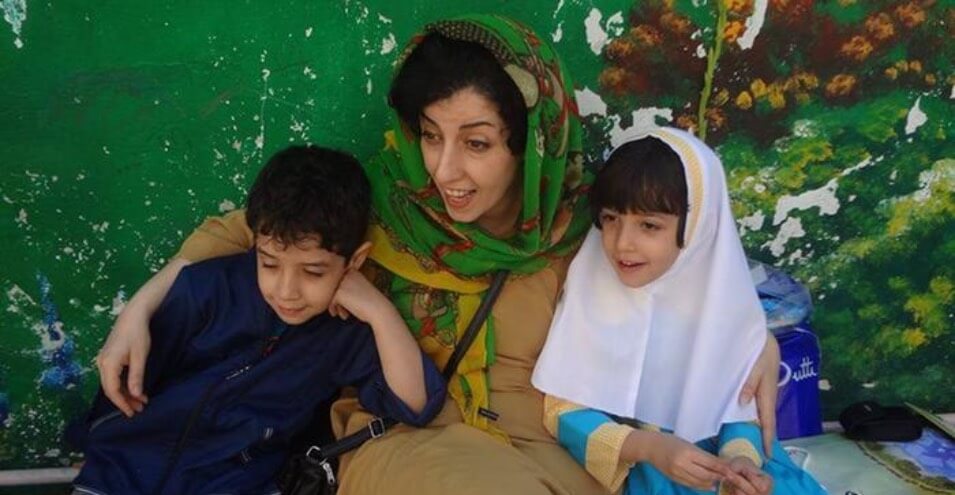
The husband of Narges Mohammadi says that the video recording of their children protesting eleven months without hearing their mother’s voice was a spontaneous action on their part. According to Taqy Rahmani, the culture of Iran’s judicial and security system is to “humiliate the prisoner”.
Taqy Rahmani, husband of Narges Mohammadi, has released a video of their two 13-year-old children in which the two teenagers say they have not heard their mother’s voice for eleven months and ask viewers to convey their voice to the world.
Narges Mohammadi, a civil activist and member of the “Step by Step to Abolish Execution” campaign, was transferred to Zanjan Prison six months ago and, despite recurring illnesses and recently contracting coronavirus, has been deprived of leave.
Taqy Rahmani, her husband, told DW Farsi that making this video was a spontaneous action by the children because since they learned that their mother had contracted coronavirus, their stress and anxiety increased, and this video was a way of expressing their feelings and opinions.
Mr. Rahmani previously confirmed in an interview with DW that his wife’s coronavirus test was positive. Nevertheless, the Islamic Republic of Iran Broadcasting’s 20:30 program aired a film from inside the prison clinic showing Narges Mohammadi with her back to the camera, facing a doctor, and in response to the doctor, only saying: “I’m fine.” This film was released with the explanation that Narges Mohammadi is healthy and has not contracted coronavirus.
Taqy Rahmani told DW that after this film was broadcast, twelve of Narges’s cellmates in Zanjan Prison protested it. The response from the head of Zanjan Prison was that the film was not their work but was made in Tehran.
Even one of the imprisoned women said, “If you had said they contracted coronavirus and we are treating them, that would have been better than denying the facts just because of Narges Mohammadi.”
Two Children Who Have Always Had Either No Mother or No Father
Taqy Rahmani, speaking about the video released of his teenage children, says their life has become very turbulent: “They got involved in our political and civil life from the age of five—night arrests, raids on the home, interrogations, interrogators thrown into the bedroom at midnight, and then exile. The standard of living of an exile abroad is lower than what they had inside. They are subject to all these deprivations, and there is something even worse: they don’t let them talk to their mother. They saw that when mom is there, dad is not, and when dad is there, mom is not.”
Did Narges Riot or Protest?
Yesterday, Monday the 30th of Tir, Ebrahim Raisi, the head of Iran’s judicial power, stated in his remarks that a distinction should be made between protest and rioting. He said: “We accept protest and we should listen to protest and deal with it logically, but protest is different from rioting, and rioting and chaos is a red line for the judicial system and we should not allow anyone to create insecurity in the country.”
Taqy Rahmani, referring to these remarks by the head of the judicial power, asks: “What is Narges Mohammadi’s crime? A campaign to abolish execution, is this rioting? Narges went with several other women in front of Parliament, protested acid attacks on women, is this another crime of Narges? Is this rioting? Mr. Raisi, when have you paid attention to protesters? You drive the protester to madness so that they either develop psychological problems or resort to extremism, and then you suppress them. This has become a method.”
Rahmani emphasizes that Narges’s family has exhausted all legal channels in Iran; they have requested leave, they have requested that Narges be returned to Tehran and Evin Prison, but the Intelligence Ministry does not allow these requests to be implemented.
“The Culture of Humiliation”
This political activist, who himself spent years in Islamic Republic prisons, says the dominant culture in Iran’s intelligence system is “the culture of humiliation”: “One thing opened up in the culture after the revolution: humiliating someone. We grew up in the south of Qazvin city; there was a thug culture that when these people came to power, it turned into thuggery; that is, there is no talk of law at all, I must humiliate you. They say a prisoner must be humiliated and then with shame ask us for something; well, this is no longer a citizen.”
Taqy Rahmani, referring to his own experience in 1365 in Evin Prison, says: “I heard this exact statement in ’65 from Mr. Mojtaba Halvaei, the director of Evin Prison; he said we will humiliate you. I told the prison director, what is your regulation? Tell us so we can comply with it in the ward. He said our regulation is the ward guard. Whatever the guard says at any moment, that is the regulation. Mr. Lajvardi said the same thing. He said I don’t establish regulations for you to abuse, whatever the guard says at any moment is the regulation. We are facing such a system.”
Narges Mohammadi has been imprisoned since the 15th of Ordibehesht 1394 to serve her 16-year sentence. Six years of this sentence was issued on the charge of “propaganda against the system” and the other 10 years are related to her activities in the “Step by Step to Abolish Execution” campaign.
Ms. Mohammadi, who is serving her sentence in Evin Prison, was forcibly and with physical violence by the head of Evin Prison transferred to Zanjan Prison in Dey 1398. The reason for this transfer was stated to be her sit-in and that of several other prisoners in the Evin Prison office in solidarity with flood and earthquake victims and in the November protests.
Source: DW